SHAWORDS

The Rev. Jesse Jackson once said, “There is nothing more painful for m — Walter E. Williams

"The Rev. Jesse Jackson once said, “There is nothing more painful for me at this stage in my life than to walk down the street and hear footsteps and start thinking about robbery—then look around and see somebody white and feel relieved."
W
Walter E. Williams
Walter E. Williams
author23 quotes

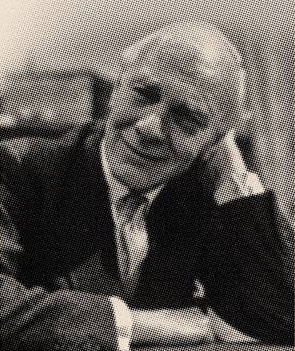
Walter Edward Williams was an American economist, commentator, and academic. Williams was the John M. Olin Distinguished Professor of Economics at George Mason University, a syndicated columnist, and author. Williams held classical liberal and libertarian views, and wrote frequently for Townhall, WND, and Jewish World Review. Williams was also a popular guest host of The Rush Limbaugh Show when Li

More by Walter E. Williams

View all →
Quote
"Capitalism, or what some call free markets, is relatively new in human history. Prior to capitalism, the way individuals amassed great wealth was by looting, plundering and enslaving their fellow man. With the rise of capitalism, it became possible to amass great wealth by serving and pleasing your fellow man. Capitalists seek to discover what people want and produce and market it as efficiently as possible as a means to profit. A historical example of this process would be John D. Rockefeller, whose successful marketing drove kerosene prices down from 58 cents a gallon in 1865 to 7 cents in 1900. Henry Ford became rich by producing cars for the common man. Both Fords and Rockefellers personal benefits pale in comparison to the benefits received by the common man who had cheaper kerosene and cheaper and more convenient transportation. There are literally thousands of examples of how mankinds life has been made better by those in the pursuit of profits. Heres my question to you: Are the people who, by their actions, created unprecedented convenience, longer life expectancy and a more pleasant life for the ordinary person — and became wealthy in the process — deserving of all the scorn and ridicule heaped upon them by intellectuals and political hustlers today?"
W
Walter E. Williams
Quote
"There is no moral argument that justifies using the coercive powers of government to force one person to bear the expense of taking care of another. If that person is too resolute in his refusal to do so, what is the case for imposing fines, imprisonment or death? You say, "Death! Arent you exaggerating, Williams?" Say he tells the agents of Congress that hell pay his share of the constitutionally mandated functions of government but refuse to pay the health costs of a sick obese person or a cyclist who becomes a vegetable, what do you think the likely course of events will be? First, hed be threatened with fines, imprisonment or property confiscation. Refusal to give in to these government sanctions would ultimately lead to his being shot by the agents of Congress."
W
Walter E. Williams
Quote
"In 302, the Roman emperor Diocletian commanded "there should be cheapness," declaring, "Unprincipled greed appears wherever our armies … march. … Our law shall fix a measure and a limit to this greed." The predictable result of Diocletians food price controls were black markets, hunger and food confiscation by his soldiers. Despite the disastrous history of price controls, politicians never manage to resist tampering with prices -- thats not a flattering observation of their learning abilities."
W
Walter E. Williams
Quote
"I personally believe that economics is fun and valuable. People who say they found it a nightmare in college just didnt have a good teacher-professor. I became a good teacher-professor as a result of tenacious mentors during my graduate study at UCLA. Professor Armen Alchian, a very distinguished economist, used to give me a hard time in class. But one day, we were having a friendly chat during our departments weekly faculty/graduate student coffee hour, and he said, "Williams, the true test of whether someone understands his subject is whether he can explain it to someone who doesnt know a darn thing about it." Thats a challenge I love: making economics fun and understandable."
W
Walter E. Williams
Quote
"At the beginning of each semester, I tell students that my economic theory course will deal with positive, non-normative economic theory. I also tell them that if they hear me making a normative statement without first saying, "In my opinion," they are to raise their hands and say, "Professor Williams, we didnt take this class to be indoctrinated with your personal opinions passed off as economic theory; thats academic dishonesty." I also tell them that as soon as they hear me say, "In my opinion," they can stop taking notes because my opinion is irrelevant to the subject of the class -- economic theory. Another part of this particular lecture to my students is that by no means do I suggest that they purge their vocabulary of normative or subjective statements. Such statements are useful tools for tricking people into doing what you want them to do. You tell your father that you need a cell phone and he should buy you one. Theres no evidence whatsoever that you need a cell phone. After all, George Washington managed to lead our nation to defeat Great Britain, the mightiest nation on Earth at the time, without owning a cell phone."
W
Walter E. Williams
Quote
"If FDA officials err on the side of under-caution in approving an unsafe drug, they are attacked by the media and patient groups, and investigated by Congress. Their victims, sick and dead people, are highly visible. If FDA officials err on the side of over-caution, keeping a safe and effective drug off the market, whos to know? The victims are invisible. For example, neither the Americans who get sick or die from meningitis C this year, nor their loved ones, will know that their illness or death could have been prevented had it not been for errors by FDA officials. Its a no-brainer to figure out which error FDA officials prefer to make."
W
Walter E. Williams

More on Life

View all →
Quote
"If it fulfills our hopes, this center will be, at once, a symbol and a reflection and a hope. It will symbolize our belief that the world of creation and thought are at the core of all civilization. Only recently in the White House we helped commemorate the 400th anniversary of Shakespeare. The political conflicts and ambitions of his England are known to the scholar and to the specialist. But his plays will forever move men in every corner of the world. The leaders that he wrote about live far more vividly in his words than in the almost forgotten facts of their own rule. Our civilization, too, will largely survive in the works of our creation. There is a quality in art which speaks across the gulf dividing man from man and nation from nation, and century from century. That quality confirms the faith that our common hopes may be more enduring than our conflicting hostilities. Even now men of affairs are struggling to catch up with the insights of great art. The stakes may well be the survival of civilization. The personal preferences of men in government are not important--except to themselves. However, it is important to know that the opportunity we give to the arts is a measure of the quality of our civilization. It is important to be aware that artistic activity can enrich the life of our people, which really is the central object of Government. It is important that our material prosperity liberate and not confine the creative spirit."
L
Lyndon B. Johnson
Quote
"I did not go to join Kurtz there and then. I did not. I remained to dream the nightmare out to the end, and to show my loyalty to Kurtz once more. Destiny. My destiny! Droll thing life is — that mysterious arrangement of merciless logic for a futile purpose. The most you can hope from it is some knowledge of yourself — that comes too late — a crop of unextinguishable regrets. I have wrestled with death. It is the most unexciting contest you can imagine. It takes place in an impalpable grayness, with nothing underfoot, with nothing around, without spectators, without clamor, without glory, without the great desire of victory, without the great fear of defeat, in a sickly atmosphere of tepid skepticism, without much belief in your own right, and still less in that of your adversary. If such is the form of ultimate wisdom, then life is a greater riddle than some of us think it to be. I was within a hairs-breadth of the last opportunity for pronouncement, and I found with humiliation that probably I would have nothing to say. This is the reason why I affirm that Kurtz was a remarkable man. He had something to say. He said it. Since I had peeped over the edge myself, I understand better the meaning of his stare, that could not see the flame of the candle, but was wide enough to embrace the whole universe, piercing enough to penetrate all the hearts that beat in the darkness. He had summed up — he had judged. The horror! He was a remarkable man. After all, this was the expression of some sort of belief; it had candor, it had conviction, it had a vibrating note of revolt in its whisper, it had the appalling face of a glimpsed truth — the strange commingling of desire and hate."
H
Heart of Darkness