Quote
"All day long the superior man is creatively active."
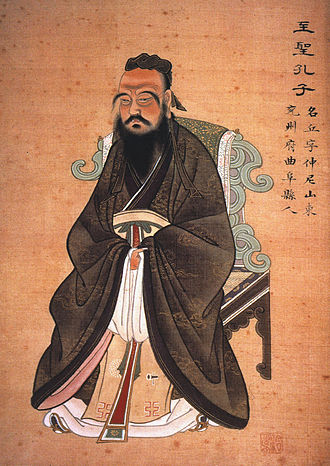 Junzi
Junzi"The superior man, even when he is not moving, has a feeling of reverence, and while he speaks not, he has the feeling of truthfulness."
The word junzi is a Chinese philosophical term often translated as "gentleman", "superior person", or "noble man". Since the characters are overtly gendered, the term is frequently translated as "gentleman"; gentry and distinguished/moral person are common gender-neutral translations. Traditionally referring to the "aristocratic nobility of the Zhou", Junzi is employed in the Book of Changes to me
"All day long the superior man is creatively active."
Junzi"To show forbearance and gentleness in teaching others; and not to revenge unreasonable conduct — this is the energy of southern regions, and the good man makes it his study. To lie under arms; and meet death without regret — this is the energy of northern regions, and the forceful make it their study. Therefore, the superior man cultivates a friendly harmony, without being weak — How firm is he in his energy! He stands erect in the middle, without inclining to either side — How firm is he in his energy! When good principles prevail in the government of his country, he does not change from what he was in retirement. How firm is he in his energy! When bad principles prevail in the country, he maintains his course to death without changing — How firm is he in his energy! watchful over himself, when he is alone."
Junzi"The superior man accords with the course of the Mean. Though he may be all unknown, unregarded by the world, he feels no regret — It is only the sage who is able for this."
Junzi"It is said in the Book of Poetry, "In silence is the offering presented, and the spirit approached to; there is not the slightest contention." Therefore the superior man does not use rewards, and the people are stimulated to virtue. He does not show anger, and the people are awed more than by hatchets and battle-axes."
Junzi"The superior man discusses criminal cases In order to delay executions."
Junzi"君子不重,則不威。學則不固。主忠信。无友不如己者。過,則勿憚改。"
Junzi