Quote
"I love you, what star do you live on?"
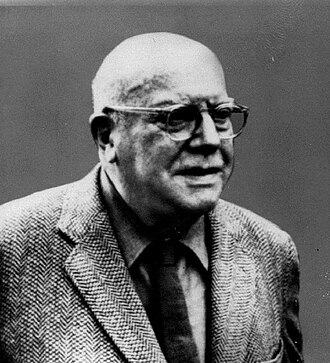 Conrad Aiken
"The wind shrieks, the wind grieves; It dashes the leaves on walls, it whirls then again; And the enormous sleeper vaguely and stupidly dreams And desires to stir, to resist a ghost of pain."
Conrad Potter Aiken was an American writer and poet, honored with a Pulitzer Prize and a National Book Award, and was United States Poet Laureate from 1950 to 1952. His published works include poetry, short stories, novels, literary criticism, a play, and an autobiography.
Conrad Potter Aiken was an American writer and poet, honored with a Pulitzer Prize and a National Book Award, and was United States Poet Laureate from 1950 to 1952. His published works include poetry, short stories, novels, literary criticism, a play, and an autobiography.
View all quotes by Conrad Aiken"I love you, what star do you live on?"
Conrad Aiken"I think Ushant describes it pretty well, with that epigraph from Tom Brown’s School Days: “I’m the poet of White Horse Vale, sir, with Liberal notions under my cap!” For some reason those lines stuck in my head, and I’ve never forgotten them. This image became something I had to be. … I compelled myself all through to write an exercise in verse, in a different form, every day of the year. I turned out my page every day, of some sort — I mean I didn’t give a damn about the meaning, I just wanted to master the form — all the way from free verse, Walt Whitman, to the most elaborate of villanelles and ballad forms. Very good training. I’ve always told everybody who has ever come to me that I thought that was the first thing to do. And to study all the vowel effects and all the consonant effects and the variation in vowel sounds."
Conrad Aiken"In one room, silently, lover looks upon lover, And thinks the air is fire."
Conrad Aiken"I walk in a cloud of wonder; I am glad. I mingle among the crowds; my heart is pounding; You do not guess the adventure I have had! . . . Yet you, too, all have had your dark adventures, Your sudden adventures, or strange, or sweet . . . My peril goes out from me, is blown among you. We loiter, dreaming together, along the street."
Conrad Aiken"I will ask them all, I will ask them all their dreams, I will hold my light above them and seek their faces. I will hear them whisper, invisible in their veins . . . The eternal asker of answers becomes as the darkness, Or as a wind blown over a myriad forest, Or as the numberless voices of long-drawn rains."
Conrad Aiken"We flow, we descend, we turn . . . and the eternal dreamer Moves among us like light, like evening air . . ."
Conrad Aiken"The only influences in [the painting The sick Child, Munch painted in his elderly home, remembering very accurate the last days of his dying little sister Sophie] The sick Child.. ..were the ones that come from my home.. ..my childhood and my home. Only someone who knew the conditions at home could possibly understand why there can be no conceivable chance of any other place having played a part – my home is to my art as a midwife is to her children.. ..few painters have ever experienced the full grief of their subject as I did in The sick child. It was not just I who was suffering; it was all my nearest and dearest as well."
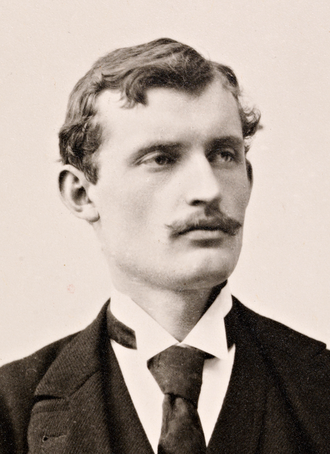 Edvard Munch
"General Franco made it clear that Spain could enter the war only when England was about ready to collapse."
 Francisco Franco
"The Spanish Republic did not find itself free of obligations. For the most part the leaders were Freemasons. Before their duty to their country came their obligations to the Grand Orient. In my opinion, Freemasonry, with all its international influence, is the organization principally responsible for the political ruin of Spain, as well as the murder of Calvo Sotelo, who was executed in accordance with orders from the Grand Secretary of Freemasonry in Geneva."
Francisco Franco"Art was what I originally started out to do and music came second at first. I had a year at art college but I left because it was too much like school. I give all my paintings away to people I like."
 Cat Stevens
"Lady Cannons gone to a matinée at the St. Jamess. We had tickets for the first night, but of course she wouldnt use them then. She preferred to go alone in the afternoon, because she detests the theatre, anyhow, and afternoon performances give her a headache. If she does a thing thats disagreeable to her, she likes to do it in the most painful possible way. She has a beautiful nature."
"At first when I saw The Sick Child [in his imagination] her pallid face and the vivid red hair against the pillow – I saw something that vanished when I tried to paint it. I ended up with a picture on the canvas which, although I was pleased with it, bore little relationship to what I had seen.. ..In the space of that year [1885 – 1886], scratching it out, just letting the paint flow, endlessly I tried to recapture what I had seen for the first time – the pale transparent skin against the linen sheets, the trembling lips, the shaking hands. I repainted the painting numerous times – scratched it out – let it become blurred in the medium – and tried again and again to catch the first impression – the transparent pale skin against the canvas – the trembling mouth – the trembling hands. I had done the chair [in which his sister Sophie had died] with the glass too often. It distracted me from doing the head. – When I saw the picture I could only make out the glass and the surroundings. – Should I remove it completely? – No, it had the effect of giving depth and emphasis to the head. – I scared off half the background and left everything in masses – one could now see past and across the head and the glass.. .I had achieved much of that first impression, the trembling mouth – the transparent skin – the tired eyes – but the picture was not finished in its colour – it was pale grey – the picture was then heavy as lead. [Munch showed the painting on the Autumn Exhibition 18 October 1886; it was criticized severely, even by his bohemian art-friend Jager]"
Edvard Munch