Quote
"It seems that thought itself has a power for which it has never been given credit."
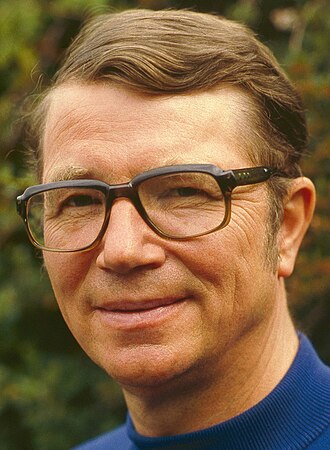 Colin Wilson
"There certainly is self division. The man who watches a woman undressing has the red eyes of an ape; yet the man who sees two young lovers, really alone for the first time, who brings out all the pathos, the tenderness and uncertainty when he tells about it, is no brute; he is very much human. And the ape and the man exist in one body; and when the apes desires are about to be fulfilled, he disappears and is succeeded by the man, who is disgusted with the apes appetite."
Colin Henry Wilson was an English existentialist philosopher-novelist. He also wrote widely on true crime, mysticism and the paranormal, eventually writing more than a hundred books. Wilson called his philosophy "new existentialism" or "phenomenological existentialism", and maintained his life work was "that of a philosopher, and (his) purpose to create a new and optimistic existentialism".
"It seems that thought itself has a power for which it has never been given credit."
Colin Wilson"The heart, oddly enough, seems to be the essential organ concerned. When we are in a hurry or doing something we dislike, we clench the heart, exactly like clenching a fist, and nothing can get in. When we are filled with a sense of multiplicity and excitement we somehow open the heart and allow reality to flow in. But in that state we only need to entertain the shadow of some unpleasant thought for it to close again. And human beings are so naturally prone to mistrust that it is hard to maintain the openness for very long. Children on the other hand find it easy to slip into states of wonder and delight when the heart finally opens so wide that the whole world seems magical. the trick of the peak experience lies in this ability to relax out of our usual defensive posture and to open the heart."
Colin Wilson"We all possess, in our unconscious minds, a kind of servant who performs certain automatic functions. When I learn to type or drive a car or learn a foreign language, I have to do it painfully and consciously; then, suddenly, my robot takes over and does it automatically; in fact, he does it far more quickly and efficiently than "I" could. The main trouble with this mechanical valet is that he often takes over functions I would prefer to keep for myself -- for example, when I am tired I eat "automatically," and so do not enjoy my food. In fact, this is the reason that so much of our experience seems oddly "unreal"; the robot has taken it over. When I am feeling low, I may live for whole days in a "robotic" state, so that experience flows off me like water off a ducks back. And because I am not receiving any "feedback" of pleasure or interest from my activities, I become duller than ever, and experience becomes progressively less interesting. (This is, of course, the mechanism of depression and nervous breakdown.) And this is also why explorers deliberately seek out hardship and danger -- to cheat the robot and "feel the life in them more intensely."
Colin Wilson"The outsider, Haller says, is a self-divided man; being self-divided, his chief desire is to be unified. He is selfish as a man with a lifelong raging toothache."
Colin Wilson"The Outsider’s case against society is very clear. All men and women have these dangerous, unnamable impulses, yet they keep up a pretense, to themselves, to others; their respectability, their philosophy, their religion, are all attempts to gloss over, to make civilized and rational something that is savage, unorganized, irrational. He is an Outsider because he stands for truth."
Colin Wilson"The Outsider has his proper place in the Order of Society, as the impractical dreamer."
Colin Wilson"At one point a heated discussion arose over the possible interpretation of Lolita as a grandiose metaphor of the classic Europeans hopeless love for young, seductive, barbaric America. In his afterword to the novel Nabokov himself mentions this as the naive theory of one of the publishers who turned the book down. And although there cant be the slightest doubt that Nabokov did not mean to limit Lolita to that interpretation, there is no reason to exclude it as one of the novels many dimensions. The point, I felt, became obvious when one drew the line between Lolita as a delightfully frivolous story on the verge of pornography and Lolita as a literary masterpiece, the only convincing love story of our century."
 Lolita
"Lovely food, for rabbits, that is."
"One makes mistakes; that is life. But it is never a mistake to have loved."
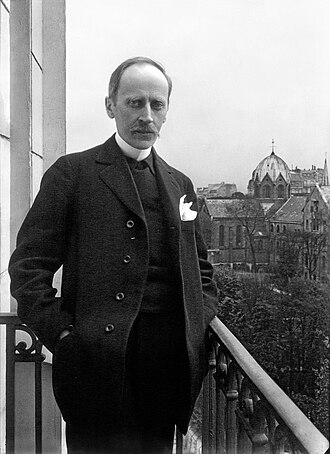 Romain Rolland
"[explaining to Ernie how April apologized to him] She just showed up at the factory, took off her coat, and begged me to take her. We made love in a way that Ive only ever seen in nature films."
 MouseHunt (film)
"Love is always love, come whence it may. A heart that beats at your approach, an eye that weeps when you go away are things so rare, so sweet, so precious that they must never be despised."
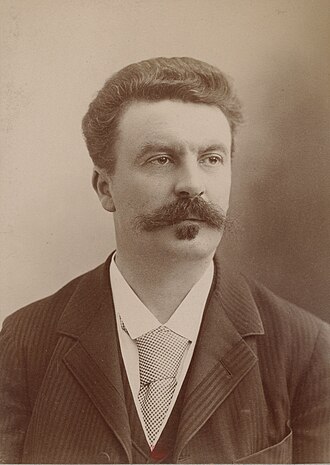 Guy de Maupassant
"He was obeyed, yet he inspired neither love nor fear, nor even respect. He inspired uneasiness. That was it! Uneasiness. Not a definite mistrust — just uneasiness — nothing more. You have no idea how effective such a... a... faculty can be. He had no genius for organizing, for initiative, or for order even. That was evident in such things as the deplorable state of the station. He had no learning, and no intelligence. His position had come to him — why? Perhaps because he was never ill . . . He had served three terms of three years out there . . . Because triumphant health in the general rout of constitutions is a kind of power in itself."