SHAWORDS

There have been, from time to time, changes in the degree of destructi — Paul Nitze

HomePaul NitzeQuote
"There have been, from time to time, changes in the degree of destructiveness of weapons and of war. These changes, until recent decades, generally have been considered not to have invalidated the precepts of Western civilization and its antecedent cultures of the moral obligation to defend its freedoms, diversity, and cultural growth from tyranny, reaction, and cultural stagnation or death. But with the advent of the nuclear age, we are faced with a change in degree that threatens to become one of kind. The destructive nature of nuclear war dictates that we no longer regard war as merely the continuation of policy by other means. The deterrence of nuclear war, until such time as technology provides a more reliable and stable method, must, for the United States, be based upon the capability to prevail if deterrence should fail. But this must be combined with an effort to join with other nations in the creation of a just international order."
Paul Nitze
Paul Nitze
Paul Nitze
author14 quotes

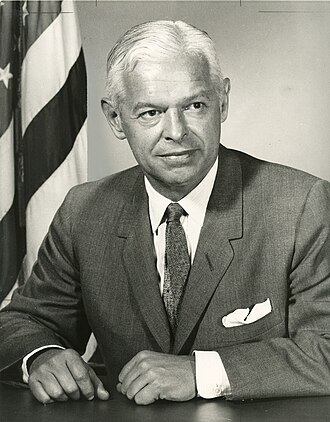
Paul Henry Nitze was an American businessman and government official who served as United States Deputy Secretary of Defense, U.S. Secretary of the Navy, and Director of Policy Planning for the U.S. State Department. He is best known for being the principal author of NSC 68 and the co-founder of Team B. He helped shape U.S. Cold War defense policy over the course of numerous presidential administr

More by Paul Nitze

View all →
Quote
"If there is little or no middle ground in the struggle for peace with justice, what resources of will and of national sacrifice are we entitled, or ethically called upon, to put into the effort to cause a system compatible with superior values to prevail? What risks are we entitled to take with the awful hazard of a nuclear war? What guidelines emerge from a comprehensive analysis of the full range of pertinent considerations? The concept of an ethical framework that has objective validity, over and beyond the values of the individual or societal groups and to which man can aspire to have some degree of understanding, seemed to me to be necessary for there to be a well-founded sense of direction to a foreign policy."
Paul NitzePaul Nitze
Quote
"As for the so-called rogue states that are not inhibited in their actions by the consensus of world opinion, the United States would be wise to eliminate their nuclear capabilities with the preemptive use of our conventional weapons — when necessary, and when we have unambiguous indication of these countries intent to use their nuclear capability for purposes of aggrandizement. The same principle should apply to any threat emanating from unstable states with nuclear arsenals. By simply having our intelligence services read their mail, we can tell if there is compelling reason to take preemptive action."
Paul NitzePaul Nitze
Quote
"Early in life, as a witness to the limitless tragedy of World War I, I felt grow in me a determination to act, to work with others to influence the course of history and not supinely to accept what, in the absence of will and action, might be the worlds fate. I came to Washington in the summer of 1940 with Jim Forrestal. I have been here, with short exceptions, ever since. For almost five decades I have played some role in the affairs of state, working with others to bend what otherwise might have been called the "inevitable trends of history." Some of the outcomes were wholly satisfactory, some marginally successful, and some were failures-but, on the whole, they were better, I think, than would otherwise have come about. On balance, we were fortunate in the opportunities for significant action the fortune of history opened up for us. It cannot be the good fortune of all mankind to live in Athens under the leadership of a Pericles, in Florence under the Medici, in the United States under a Washington or a Lincoln. Nor is it the usual fate of mankind to live under a Cleon, a Nero, a Stalin or a Hitler and thus have an unambiguous case for withdrawal from government or opposition to it. The usual case is a mixed one in which the task of the man of general wisdom and with a taste for politics is to manage, to deal with, to nudge the existing situation toward the best that is within the realm of the politically possible, to find such scope as he can for his courage, his fortitude, and his willingness to view facts with an open mind. When given half a chance, the combination of courage and an open mind can do wonders."
Paul NitzePaul Nitze