Quote
"All brave men love; for he only is brave who has affections to fight for, whether in the daily battle of life, or in physical contests."
N
Nathaniel Hawthorne"There is a fatality, a feeling so irresistible and inevitable that it has the force of doom, which almost invariably compels human beings to linger around and haunt, ghostlike, the spot where some great and marked event has given the color to their lifetime; and still the more irresistibly, the darker the tinge that saddens it."
Nathaniel Hawthorne was an American novelist and short story writer. His works often focus on history, morality, and religion.
"All brave men love; for he only is brave who has affections to fight for, whether in the daily battle of life, or in physical contests."
"Many writers lay very great stress upon some definite moral purpose, at which they profess to aim their works. Not to be deficient in this particular, the author has provided himself with a moral, — the truth, namely, that the wrong-doing of one generation lives into the successive ones, and, divesting itself of every temporary advantage, becomes a pure and uncontrollable mischief; and he would feel it a singular gratification if this romance might effectually convince mankind — or, indeed, any one man — of the folly of tumbling down an avalanche of ill-gotten gold, or real estate, on the heads of an unfortunate posterity, thereby to maim and crush them, until the accumulated mass shall be scattered abroad in its original atoms. In good faith, however, he is not sufficiently imaginative to flatter himself with the slightest hope of this kind. When romances do really teach anything, or produce any effective operation, it is usually through a far more subtile process than the ostensible one. The author has considered it hardly worth his while, therefore, relentlessly to impale the story with its moral as with an iron rod, — or, rather, as by sticking a pin through a butterfly, — thus at once depriving it of life, and causing it to stiffen in an ungainly and unnatural attitude. A high truth, indeed, fairly, finely, and skilfully wrought out, brightening at every step, and crowning the final development of a work of fiction, may add an artistic glory, but is never any truer, and seldom any more evident, at the last page than at the first."
"Can the philosopher, big with the inspiration of an idea that is to reform mankind, believe that he is to be beckoned from this sensible existence at the very instant when he is mustering his breath to speak the word of light? Should he perish so, the weary ages must pass away—the worlds, whose life sand may fall, drop by drop—before another intellect is prepared to develop the truth that might have been uttered then. But history affords many an example where the most precious spirit... has gone hence... The prophet dies, and the man of torpid heart and sluggish brain lives on. The poet leaves his song half sung, or finishes it, beyond the scope of mortal ears... The painter—as Allston did—leaves half his conception on the canvas to sadden us with its imperfect beauty, and goes to picture forth the whole... in the hues of heaven. But rather such incomplete designs of life will be perfected nowhere. This so frequent abortion of mans dearest projects must be taken as proof that the deeds of earth, however etherealized by piety or genius, are without value, except as exercises and manifestations of the spirit."
"If a man, sitting all alone, cannot dream strange things, and make them look like truth, he need never try to write romances."
"Lo, there ye stand, my children," said the figure, in a deep and solemn tone, almost sad with its despairing awfulness, as if his once angelic nature could yet mourn for our miserable race. "Depending upon one anothers hearts, ye had still hoped that virtue were not all a dream. Now are ye undeceived. Evil is the nature of mankind. Evil must be your only happiness. Welcome again, my children, to the communion of your race."
"Accuracy is the twin brother of honesty; inaccuracy, of dishonesty."
"The only influences in [the painting The sick Child, Munch painted in his elderly home, remembering very accurate the last days of his dying little sister Sophie] The sick Child.. ..were the ones that come from my home.. ..my childhood and my home. Only someone who knew the conditions at home could possibly understand why there can be no conceivable chance of any other place having played a part – my home is to my art as a midwife is to her children.. ..few painters have ever experienced the full grief of their subject as I did in The sick child. It was not just I who was suffering; it was all my nearest and dearest as well."
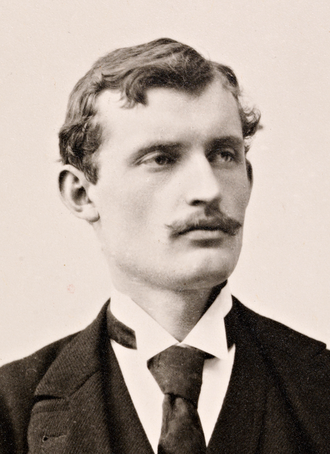 Edvard Munch
"There was a man and he had eight sons. Apart from that, he was nothing more than a comma on the page of History. Its sad, but thats all you can say about some people."
"Im very sad that this seems to be the No. 1 question people want to discuss. I had nothing to do with the issue other than what the media created. I was innocently drawn into the whole controversy. So, after many years, Im glad at least now that I have been given the opportunity to explain to the public and fans my side of the story in my own words. At a lecture, back in 1989, I was asked a question about blasphemy according to Islamic Law, I simply repeated the legal view according to my limited knowledge of the Scriptural texts, based directly on historical commentaries of the Quran. The next day the newspaper headlines read, "Cat Says, Kill Rushdie." I was abhorred, but what could I do? I was a new Muslim. If you ask a Bible student to quote the legal punishment of a person who commits blasphemy in the Bible, he would be dishonest if he didnt mention Leviticus 24:16."
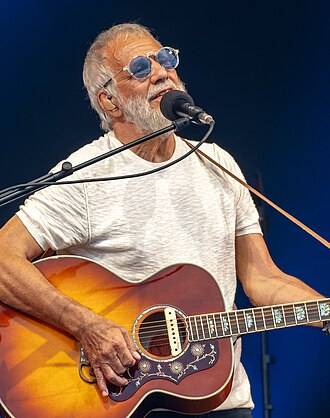 Cat Stevens
"Rhymer, brawler, and musician, Famed for his lunar expedition, And the unnumbered duels he fought, — And lover also, — by interposition! — Here lies Hercule Savinien De Cyrano de Bergerac, Who was everything, yet was naught. I cry you pardon, but I may not stay; See, the moon-ray that comes to call me hence! I would not bid you mourn less faithfully That good, brave Christian: I would only ask That when my body shall be cold in clay You wear those sable mourning weeds for two, And mourn awhile for me, in mourning him."
"We must recognize that there is no indication that Saddam Hussein has any intention of relenting. So we have an obligation of enormous consequence, an obligation to guarantee that Saddam Hussein cannot ignore the United Nations. He cannot be permitted to go unobserved and unimpeded toward his horrific objective of amassing a stockpile of weapons of mass destruction."
"—musics power Is little felt in sunlit hour; But hear its voice when hopes depart, Like swallows, flying from the heart On which the summers late decline Has set a sadness and a sign;. . . . . . How deeply will the spirit feel The lute, the songs sweet-voiced appeal; And how the heart drink in their sighs As echoes they from Paradise."