SHAWORDS

[There was a] long standing contention between the sees of York and Ca — John Peckham

HomeJohn PeckhamQuote
"[There was a] long standing contention between the sees of York and Canterbury as to the right of either metropolitan to bear his cross erect in the province of the other. ...Peckham, on hearing that his brother [ William of Wickwane, Archbishop] of York had returned from abroad, and was intending to pass through his province with his cross erect, wrote a letter forbidding the clergy to show him any mark of respect, ordering them to shut the church-doors in his face, and threatening all persons, clerical and lay, with excommunication, who ventured to supply him with food, or render him the slightest service."
John Peckham
John Peckham
John Peckham
author60 quotes

John Peckham was a Franciscan friar and Archbishop of Canterbury in the years 1279–1292.

More by John Peckham

View all →
Quote
"The whole conduct of the monks of Canterbury, from the time of Beckets death, had in fact been directed to two objects: to emancipate themselves from the abbatial authority, as well as from the archiepiscopal jurisdiction of the primate, and in the case of elections, to force a monk into the primatial see. They were a set of turbulent, unprincipled men, always ready to side with the pope, against the king, and against the suffragans. ...no one could object to the appointment of Friar John. In the parishes, in the universities, among the nobles, as well as among the masses of the people, the mendicants were at this time popular; and the pope was willing to show his impartiality, in nominating a Franciscan as the successor of a Dominican. We can easily understand the unwillingness of Friar John to accept the office. He was a sectarian, who loved his order more than he loved the Church; and he did not consider an archbishopric superior to the high offices among the Franciscans, to which he aspired. But he was obliged to yield, and was consecrated by the pope himself, on the 19th of February, 1279."
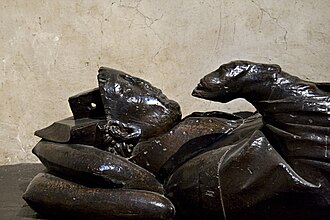
John PeckhamJohn Peckham
Quote
"The feeling of the country had... become fanatical in its hatred of the Jews; and the House of Commons, in 1290, demanded that the whole race should be banished the kingdom. Edward I was one of the greatest of our sovereigns, but he was not sufficiently great to resist the spirit of the age, when it accorded with his own religious convictions, and, at the same time, with his worldly interests. Human nature is always the same. Fools are always numerous, and sometimes powerful, and wise men are not infrequently weak. We are not required to enter into a description of the measures which were adopted; for though Peckham, harsh, severe, and intolerant, was sure to be on the side of what are called strong measures, he did not take a prominent part in the proceedings against the Jews. We need only, therefore, mention, that the king, probably for their protection, first directed that they should be imprisoned; then made them pay for their liberation; and finally, banished them from the kingdom. Edward was enriched, at the time, by the confiscation of the property of the Jews; but... the country suffered more by their expulsion, than the Jews themselves, and the court itself eventually suffered, as the annual tax, which they had hitherto paid for protection, was now withdrawn."
John PeckhamJohn Peckham
Quote
"For some years the discipline at Christchurch had been in a very bad state, and some of the obedientiaries had been guilty of "Converting public trusts "To very private uses," and thus incurred the penalty of excommunication. The convent indeed was almost in a state of mutiny. In order to escape from claustral discipline, the monks were in the habit of staying at the convent manors, on the pretext of looking after the tenants, and while there ventured to keep purses of their own and live like ordinary men of the world. At the last election of a prior, the convent had forced Ringmer to take an oath which hampered his action as a reformer. When the archbishop tried to put down these abuses, some of the monks, "certain sons of Belial," tried to make a bargain and drew up articles on which they insisted for a time. But the majority was too strong. They were obliged to renounce them, and the paper was publicly burnt by the archbishop. Some monks who were opposed to the prior fled, but were recaptured about the end of 1284. The king, why we know not, was angry about this..."
John PeckhamJohn Peckham
Quote
"We have a more pleasant scene presented to us, when the archbishop revisited the place of his early education, and showed his affectionate respect to the aged men, once his superiors, now placed under his jurisdiction. The archbishop arrived at Lewes. The chapter of the priory went out to meet him. They experienced the strange feeling, which old men often experience, when they pay obeisance to one, whom they have whipped when a boy. The Archbishop of Canterbury, arrayed in his pontificals, and in great state, joined the procession as it perambulated the town of Lewes. He preached in the great church; he granted indulgences; he sang the mass at the high altar. Having thus done all that he could do for the honour of the priory; having kept a high festival and feasted the poor; Brother John, as he is called in the "Diary," put off his splendid attire, and in his grey coat, rope-girdle, bare of foot, he entered the refectory, and partook, with his usual moderation, of the simple fare of the delighted monks. To receive such a mark of respect from a friar, usually the opponent of the monks, was an honour highly appreciated."
John PeckhamJohn Peckham
Quote
"As a friar Peckham was naturally inclined to favour the pretensions of the papal see, and his tenure of office was marked by several bold though ineffectual attempts to magnify ecclesiastical authority at the expense of the temporal power. Almost his first act on landing [in England as the new Archbishop] was to summon a council to meet at Reading on 29 July [1279]. Among other acts at this council Peckham ordered his clergy to explain the sentences of excommunication against the impugners of Magna Charta, against those who obtained royal writs to obstruct ecclesiastical suits, and against all, whether royal officers or not, who neglected to carry out the sentences of the royal courts. Edward took offence at Peckhams attitude and... not only compelled him to withdraw the objectionable articles, but also made the archbishops action the occasion for passing Statute of Mortmain or De Religiosis."
John PeckhamJohn Peckham
Quote
"And therefore, Sire, altho I am ready, so far as is in me, to dedicate the place for the Cistercian monks at Meynan, yet I could not do it without the full assent of the bishop and of his chapter, and of the parson of the place, who, with plenty of other people, have a very great horror of the approach of the forsaid monks. For though they may be good men, if God please, still they are the hardest neighbours that prelates and parsons could have. For where they plant their foot, they destroy towns, take away tithes, and curtail by their privileges all the power of prelacy."
John PeckhamJohn Peckham