Quote
"Help us to find God." "No one can help you there." "Why not?" "For the same reason that no one can help the fish to find the ocean."
A
Anthony de Mello"There were rules in the monastery, but the Master always warned against the tyranny of the law. "Obedience keeps the rules," he would say. "Love knows when to break them.""
"Help us to find God." "No one can help you there." "Why not?" "For the same reason that no one can help the fish to find the ocean."
"The Master would frequently assert that holiness was less a matter of what one did than of what one allowed to happen."
"Any time you are with anyone or think of anyone you must say to yourself: I am dying and this person too is dying, attempting the while to experience the truth of the words you are saying. If every one of you agrees to practise this, bitterness will die out, harmony will arise."
"A good teacher offers practice, a bad one offers theories."
"Suffering is a sign that youre out of touch with the truth. Suffering is given to you that you might open your eyes to the truth, that you might understand that theres falsehood somewhere, just as physical pain is given to you so you will understand that there is disease or illness somewhere. Suffering points out that there is falsehood somewhere. Suffering occurs when you clash with reality. When your illusions clash with reality when your falsehoods clash with the truth, then you have suffering. Otherwise there is no suffering."
"Why is everyone here so happy except me?" "Because they have learned to see goodness and beauty everywhere," said the Master. "Why dont I see goodness and beauty everywhere?" "Because you cannot see outside of you what you fail to see inside."
"At one point a heated discussion arose over the possible interpretation of Lolita as a grandiose metaphor of the classic Europeans hopeless love for young, seductive, barbaric America. In his afterword to the novel Nabokov himself mentions this as the naive theory of one of the publishers who turned the book down. And although there cant be the slightest doubt that Nabokov did not mean to limit Lolita to that interpretation, there is no reason to exclude it as one of the novels many dimensions. The point, I felt, became obvious when one drew the line between Lolita as a delightfully frivolous story on the verge of pornography and Lolita as a literary masterpiece, the only convincing love story of our century."
 Lolita
"Lovely food, for rabbits, that is."
"One makes mistakes; that is life. But it is never a mistake to have loved."
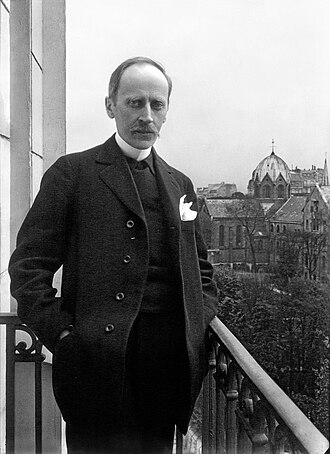 Romain Rolland
"[explaining to Ernie how April apologized to him] She just showed up at the factory, took off her coat, and begged me to take her. We made love in a way that Ive only ever seen in nature films."
 MouseHunt (film)
"Love is always love, come whence it may. A heart that beats at your approach, an eye that weeps when you go away are things so rare, so sweet, so precious that they must never be despised."
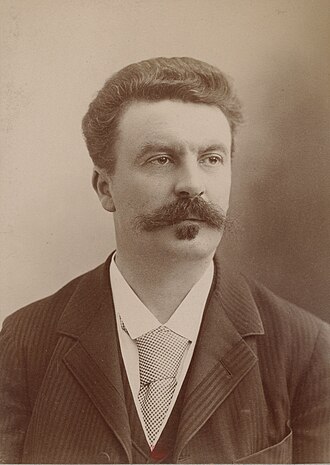 Guy de Maupassant
"He was obeyed, yet he inspired neither love nor fear, nor even respect. He inspired uneasiness. That was it! Uneasiness. Not a definite mistrust — just uneasiness — nothing more. You have no idea how effective such a... a... faculty can be. He had no genius for organizing, for initiative, or for order even. That was evident in such things as the deplorable state of the station. He had no learning, and no intelligence. His position had come to him — why? Perhaps because he was never ill . . . He had served three terms of three years out there . . . Because triumphant health in the general rout of constitutions is a kind of power in itself."