SHAWORDS

They had left him for dead in the middle of a pool of blood in his own — Mickey Spillane

"They had left him for dead in the middle of a pool of blood in his own bedroom, his belly slit open like gaping barn doors, the hilt of the knife wedged against his sternum. But the only trouble was that he had stayed alive somehow, his life pumping out, managing to knock the telephone off the little table and dial me. Now he was looking up at me with seconds left and all he could do was force out the words, "Mike ...there was no reason."
M
Mickey Spillane
Mickey Spillane
author57 quotes

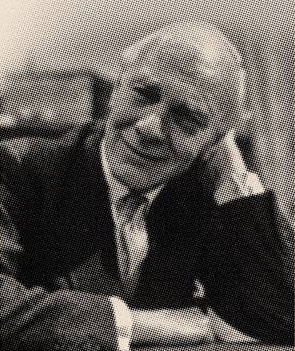
Frank Morrison Spillane, better known as Mickey Spillane, was an American crime novelist, called the "king of pulp fiction". He was best known for stories featuring his signature detective character, Mike Hammer.

More by Mickey Spillane

View all →
Quote
"The little guys face was a bloody mess. Between the puffballs of blue-black flesh that used to be eyelids, the dull gleam of shock-deadened pupils watched Dilwick uncomprehendingly. His lips were swollen things of lacerated skin, with slow trickles of blood making crooked paths from the corners of his mouth through the stubble of a beard to his chin, dripping onto a stained shirt. Dilwick stood just outside the glare of the lamp, dangling like the Sword of Damocles over the guys head. He was sweating too. His shirt clung to the meaty expanse of his huge neck. He pushed his beefy hand further into the leather glove and swung. The solid smack of his open hand on the little guys jaw was nasty. His chair went over backward and his head cracked against the concrete floor of the room like a ripe melon. Dilwick put his hands on his hips and glared down at the caricature that once was human."
M
Mickey Spillane
Quote
"All I saw was the dame standing there in the glare of the headlights waving her arms like a huge puppet and the curse I spit out filled the car and my own ears. I wrenched the wheel over, felt the rear end start to slide, brought it out with a splash of power and almost ran up the side of a cliff as the car fishtailed. The brakes bit in, gouging a furrow in the shoulder, then jumped to the pavement and held. Somehow I had managed a sweeping curve around the babe. For a few seconds she had been living on stolen time because instead of getting out of the way she had tried to stay in the beam of the headlights. I sat there and let myself shake. The butt that had fallen out of my mouth had burned a hole in the leg of my pants and I flipped it out the window. The stink of burned rubber and brake lining hung in the air like smoke and I was thinking of every damn thing I ever wanted to say to a hairbrained woman so I could have it ready when I got my hands on her. That was as far as I got. She was there in the car beside me, the door slammed shut and she said, "Thanks, mister."
M
Mickey Spillane
Quote
"The temperature was six below zero and it kept me dying on the spot because the blood coagulated and clotted in ugly smears of cloth and skin and the pain hadnt started yet, so when the little fat guy who saw my eyes open and still bright pulled me away from the carnage he was almost in the shock I was going into. Nobody would listen to him. He was a drunk. I was nearly dead. Sometimes the body responds to a stimulus that cant be explained. He got me upright. I walked woodenly, dyingly. I was sat in an old car. The fat man rolled down the windows. The blood stayed frozen. My hands were numb and I couldnt feel my feet. Idly, I wondered what frostbite was like. Breathing was a thing that was happening, but at a pace that said it could slow, then stop at any time. A dull, squeezing sensation of pain was beginning to gnaw on my insides and I knew that eventually, and very soon, it would grow into a terrible, devastating animal with an awful hunger and I would be eaten alive by it. I wanted to scream but nothing would come out."
M
Mickey Spillane

More on Life

View all →
Quote
"If it fulfills our hopes, this center will be, at once, a symbol and a reflection and a hope. It will symbolize our belief that the world of creation and thought are at the core of all civilization. Only recently in the White House we helped commemorate the 400th anniversary of Shakespeare. The political conflicts and ambitions of his England are known to the scholar and to the specialist. But his plays will forever move men in every corner of the world. The leaders that he wrote about live far more vividly in his words than in the almost forgotten facts of their own rule. Our civilization, too, will largely survive in the works of our creation. There is a quality in art which speaks across the gulf dividing man from man and nation from nation, and century from century. That quality confirms the faith that our common hopes may be more enduring than our conflicting hostilities. Even now men of affairs are struggling to catch up with the insights of great art. The stakes may well be the survival of civilization. The personal preferences of men in government are not important--except to themselves. However, it is important to know that the opportunity we give to the arts is a measure of the quality of our civilization. It is important to be aware that artistic activity can enrich the life of our people, which really is the central object of Government. It is important that our material prosperity liberate and not confine the creative spirit."
L
Lyndon B. Johnson
Quote
"I did not go to join Kurtz there and then. I did not. I remained to dream the nightmare out to the end, and to show my loyalty to Kurtz once more. Destiny. My destiny! Droll thing life is — that mysterious arrangement of merciless logic for a futile purpose. The most you can hope from it is some knowledge of yourself — that comes too late — a crop of unextinguishable regrets. I have wrestled with death. It is the most unexciting contest you can imagine. It takes place in an impalpable grayness, with nothing underfoot, with nothing around, without spectators, without clamor, without glory, without the great desire of victory, without the great fear of defeat, in a sickly atmosphere of tepid skepticism, without much belief in your own right, and still less in that of your adversary. If such is the form of ultimate wisdom, then life is a greater riddle than some of us think it to be. I was within a hairs-breadth of the last opportunity for pronouncement, and I found with humiliation that probably I would have nothing to say. This is the reason why I affirm that Kurtz was a remarkable man. He had something to say. He said it. Since I had peeped over the edge myself, I understand better the meaning of his stare, that could not see the flame of the candle, but was wide enough to embrace the whole universe, piercing enough to penetrate all the hearts that beat in the darkness. He had summed up — he had judged. The horror! He was a remarkable man. After all, this was the expression of some sort of belief; it had candor, it had conviction, it had a vibrating note of revolt in its whisper, it had the appalling face of a glimpsed truth — the strange commingling of desire and hate."
H
Heart of Darkness