Quote
"This is that which We have revealed for the First Believer in Him Whom God shall make manifest, that it may serve as an admonition from Our presence unto all mankind."
B
Báb"This is a letter from God, the Help in Peril, the Self-Subsisting, unto God, the Almighty, the Best Beloved, to affirm that the Bayán and such as bear allegiance to it are but a present from me unto Thee and to express my undoubting faith that there is no God but Thee, that the kingdoms of Creation and Revelation are Thine, that no one can attain anything save by Thy power and that He Whom Thou hast raised up is but Thy servant and Thy Testimony."
The Báb was an Iranian religious leader who founded Bábism, and is also one of the central figures of the Baháʼí Faith. The Báb gradually and progressively revealed his claim in his extensive writings to be a Manifestation of God, of a status as great as Moses, Jesus, and Muhammad, receiving revelations as profound as the Torah, Gospel, and Quran. This new revelation, he claimed, would release the
"This is that which We have revealed for the First Believer in Him Whom God shall make manifest, that it may serve as an admonition from Our presence unto all mankind."
"Know thou of a certainty that every letter revealed in the Bayán is solely intended to evoke submission unto Him Whom God shall make manifest, for it is He Who hath revealed the Bayán prior to His Own manifestation."
"It behooveth you to proclaim the Cause of God unto all created things as a token of grace from His presence; no God is there but Him, the Most Generous, the All-Compelling."
"By My life! But for the obligation to acknowledge the Cause of Him Who is the Testimony of God … I would not have announced this unto thee... All the keys of heaven God hath chosen to place on My right hand, and all the keys of hell on My left..."
"The revelation of the Divine Reality hath everlastingly been identical with its concealment and its concealment identical with its revelation That which is intended by ‘Revelation of God’ is the Tree of divine Truth that betokeneth none but Him, and it is this divine Tree that hath raised and will raise up Messengers, and hath revealed and will ever reveal Scriptures From eternity unto eternity this Tree of divine Truth hath served and will ever serve as the throne of the revelation and concealment of God among His creatures, and in every age is made manifest through whomsoever He pleaseth At the time of the revelation of the Qur’án He asserted His transcendent power through the advent of Muhammad, and on the occasion of the revelation of the Bayán He demonstrated His sovereign might through the appearance of the Point of the Bayán, and when He Whom God shall make manifest will shine forth, it will be through Him that He will vindicate the truth of His Faith, as He pleaseth, with whatsoever He pleaseth and for whatsoever He pleaseth He is with all things, yet nothing is with Him He is not within a thing nor above it nor beside it Any reference to His being established upon the throne implieth that the Exponent of His Revelation is established upon the seat of transcendent authority He hath everlastingly existed and will everlastingly continue to exist He hath been and will ever remain inscrutable unto all men, inasmuch as all else besides Him have been and shall ever be created through the potency of His command He is exalted above every mention or praise and is sanctified beyond every word of commendation or every comparison No created thing comprehendeth Him, while He in truth comprehendeth all things Even when it is said ‘no created thing comprehendeth Him’, this refers to the Mirror of His Revelation, that is Him Whom God shall make manifest Indeed too high and exalted is He for anyone to allude unto Him"
"I render thanks and yield praise unto God for having been chosen by Him as the Exponent of His Cause in bygone days and in the days to come; there is none other God save Him, the Glorified, the All-Praised, the Ever-Abiding. Whatever is in the heavens and on the earth is His and through Him are we guided aright."
"At one point a heated discussion arose over the possible interpretation of Lolita as a grandiose metaphor of the classic Europeans hopeless love for young, seductive, barbaric America. In his afterword to the novel Nabokov himself mentions this as the naive theory of one of the publishers who turned the book down. And although there cant be the slightest doubt that Nabokov did not mean to limit Lolita to that interpretation, there is no reason to exclude it as one of the novels many dimensions. The point, I felt, became obvious when one drew the line between Lolita as a delightfully frivolous story on the verge of pornography and Lolita as a literary masterpiece, the only convincing love story of our century."
 Lolita
"Lovely food, for rabbits, that is."
"One makes mistakes; that is life. But it is never a mistake to have loved."
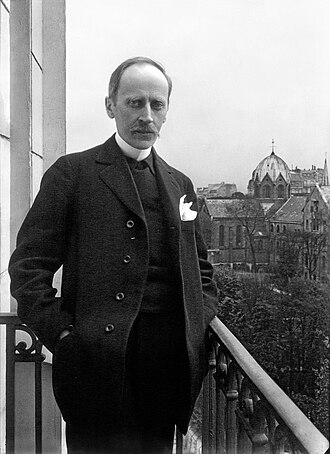 Romain Rolland
"[explaining to Ernie how April apologized to him] She just showed up at the factory, took off her coat, and begged me to take her. We made love in a way that Ive only ever seen in nature films."
 MouseHunt (film)
"Love is always love, come whence it may. A heart that beats at your approach, an eye that weeps when you go away are things so rare, so sweet, so precious that they must never be despised."
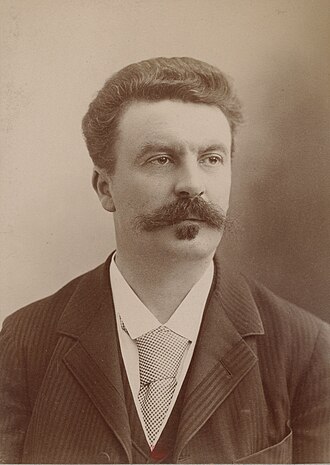 Guy de Maupassant
"He was obeyed, yet he inspired neither love nor fear, nor even respect. He inspired uneasiness. That was it! Uneasiness. Not a definite mistrust — just uneasiness — nothing more. You have no idea how effective such a... a... faculty can be. He had no genius for organizing, for initiative, or for order even. That was evident in such things as the deplorable state of the station. He had no learning, and no intelligence. His position had come to him — why? Perhaps because he was never ill . . . He had served three terms of three years out there . . . Because triumphant health in the general rout of constitutions is a kind of power in itself."