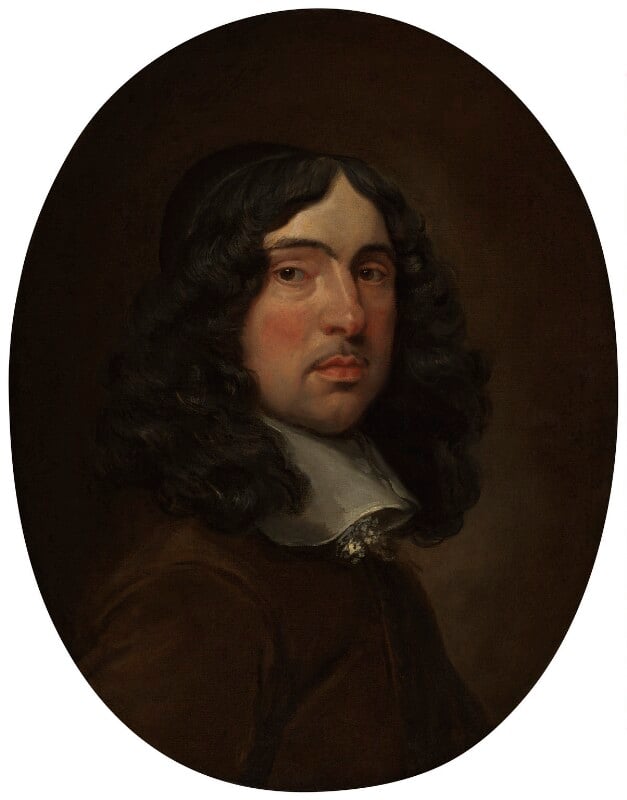
"I soon perceived that she possessed in combination, the qualities which in all other persons whom I had known I had been only too happy to find singly. In her, complete emancipation from every kind of superstition (including that which attributes a pretended perfection to the order of nature and the universe), and an earnest protest against many things which are still part of the established constitution of society, resulted not from the hard intellect, but from strength of noble and elevated feeling, and co-existed with a highly reverential nature."
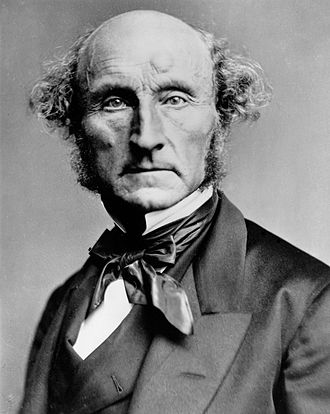
Those only are happy (I thought) who have their minds fixed on some ob — John Stuart Mill
"Those only are happy (I thought) who have their minds fixed on some object other than their own happiness; on the happiness of others, on the improvement of mankind, even on some art or pursuit, followed not as a means, but as itself an ideal end. Aiming thus at something else, they find happiness by the way."

John Stuart Mill was an English philosopher, political economist, politician and civil servant. One of the most influential thinkers in the history of liberalism and social liberalism, he contributed widely to social theory, political theory, and political economy. Dubbed "the most influential English-speaking philosopher of the nineteenth century" by the Stanford Encyclopedia of Philosophy, he co
View all quotes by John Stuart MillMore by John Stuart Mill
View all →"I well knew that to propose something which would be called extreme, was the true way not to impede but to facilitate a more moderate experiment."
"As every reader of Representative Government soon discovers, it was Mill himself who undermined his own argument for universal inclusion by posing a counterargument based on consideration of competence. In the course of his discussion, he explicitly asserted that the criterion of competence must take priority over any principle, whether categorical or utilitarian, that makes inclusion in the demos a matter of general right among all adults subject to the laws... Mill brought into the open a problem that had been glossed over by some of his most illustrious predecessors. Yet in justifying an exclusionary demos Mill did no more than make implicit what had generally been implicit in all previous democratic theory and practice."
"No one has ever been so right about so many things so much of the time as John Stuart Mill."
"We are far too apt to think of Mill as a technically philosophical writer, because we cannot help thinking of him as the author of the Logic, and to forget that he, no less than Bentham and the other utilitarians, is primarily dominated by the practical interest of the social reformer. He is really far more interested in the question of how, “once the general happiness is recognized as the ethical standard,” this ideal is to be practically realized, than in the question of the ethical criterion and its proof."
"For passionate emotions of all sorts, and for everything which has been said or written in exaltation of them, he professed the greatest contempt. He regarded them as a form of madness. "The intense" was with him a bye-word of scornful disapprobation. He regarded as an aberration of the moral standard of modern times, compared with that of the ancients, the great stress laid upon feeling."
More on Happiness
View all →"Ah well, towards happiness others will lead me With their tresses knotted to the horns of my brow: You know, my passion, that purple and just ripe, The pomegranates burst and murmur with bees; And our blood, aflame for her who will take it, Flows for all the eternal swarm of desire."
"In the life of each of us, I said to myself, there is a place remote and islanded, and given to endless regret or secret happiness."
"True love is timid, as it knew its worth, And that such happiness is scarce for earth."
"People ... become so preoccupied with the means by which an end is achieved, as eventually to mistake it for the end. Just as money, which is a means of satisfying wants, comes to be regarded by a miser as the sole thing to be worked for, leaving the wants unsatisfied; so the conduct men have found preferable because most conducive to happiness, has come to be thought of as intrinsically preferable: not only to be made a proximate end (which it should be), but to be made an ultimate end, to the exclusion of the true ultimate end."
"Meanwhile the mind from pleasure less Withdraws into its happiness; The mind, that ocean where each kind Does straight its own resemblance find; Yet it creates, transcending these, Far other worlds, and other seas; Annihilating all thats made To a green thought in a green shade."
"Also, for more understanding, this blessed word was said: Lo, how I loved thee! Behold and see that I loved thee so much ere I died for thee that I would die for thee; and now I have died for thee and suffered willingly that which I may. And now is all my bitter pain and all my hard travail turned to endless joy and bliss to me and to thee. How should it now be that thou shouldst anything pray that pleaseth me but that I should full gladly grant it thee? For my pleasing is thy holiness and thine endless joy and bliss with me. This is the understanding, simply as I can say it, of this blessed word: Lo, how I loved thee. This shewed our good Lord for to make us glad and merry."