Quote
"Out of the crooked timber of humanity, no straight thing was ever made."
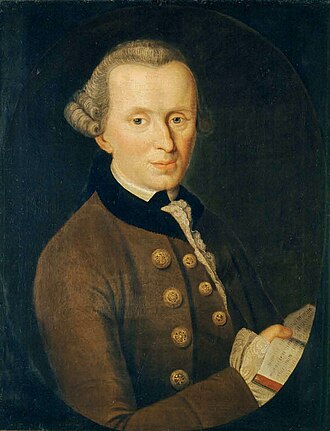 Immanuel Kant
"To a high degree we are, through art and science, cultured. We are civilized — perhaps too much for our own good — in all sorts of social grace and decorum. But to consider ourselves as having reached morality — for that, much is lacking. The ideal of morality belongs to culture; its use for some simulacrum of morality in the love of honor and outward decorum constitutes mere civilization. So long as states waste their forces in vain and violent self-expansion, and thereby constantly thwart the slow efforts to improve the minds of their citizens by even withdrawing all support from them, nothing in the way of a moral order is to be expected. For such an end, a long internal working of each political body toward the education of its citizens is required. Everything good that is not based on a morally good disposition, however, is nothing but pretense and glittering misery. In such a condition the human species will no doubt remain until, in the way I have described, it works its way out of the chaotic conditions of its international relations."
Immanuel Kant was a German philosopher. Born in Königsberg in the Kingdom of Prussia, he is considered one of the central thinkers of the Enlightenment. His comprehensive and systematic works in epistemology, metaphysics, logic, ethics, aesthetics, political theory, and the philosophy of religion have made him one of the most influential and highly discussed figures in modern Western philosophy.
Immanuel Kant was a German philosopher. Born in Königsberg in the Kingdom of Prussia, he is considered one of the central thinkers of the Enlightenment. His comprehensive and systematic works in epistemology, metaphysics, logic, ethics, aesthetics, political theory, and the philosophy of religion have made him one of the most influential and highly discussed figures in modern Western philosophy.
View all quotes by Immanuel Kant"Out of the crooked timber of humanity, no straight thing was ever made."
Immanuel Kant"Nature does nothing in vain, and in the use of means to her goals she is not prodigal. Her giving to man reason and the freedom of the will which depends upon it is clear indication of her purpose. Man accordingly was not to be guided by instinct, not nurtured and instructed with ready-made knowledge; rather, he should bring forth everything out of his own resources."
Immanuel Kant"The means employed by Nature to bring about the development of all the capacities of men is their antagonism in society, so far as this is, in the end, the cause of a lawful order among men."
Immanuel Kant"Mans greatest concern is to know how he shall properly fill his place in the universe and correctly understand what he must be in order to be a man."
Immanuel Kant"Immanuel Kant was the first hippie in history."
Immanuel Kant"Religion is too important a matter to its devotees to be a subject of ridicule. If they indulge in absurdities, they are to be pitied rather than ridiculed."
Immanuel Kant"At one point a heated discussion arose over the possible interpretation of Lolita as a grandiose metaphor of the classic Europeans hopeless love for young, seductive, barbaric America. In his afterword to the novel Nabokov himself mentions this as the naive theory of one of the publishers who turned the book down. And although there cant be the slightest doubt that Nabokov did not mean to limit Lolita to that interpretation, there is no reason to exclude it as one of the novels many dimensions. The point, I felt, became obvious when one drew the line between Lolita as a delightfully frivolous story on the verge of pornography and Lolita as a literary masterpiece, the only convincing love story of our century."
 Lolita
"Lovely food, for rabbits, that is."
"One makes mistakes; that is life. But it is never a mistake to have loved."
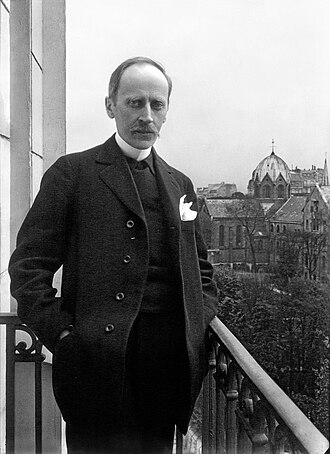 Romain Rolland
"[explaining to Ernie how April apologized to him] She just showed up at the factory, took off her coat, and begged me to take her. We made love in a way that Ive only ever seen in nature films."
 MouseHunt (film)
"Love is always love, come whence it may. A heart that beats at your approach, an eye that weeps when you go away are things so rare, so sweet, so precious that they must never be despised."
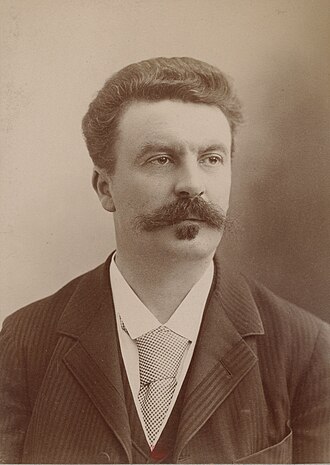 Guy de Maupassant
"He was obeyed, yet he inspired neither love nor fear, nor even respect. He inspired uneasiness. That was it! Uneasiness. Not a definite mistrust — just uneasiness — nothing more. You have no idea how effective such a... a... faculty can be. He had no genius for organizing, for initiative, or for order even. That was evident in such things as the deplorable state of the station. He had no learning, and no intelligence. His position had come to him — why? Perhaps because he was never ill . . . He had served three terms of three years out there . . . Because triumphant health in the general rout of constitutions is a kind of power in itself."