Quote
"Dangers await only those who do not react to life."
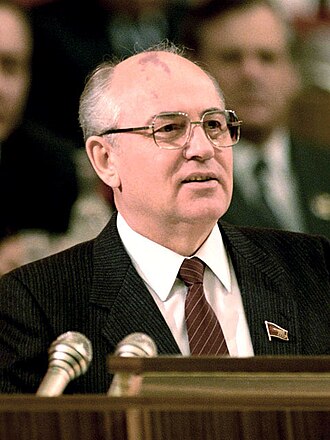 Mikhail Gorbachev
"To me, it is self-evident that if Soviet perestroika succeeds, there will be a real chance of building a new world order. And if perestroika fails, the prospect of entering a new peaceful period in history will vanish, at least for the foreseeable future. I believe that the movement that we have launched towards that goal has fairly good prospects of success. After all, mankind has already benefited greatly in recent years, and this has created a certain positive momentum."
Mikhail Sergeyevich Gorbachev was a Soviet and Russian politician who was the last leader of the Soviet Union from 1985 until the country's dissolution in 1991. He served as General Secretary of the Communist Party from 1985, and additionally as head of state from 1988. Ideologically, he initially adhered to Marxism–Leninism, but moved towards social democracy by the early 1990s.
"Dangers await only those who do not react to life."
Mikhail Gorbachev"If what you have done yesterday still looks big to you, you havent done much today."
Mikhail Gorbachev"Gorbachevs political views were more audacious. Unlike Deng Xiaoping, who, after the chaos of the Cultural Revolution, was obsessed with stability and ruled out democratic reforms, Gorbachev linked perestroika with a policy of glasnost (openness). Taking aim at the USSRs encrusted ruling party and bureaucracy, Gorbachev adopted a stillborn project of Andropovs to reduce their power by introducing new- even Western- ideas into the Soviet environment and engaging the Soviet population in modernizing the country. He went so far as to authorize the opening of the records of Soviet history, including its darkest moments, which ignited an explosion of criticism reaching back to Lenins rule. To be sure, Gorbachevs purpose was to preserve the communist system by revitalizing it from above, but by combining perestroika with glasnost the Soviet leader risked unleashing forces he was ultimately unable to control. Gorbachev was even more daring in his foreign policy because he believed that the relaxation of international tensions was indispensable to his political reforms at home. Convinced that the Soviet Unions greatest threat was nuclear war but that its huge military budget was unsupportable, he intended to achieve security by scaling down the global rivalry between Moscow and Washington and reviving détente. After assembling a group of like-minded liberal internationalists, among them the new foreign minister, Eduard Shevardnadze, and his foreign policy adviser, Anatoly Chernyaev, Gorbachev boldly embarked on a step-by-step program of reducing the USSRs isolation and reaching out to the other side, which included Western Europe, Japan, and China as well as the United States."
Mikhail Gorbachev"Few Soviet citizens lamented Gorbachëv’s going. His policies had ruined the economy and smashed the state into fragments. His critics showed him no mercy. This was ungenerous of them since without his introduction of glasnost and perestroika they could never have had the opportunity to calumniate him. Abroad, he was better respected. His disinclination to halt the decommunisation of eastern Europe by force was widely admired. His primary role in the ending of the Cold War was rightly esteemed. There had been many times when a different General Secretary would have called upon the armed forces and the KGB and reversed the reform programme. Yet the verdict on him has to take account of his inability to understand the nature of the Soviet order. He had genuinely believed that the USSR could be reformed and still remain communist. He had a passion for a democratic, humanitarian Lenin who had never existed in history."
Mikhail Gorbachev"President Gorbachev’s achievements were truly great and historic. Not only did he dissolve the Soviet Union more or less peacefully, but he also prevented a major civil war that could have escalated into a nuclear conflict. I sincerely hope that historians in the future will honor the major achievements and statesmanship of President Gorbachev and of the other leading Soviet politicians of that time."
Mikhail Gorbachev"I consider it vitally important to preserve the democratic achievements which have been attained in the last few years. We have paid with all our history and tragic experience for these democratic achievements, and they are not to be abandoned, whatever the circumstances, and whatever the pretexts. Otherwise, all our hopes for the best will be buried."
Mikhail Gorbachev"What say you? It is useless? Ay, I know But who fights ever hoping for success? I fought for lost cause, and for fruitless quest! You there, who are you! — You are thousands! Ah! I know you now, old enemies of mine! Falsehood! Have at you! Ha! and Compromise! Prejudice, Treachery! … Surrender, I? Parley? No, never! You too, Folly, — you? I know that you will lay me low at last; Let be! Yet I fall fighting, fighting still!"
"Ministers who deal with billions of dollars cannot be paid low salaries without risking a system malfunction. Low salaries will not attract able men who are or can be successful in their professions or business. Low salaries will draw in the hypocrites who sweet talk their way into power in the name of public services, but once in charge will show their true colour, and ruin the country. This has happened in many countries."
"In a Thumbnail Sketch here is [the Multiple Drafts theory of consciousness] so far:There is no single, definitive "stream of consciousness," because there is no central Headquarters, no Cartesian Theatre where "it all comes together" for the perusal of a Central Meaner. Instead of such a single stream (however wide), there are multiple channels in which specialist circuits try, in parallel pandemoniums, to do their various things, creating Multiple Drafts as they go. Most of these fragmentary drafts of "narrative" play short-lived roles in the modulation of current activity but some get promoted to further functional roles, in swift succession, by the activity of a virtual machine in the brain. The seriality of this machine (its "von Neumannesque" character) is not a "hard-wired" design feature, but rather the upshot of a succession of coalitions of these specialists.The basic specialists are part of our animal heritage. They were not developed to perform peculiarly human actions, such as reading and writing, but ducking, predator-avoiding, face-recognizing, grasping, throwing, berry-picking, and other essential tasks. They are often opportunistically enlisted in new roles, for which their talents may more or less suit them. The result is not bedlam only because the trends that are imposed on all this activity are themselves part of the design. Some of this design is innate, and is shared with other animals. But it is augmented, and sometimes even overwhelmed in importance, by microhabits of thought that are developed in the individual, partly idiosyncratic results of self-exploration and partly the predesigned gifts of culture. Thousands of memes, mostly borne by language, but also by wordless "images" and other data structures, take up residence in an individual brain, shaping its tendencies and thereby turning it into a mind."
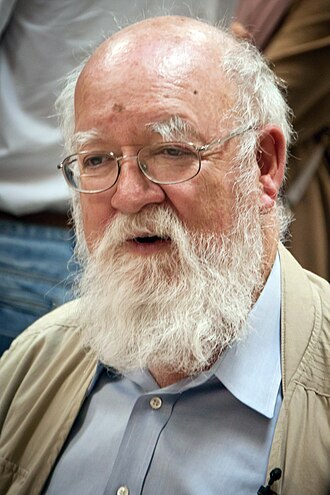 Daniel Dennett
"We recognize that in the reconstruction of most things – national, international, social, political – he is destined to play a commanding part. ... Its looks as if he were fated, despite his reluctance – for he is a modest man and his ambition, whatever it may be, is carefully concealed – to be a Saviour of Society, as well as an Organizer of Victory."
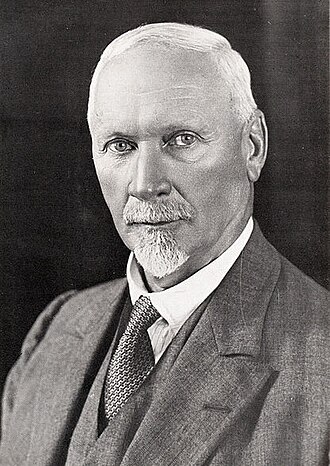 Jan Smuts
"I am speechless about the idea of putting music fans in jail for downloading music. It is wrong to illegally download, but the answer cannot be jail. Here in America we create new opportunities out of adversity, not punitive laws, and we should look to new technologies like Apples new Music Store for solutions. This way, innovation continues to be the hallmark of America. It is the fans that drive the success of the music business."
"We foreign journalists in Moscow used to amuse ourselves, as a matter of fact, by competing with one another as to who could wish upon one of these intelligentsia visitors to the USSR the most outrageous fantasy…One story I floated myself, for which I received considerable acclaim, was that the huge queues outside food shops came about because the Soviet workers were so ardent in building Socialism that they just wouldnt rest, and the only way the government could get them to rest for even two or three hours was organizing a queue for them to stand in. I laugh at it all now, but at the time you can imagine what a shock it was to someone like myself, who had been brought up to regard liberal intellectuals as the samurai, the absolute elite, of the human race, to find that they could be taken in by deceptions which a half-witted boy would see through in an instant…I could never henceforth regard the intelligentsia as other than credulous fools who nonetheless became the medias prophetic voices, their heirs and successors remaining so still."
 Malcolm Muggeridge