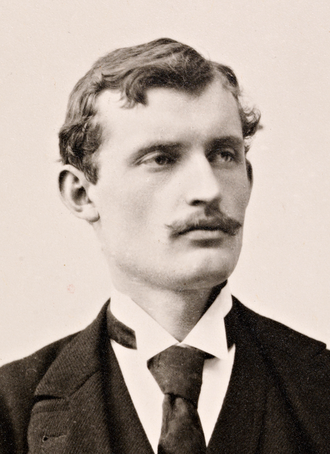
"The Journal of Marie Bashkirtseff. Her thoughts enter my bloodstream and make me very sad. I say as she doers: if only I could accomplish something! My existence seems humiliating to me. We dont have the right to strut around, not until weve made something of ourselves."
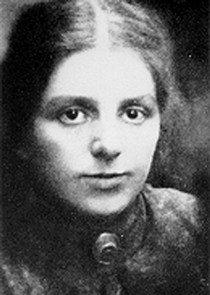
Today I painted my first plain air portrait at the clay pit, a little — Paula Modersohn-Becker
"Today I painted my first plain air portrait at the clay pit, a little blond and blue-eyed girl. The way the little thing stood in the yellow sand was simply beautiful – a bright and shimmering thing to see. It made my heart leap. Painting people is indeed more beautiful than painting a landscape. I suppose you can notice that I am dead-tired, after this long day of hard work, cant you? But inside I am so peaceful and happy.."

Paula Modersohn-Becker was a German Expressionist painter and draftswoman of the late 19th and early 20th centuries. She is noted for the many self-portraits, including nudes. She is considered one of the most important representatives of early expressionism, producing more than 700 paintings and over 1000 drawings during her active painting life. She is recognized both as the first known woman pa
View all quotes by Paula Modersohn-BeckerMore by Paula Modersohn-Becker
View all →"I paint all day. First Becka Brotmann with her loose yellow hair and just a suggestion of dahlias in the background. Then I painted Anni Brotmann at the clay pit, where the sun nearly baked us. In the afternoon I painted Rieke Gefken holding red lilies. I think it is the best thing Ive done so far – Ill show it to Mackensen [her teacher in Worpswede] tomorrow. I spent another hour with Vogeler, yesterday.. ..he showed us a sketchbook full of his ideas for etchings.. ..many really fine and original things."
"Someday I must be able to paint truly remarkable colors. Yesterday I held in my lap a wide, silver-gray satin ribbon, which I edged with two narrower black, patterned silk ribbons. And I placed on top of these a plump, bottle-green velvet bow. Id like to be able to paint something one day in those colors.."
"I sketched a young mother with her child at her breast, sitting in a smoky hut. If only I could someday paint what I felt then. A sweet woman, an image of charity. She was nursing her big, year-old bambino.. .And the woman gave her life and her youth and her power tot the child in utter simplicity, unaware that she was a heroine."
"Nature is supposed to become greater to me than people. It ought to speak louder from me. I should feel small in the face of natures enormity. That is the way Mackensen [her teacher, painter in Worpswede] thinks it should be. That is the alpha and omega of all critique. What I should learn, he says, is a more devout representation of nature. It seems that I let my own insignificant person step to the forefront too much."
"Today I saw an exhibition of old Japanese paintings and sculpture [in Paris]. I was seized by the great strangeness of these things. It makes our own art seem all the more conventional to me. Our art is very meager in expressing the emotions we have inside. Old Japanese art seems to have a better solution for that.. .We must put more weight on the fundamentals!! When I took my eyes from these pictures and began looking at the people around me, I suddenly saw that human being are more remarkable, much more striking and surprising than they have been painted. A sudden realization like that comes only at moments."
More on Pain
View all →"The only influences in [the painting The sick Child, Munch painted in his elderly home, remembering very accurate the last days of his dying little sister Sophie] The sick Child.. ..were the ones that come from my home.. ..my childhood and my home. Only someone who knew the conditions at home could possibly understand why there can be no conceivable chance of any other place having played a part – my home is to my art as a midwife is to her children.. ..few painters have ever experienced the full grief of their subject as I did in The sick child. It was not just I who was suffering; it was all my nearest and dearest as well."
"General Franco made it clear that Spain could enter the war only when England was about ready to collapse."
"The Spanish Republic did not find itself free of obligations. For the most part the leaders were Freemasons. Before their duty to their country came their obligations to the Grand Orient. In my opinion, Freemasonry, with all its international influence, is the organization principally responsible for the political ruin of Spain, as well as the murder of Calvo Sotelo, who was executed in accordance with orders from the Grand Secretary of Freemasonry in Geneva."
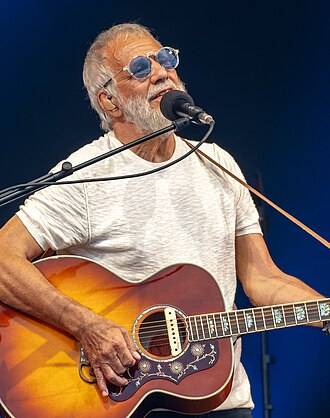
"Art was what I originally started out to do and music came second at first. I had a year at art college but I left because it was too much like school. I give all my paintings away to people I like."
"Lady Cannons gone to a matinée at the St. Jamess. We had tickets for the first night, but of course she wouldnt use them then. She preferred to go alone in the afternoon, because she detests the theatre, anyhow, and afternoon performances give her a headache. If she does a thing thats disagreeable to her, she likes to do it in the most painful possible way. She has a beautiful nature."
"At first when I saw The Sick Child [in his imagination] her pallid face and the vivid red hair against the pillow – I saw something that vanished when I tried to paint it. I ended up with a picture on the canvas which, although I was pleased with it, bore little relationship to what I had seen.. ..In the space of that year [1885 – 1886], scratching it out, just letting the paint flow, endlessly I tried to recapture what I had seen for the first time – the pale transparent skin against the linen sheets, the trembling lips, the shaking hands. I repainted the painting numerous times – scratched it out – let it become blurred in the medium – and tried again and again to catch the first impression – the transparent pale skin against the canvas – the trembling mouth – the trembling hands. I had done the chair [in which his sister Sophie had died] with the glass too often. It distracted me from doing the head. – When I saw the picture I could only make out the glass and the surroundings. – Should I remove it completely? – No, it had the effect of giving depth and emphasis to the head. – I scared off half the background and left everything in masses – one could now see past and across the head and the glass.. .I had achieved much of that first impression, the trembling mouth – the transparent skin – the tired eyes – but the picture was not finished in its colour – it was pale grey – the picture was then heavy as lead. [Munch showed the painting on the Autumn Exhibition 18 October 1886; it was criticized severely, even by his bohemian art-friend Jager]"