Quote
"Seventy years ago this November, Vladimir Lenin created the modern totalitarian state, transforming simpler forms of tyranny into historys most sophisticated apparatus of rule by terror."
M
Michael Johns"Ultimately, in its collapse, Laos was important because it proved the validity of the so-called domino theory, which preached that communism--once victorious in South Vietnam--would metastasize throughout the region. Laos, like Cambodia, proved the domino theorists correct. On August 23, 1975, just four months after Saigons fall, communist Pathet Lao (meaning "Land of Lao") guerrillas entered the Laotian capital of Vientiane and seized control of the nation. It was an event that, while clearly destructive to American interests in Asia, served as something of a wake-up call to those American isolationists who had downplayed the regional threat of communism. It also ushered in a horrid era for this nations 4.8 million people."
"Seventy years ago this November, Vladimir Lenin created the modern totalitarian state, transforming simpler forms of tyranny into historys most sophisticated apparatus of rule by terror."
"Up against the ropes in the Iran-Contra affair, Ronald Reagan should have come out swinging, announcing clearly that this government carries itself in the tradition of the Marquis de Lafayette, that freedom fighters will no longer be left to die in the jungle, like Brigade 2506 at the Bay of Pigs."
"While there are periodic calls from lifbertarians and others for the privatization or elimination of the program, given the first political opportunity to dramatically influence the Medicare program, a conservative White House and Congress sought to strengthen, not weaken, the program. To be sure, debates will linger about whether Medicare is too large or too small. Debates remain about the allocation of Medicare dollars. But December 8, 2003, demonstrated that there is no debate on this most fundamental fact: Medicare must survive."
"What, exactly, is the cost of this inaction? Estimates of the total national cost of medical malpractice range from $20 billion to $45 billion annually. But this number hardly tells the whole story. There also is the more hidden cost of defensive medicine, including unnecessary testing and second opinions that send patients scurrying through processes that would not otherwise be ordered and deepen the financial burden of America’s health care system by an estimated three percent of our country’s total health care expenditures. Who ultimately pays these costs? Reckless doctors? Faceless insurance companies? Seldom mentioned, the totality of these expenses ultimately falls exclusively on the consumer, since each malpractice award translates ultimately to increased malpractice insurance premiums, which, in turn, translates to either higher health care costs, fewer physicians (with less competitive pricing pressure), or both."
"The tragedy of Africa seemingly has no end. Viewing it from afar, the casual Western onlooker can be forgiven if the scenes begin to meld: Ethiopian famine in 1987, Somalian civil war and ensuing famine in 1992, and now Central Africa in 1997. The pictures and footage assume the role of media footnotes: snapshots of hopelessness, disaster, and death that seem as far away as the moon and as unrealistic as some science fiction film. Yet, like the African crises before it, the tragedy of Central Africa is very real and, in a global age, perhaps not as distant as some would like to think. With a foreign policy appropriately rooted in some sense of humanitarian decency, the Central African crisis will not be easily ignored by American policymakers. It screams for remedy."
"The breakup of the former Yugoslavia--like the breakup of the former Soviet Union--presents challenges, some of which (such as developing tranquil relations among peoples of varying and often hostile ethnic and religious orientations) may, indeed, earn the label complicated. But with the Bosnian war now in its third year, it is worth asking whether Washington has for too long outthought itself on this issue. Does the Bosnian crisis not hold some fundamental truths? Most certainly, it does. And if these truths could be agreed upon in a bipartisan fashion, might they not lay the foundation for the development of a comprehensive American policy that could assist in the deterrence of aggression and ultimately an assurance of peace in the region? The answer again is yes."
"In the life of the mass-order, the culture of the generality tends to conform to the demands of the average human being. Spirituality decays through being diffused among the masses when knowledge is impoverished in every possible way by rationalisation until it becomes accessible to the crude understanding of all."
"The first thing I remember about the world — and I pray that it may be the last — is that I was a stranger in it. This feeling, which everyone has in some degree, and which is, at once, the glory and desolation of homo sapiens, provides the only thread of consistency that I can detect in my life."
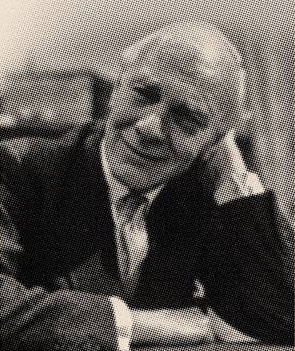 Malcolm Muggeridge
"Jewish custom, which traces descent solely from the mother, is more sensible and more discreet. Our own lawgivers cant accept the fact that there are many things in family life that are best kept shrouded in mystery."
"One makes mistakes; that is life. But it is never a mistake to have loved."
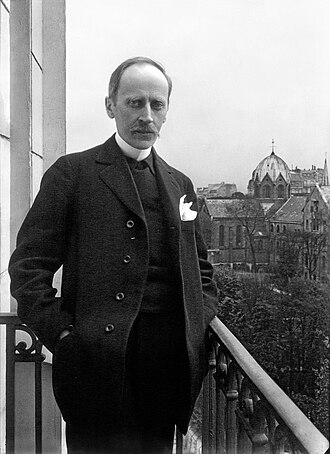 Romain Rolland
"If it fulfills our hopes, this center will be, at once, a symbol and a reflection and a hope. It will symbolize our belief that the world of creation and thought are at the core of all civilization. Only recently in the White House we helped commemorate the 400th anniversary of Shakespeare. The political conflicts and ambitions of his England are known to the scholar and to the specialist. But his plays will forever move men in every corner of the world. The leaders that he wrote about live far more vividly in his words than in the almost forgotten facts of their own rule. Our civilization, too, will largely survive in the works of our creation. There is a quality in art which speaks across the gulf dividing man from man and nation from nation, and century from century. That quality confirms the faith that our common hopes may be more enduring than our conflicting hostilities. Even now men of affairs are struggling to catch up with the insights of great art. The stakes may well be the survival of civilization. The personal preferences of men in government are not important--except to themselves. However, it is important to know that the opportunity we give to the arts is a measure of the quality of our civilization. It is important to be aware that artistic activity can enrich the life of our people, which really is the central object of Government. It is important that our material prosperity liberate and not confine the creative spirit."
"I did not go to join Kurtz there and then. I did not. I remained to dream the nightmare out to the end, and to show my loyalty to Kurtz once more. Destiny. My destiny! Droll thing life is — that mysterious arrangement of merciless logic for a futile purpose. The most you can hope from it is some knowledge of yourself — that comes too late — a crop of unextinguishable regrets. I have wrestled with death. It is the most unexciting contest you can imagine. It takes place in an impalpable grayness, with nothing underfoot, with nothing around, without spectators, without clamor, without glory, without the great desire of victory, without the great fear of defeat, in a sickly atmosphere of tepid skepticism, without much belief in your own right, and still less in that of your adversary. If such is the form of ultimate wisdom, then life is a greater riddle than some of us think it to be. I was within a hairs-breadth of the last opportunity for pronouncement, and I found with humiliation that probably I would have nothing to say. This is the reason why I affirm that Kurtz was a remarkable man. He had something to say. He said it. Since I had peeped over the edge myself, I understand better the meaning of his stare, that could not see the flame of the candle, but was wide enough to embrace the whole universe, piercing enough to penetrate all the hearts that beat in the darkness. He had summed up — he had judged. The horror! He was a remarkable man. After all, this was the expression of some sort of belief; it had candor, it had conviction, it had a vibrating note of revolt in its whisper, it had the appalling face of a glimpsed truth — the strange commingling of desire and hate."