Quote
"Marriage laws, the police, armies and navies are the mark of human incompetence. We have not yet found the right road to conquering ourselves and our environment."
D
Dora Russell"We do not want our world to perish. But in our quest for knowledge, century by century, we have placed all our trust in a cold, impartial intellect which only brings us nearer to destruction. We have heeded no wisdom offering guidance. Only by learning to love one another can our world be saved. Only love can conquer all."
Dora Winifred Russell, Countess Russell was a British author, a feminist and socialist campaigner, and the second wife of the philosopher Bertrand Russell. She was a campaigner for contraception and peace. She worked for the UK-government-funded Moscow newspaper British Ally, and in 1958 she led the "Women's Peace Caravan" across Europe during the Cold War.
Dora Winifred Russell, Countess Russell was a British author, a feminist and socialist campaigner, and the second wife of the philosopher Bertrand Russell. She was a campaigner for contraception and peace. She worked for the UK-government-funded Moscow newspaper British Ally, and in 1958 she led the "Women's Peace Caravan" across Europe during the Cold War.
View all quotes by Dora Russell"Marriage laws, the police, armies and navies are the mark of human incompetence. We have not yet found the right road to conquering ourselves and our environment."
"Humanity will ever seek but never attain perfection. Let us at least survive and go on trying."
"We want better reasons for having children than not knowing how to prevent them. Nor should we represent motherhood as something so common and easy that everyone can go through it without harm or suffering and rear her children competently and well."
"Nothing whatever is to be gained by driving the timorous and weak by lies or compulsion into pain which they will resent and responsibility which they will evade. Everything is to be gained by training a woman in knowledge, courage, and physical strength, and leaving it then to her own instinct and her mind to tell her that to create new human beings is worth the discomfort and the suffering she must necessarily undergo. Those in whom the courage to create survives when choice is free and all the facts are known are those best fitted to bring children into the world, and breed in them eagerness and intrepidity. The others will only pass on fear and distaste for life from which individuals and the community suffer far too much already."
"We have never yet had a Labour Government that knew what taking power really means; they always act like second-class citizens."
"Strictly speaking, no person who believes that wars between classes and nations are inevitable is fit to be in charge of the destiny of children. To believe in the unity of the human race and get children to believe it in early youth would mean the creation of that unity and the end of war."
"At one point a heated discussion arose over the possible interpretation of Lolita as a grandiose metaphor of the classic Europeans hopeless love for young, seductive, barbaric America. In his afterword to the novel Nabokov himself mentions this as the naive theory of one of the publishers who turned the book down. And although there cant be the slightest doubt that Nabokov did not mean to limit Lolita to that interpretation, there is no reason to exclude it as one of the novels many dimensions. The point, I felt, became obvious when one drew the line between Lolita as a delightfully frivolous story on the verge of pornography and Lolita as a literary masterpiece, the only convincing love story of our century."
 Lolita
"Lovely food, for rabbits, that is."
"One makes mistakes; that is life. But it is never a mistake to have loved."
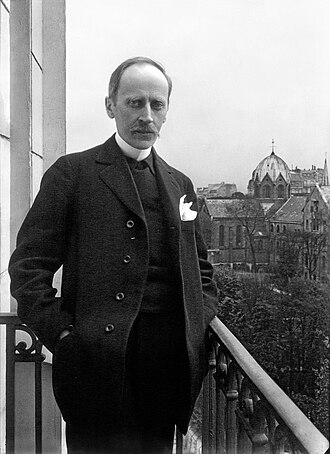 Romain Rolland
"[explaining to Ernie how April apologized to him] She just showed up at the factory, took off her coat, and begged me to take her. We made love in a way that Ive only ever seen in nature films."
 MouseHunt (film)
"Love is always love, come whence it may. A heart that beats at your approach, an eye that weeps when you go away are things so rare, so sweet, so precious that they must never be despised."
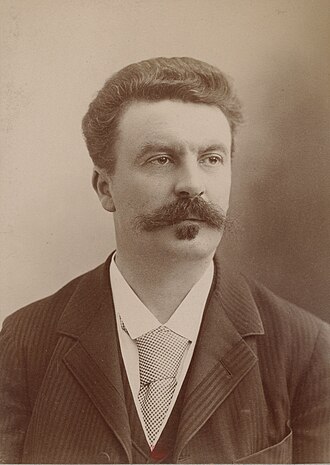 Guy de Maupassant
"He was obeyed, yet he inspired neither love nor fear, nor even respect. He inspired uneasiness. That was it! Uneasiness. Not a definite mistrust — just uneasiness — nothing more. You have no idea how effective such a... a... faculty can be. He had no genius for organizing, for initiative, or for order even. That was evident in such things as the deplorable state of the station. He had no learning, and no intelligence. His position had come to him — why? Perhaps because he was never ill . . . He had served three terms of three years out there . . . Because triumphant health in the general rout of constitutions is a kind of power in itself."