Quote
"Character is the result of a system of stereotyped principles."
D
David Hume"Were a stranger to drop on a sudden into this world, I would show him, as a specimen of its ills, a hospital full of diseases, a prison crowded with malefactors and debtors, a field of battle strewed with carcasses, a fleet foundering in the ocean, a nation languishing under tyranny, famine, or pestilence. To turn the gay side of life to him, and give him a notion of its pleasures; whither should I conduct him? to a ball, to an opera, to court? He might justly think, that I was only showing him a diversity of distress and sorrow."
David Hume was a Scottish philosopher, historian, economist and essayist who is known for his highly influential system of empiricism, philosophical scepticism and metaphysical naturalism. Beginning with A Treatise of Human Nature (1739–40), Hume strove to create a naturalistic science of man that examined the psychological basis of human nature. Hume followed John Locke in rejecting the existence
David Hume was a Scottish philosopher, historian, economist and essayist who is known for his highly influential system of empiricism, philosophical scepticism and metaphysical naturalism. Beginning with A Treatise of Human Nature (1739–40), Hume strove to create a naturalistic science of man that examined the psychological basis of human nature. Hume followed John Locke in rejecting the existence
View all quotes by David Hume"Character is the result of a system of stereotyped principles."
"Truth springs from argument amongst friends."
"I say, then, that belief is nothing but a more vivid, lively, forcible, firm, steady conception of an object, than what the imagination alone is ever able to attain"
"In every page of David Hume, there is more to be learned than from Hegels, Herbarts and Schleiermachers complete philosophical works."
"Tis certainly a kind of indignity to philosophy, whose sovereign authority ought every where to be acknowledgd, to oblige her on every occasion to make apologies for her conclusions, and justify herself to every particular art and science, which may be offended at her."
"The great end of all human industry, is the attainment of happiness. For this were arts invented, sciences cultivated, laws ordained, and societies modelled, by the most profound wisdom of patriots and legislators."
"The only influences in [the painting The sick Child, Munch painted in his elderly home, remembering very accurate the last days of his dying little sister Sophie] The sick Child.. ..were the ones that come from my home.. ..my childhood and my home. Only someone who knew the conditions at home could possibly understand why there can be no conceivable chance of any other place having played a part – my home is to my art as a midwife is to her children.. ..few painters have ever experienced the full grief of their subject as I did in The sick child. It was not just I who was suffering; it was all my nearest and dearest as well."
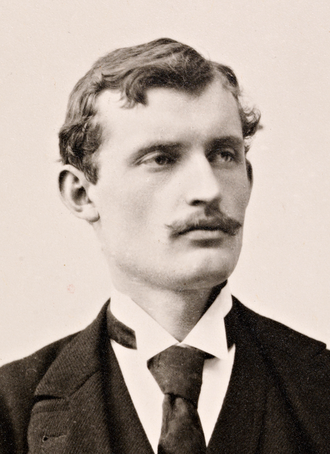 Edvard Munch
"There was a man and he had eight sons. Apart from that, he was nothing more than a comma on the page of History. Its sad, but thats all you can say about some people."
"Im very sad that this seems to be the No. 1 question people want to discuss. I had nothing to do with the issue other than what the media created. I was innocently drawn into the whole controversy. So, after many years, Im glad at least now that I have been given the opportunity to explain to the public and fans my side of the story in my own words. At a lecture, back in 1989, I was asked a question about blasphemy according to Islamic Law, I simply repeated the legal view according to my limited knowledge of the Scriptural texts, based directly on historical commentaries of the Quran. The next day the newspaper headlines read, "Cat Says, Kill Rushdie." I was abhorred, but what could I do? I was a new Muslim. If you ask a Bible student to quote the legal punishment of a person who commits blasphemy in the Bible, he would be dishonest if he didnt mention Leviticus 24:16."
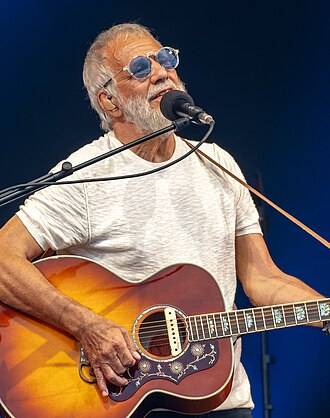 Cat Stevens
"Rhymer, brawler, and musician, Famed for his lunar expedition, And the unnumbered duels he fought, — And lover also, — by interposition! — Here lies Hercule Savinien De Cyrano de Bergerac, Who was everything, yet was naught. I cry you pardon, but I may not stay; See, the moon-ray that comes to call me hence! I would not bid you mourn less faithfully That good, brave Christian: I would only ask That when my body shall be cold in clay You wear those sable mourning weeds for two, And mourn awhile for me, in mourning him."
"We must recognize that there is no indication that Saddam Hussein has any intention of relenting. So we have an obligation of enormous consequence, an obligation to guarantee that Saddam Hussein cannot ignore the United Nations. He cannot be permitted to go unobserved and unimpeded toward his horrific objective of amassing a stockpile of weapons of mass destruction."
"—musics power Is little felt in sunlit hour; But hear its voice when hopes depart, Like swallows, flying from the heart On which the summers late decline Has set a sadness and a sign;. . . . . . How deeply will the spirit feel The lute, the songs sweet-voiced appeal; And how the heart drink in their sighs As echoes they from Paradise."