SHAWORDS

When Socrates was sentenced to death, for his philosophical investigat — Christopher Hitchens

"When Socrates was sentenced to death, for his philosophical investigations and his blasphemy for challenging the Gods of the city and he accepted his death. He did say "well, if were lucky perhaps Ill be able to hold a conversation with other great thinkers and philosophers and doubters too", in other words that the discussion about what is good, what is beautiful, what is noble and what is pure and what is true can always go on. Why is that important, why would I like to do that? Because that is the only conversation worth having. And whether it goes on or not after I die, I dont know, but I do know that it is the conversation I want to have while I am still alive. Which means that for me, the offer of certainty, the offer of complete security, the offer of an impermeable faith that cant give way, is an offer of something not worth having. I want to live my life taking the risk all the time that I dont know anything like enough yet. That I havent understood enough, that I cant know enough, that Im always hungrily operating on the margins of a potentially great harvest of future knowledge and wisdom. I wouldnt have it any other way. And I urge you to look at those of you that tell you (at your age) that that you are dead until you believe as they do. (What a terrible thing to be telling to children.) And that you can only live by accepting an absolute authority. Dont think of that as a gift, think of it as a poison chalice. Push it aside no matter how tempting it is. Take the risk of thinking for yourself. Much more happiness, truth, beauty and wisdom will come to you that way."
When Socrates was sentenced to death, for his philosophical investigations and his blasphemy for challenging the Gods of
C
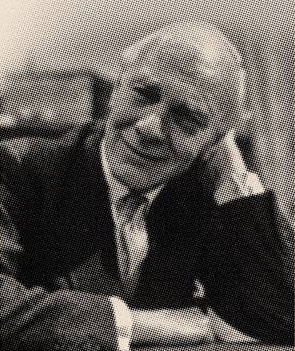
Christopher Hitchens
author237 quotes

Christopher Eric Hitchens was a British and American author and journalist. Known as one of the "Four Horsemen" of New Atheism, he gained prominence as a columnist and speaker. His epistemological razor, which states that "what can be asserted without evidence can also be dismissed without evidence", is used in philosophy and law.

About Christopher Hitchens

Christopher Eric Hitchens was a British and American author and journalist. Known as one of the "Four Horsemen" of New Atheism, he gained prominence as a columnist and speaker. His epistemological razor, which states that "what can be asserted without evidence can also be dismissed without evidence", is used in philosophy and law.

View all quotes by Christopher Hitchens

More by Christopher Hitchens

View all →
Quote
"It is said that Louis Farrakhan’s racist crackpot Nation of Islam and its sectarian gang gets young men off drugs. For all I know it does, it may, but that does not recommend it, to me, nor does it prove anything of its theology. Whereas I can tell you that of the suicide bombing population one hundred percent is faith-based. And I don’t think that in itself disapproves faith, but I think it should make you skeptical of that kind of random sampling. Of the genital mutilation community the same can be said."
C
Christopher Hitchens

More on Life

View all →
Quote
"If it fulfills our hopes, this center will be, at once, a symbol and a reflection and a hope. It will symbolize our belief that the world of creation and thought are at the core of all civilization. Only recently in the White House we helped commemorate the 400th anniversary of Shakespeare. The political conflicts and ambitions of his England are known to the scholar and to the specialist. But his plays will forever move men in every corner of the world. The leaders that he wrote about live far more vividly in his words than in the almost forgotten facts of their own rule. Our civilization, too, will largely survive in the works of our creation. There is a quality in art which speaks across the gulf dividing man from man and nation from nation, and century from century. That quality confirms the faith that our common hopes may be more enduring than our conflicting hostilities. Even now men of affairs are struggling to catch up with the insights of great art. The stakes may well be the survival of civilization. The personal preferences of men in government are not important--except to themselves. However, it is important to know that the opportunity we give to the arts is a measure of the quality of our civilization. It is important to be aware that artistic activity can enrich the life of our people, which really is the central object of Government. It is important that our material prosperity liberate and not confine the creative spirit."
L
Lyndon B. Johnson
Quote
"I did not go to join Kurtz there and then. I did not. I remained to dream the nightmare out to the end, and to show my loyalty to Kurtz once more. Destiny. My destiny! Droll thing life is — that mysterious arrangement of merciless logic for a futile purpose. The most you can hope from it is some knowledge of yourself — that comes too late — a crop of unextinguishable regrets. I have wrestled with death. It is the most unexciting contest you can imagine. It takes place in an impalpable grayness, with nothing underfoot, with nothing around, without spectators, without clamor, without glory, without the great desire of victory, without the great fear of defeat, in a sickly atmosphere of tepid skepticism, without much belief in your own right, and still less in that of your adversary. If such is the form of ultimate wisdom, then life is a greater riddle than some of us think it to be. I was within a hairs-breadth of the last opportunity for pronouncement, and I found with humiliation that probably I would have nothing to say. This is the reason why I affirm that Kurtz was a remarkable man. He had something to say. He said it. Since I had peeped over the edge myself, I understand better the meaning of his stare, that could not see the flame of the candle, but was wide enough to embrace the whole universe, piercing enough to penetrate all the hearts that beat in the darkness. He had summed up — he had judged. The horror! He was a remarkable man. After all, this was the expression of some sort of belief; it had candor, it had conviction, it had a vibrating note of revolt in its whisper, it had the appalling face of a glimpsed truth — the strange commingling of desire and hate."
H
Heart of Darkness