Quote
"Steven Pinker’s mind bristles with pure, crystalline intelligence, deep knowledge and human sympathy. And he writes as he thinks, with a sinewy mot-justery of language which I find irresistible."
S
Steven Pinker"While Pinker elects himself the heir of Enlightenment, his whole approach betrays Enlightenment principles. The very past authorities Pinker invokes did not want to hawk psychic uppers for those in doubt and far more openly advertised the ambivalence of their own belief in progress. They neither claimed that progress was universal nor insisted so monotonously on its indefinite continuation."
Steven Arthur Pinker is a Canadian cognitive psychologist, psycholinguist, popular science author, and public intellectual. He is an advocate of evolutionary psychology and the computational theory of mind. Pinker is the Johnstone Family Professor of Psychology at Harvard University.
"Steven Pinker’s mind bristles with pure, crystalline intelligence, deep knowledge and human sympathy. And he writes as he thinks, with a sinewy mot-justery of language which I find irresistible."
"Stripped to its essentials, every decision in life amounts to choosing which lottery ticket to buy. . . . Most organisms dont buy lottery tickets, but they all choose between gambles every time their bodies can move in more than one way. They should be willing to pay for information---in tissue, energy, and time---if the cost is lower than the expected payoff in food, safety, mating opportunities, and other resources, all ultimately valuated in the expected number of surviving offspring. In multicellular animals the information is gathered and translated into profitable decisions by the nervous system."
"Humans . . . entered the cognitive niche. Remember the definition of intelligence from Chapter 2: using knowledge of how things work to attain goals in the face of obstacles. By learning which manipulations achieve which goals, humans have mastered the art of the surprise attack. They use novel, goal-oriented courses of action to overcome the Maginot Line defenses of other organisms, which can respond only over evolutionary time. The manipulations can be novel because human knowledge is not just couched in concrete instructions like how to catch a rabbit. Humans analyze the world using intuitive theories of objects, forces, paths, places, manners, states, substances, hidden biochemical essences, and, for other animals and people, beliefs and desires. . . . People compose new knowledge and plans by mentally playing out combinatorial interactions among these laws in their minds eye."
"Human beings do not live in the objective world alone, nor alone in the world of social activity as ordinarily understood, but are very much at the mercy of the particular language which has become the medium of expression for their society. It is quite an illusion to imagine that one adjusts to reality essentially without the use of language and that language is merely an incidental means of solving specific problems of communication or reflection. The fact of the matter is that the ‘real world’ is to a large extent unconsciously built up on the language habits of the group... We see and hear and otherwise experience very largely as we do because the language habits of our community predispose certain choices of interpretation."
"Suppose the reasoning centers of the brain can get their hands on the mechanisms that plop shapes into the array and that read their locations out of it. Those reasoning demons can exploit the geometry of the array as a surrogate for keeping certain logical constraints in mind. Wealth, like location on a line, is transitive: if A is richer than B, and B is richer than C, then A is richer than C. By using location in an image to symbolize wealth, the thinker takes advantage of the transitivity of location built into the array, and does not have to enter it into a chain of deductive steps. The problem becomes a matter of plop down and look up. It is a fine example of how the form of a mental representation determines what is easy or hard to think."
"In this piece, Pinker appears to me to change sides almsot completely, from pessimist to optimist and from genetic determinist to social improver. Not only does he present evidence that war and violence are declining in relative importance, his explanation for this seems to be entirely consistent with the Standard Social Science Model he caricatured and debunked in The Blank Slate. He’s still got a sort of rational self-interest model in there, but now Hobbes is invoked, not for his ‘nasty, brutish and short’ state of nature, but for his argument that the Leviathan of social order will suppress violence to the benefit of all."
"At one point a heated discussion arose over the possible interpretation of Lolita as a grandiose metaphor of the classic Europeans hopeless love for young, seductive, barbaric America. In his afterword to the novel Nabokov himself mentions this as the naive theory of one of the publishers who turned the book down. And although there cant be the slightest doubt that Nabokov did not mean to limit Lolita to that interpretation, there is no reason to exclude it as one of the novels many dimensions. The point, I felt, became obvious when one drew the line between Lolita as a delightfully frivolous story on the verge of pornography and Lolita as a literary masterpiece, the only convincing love story of our century."
 Lolita
"I did not go to join Kurtz there and then. I did not. I remained to dream the nightmare out to the end, and to show my loyalty to Kurtz once more. Destiny. My destiny! Droll thing life is — that mysterious arrangement of merciless logic for a futile purpose. The most you can hope from it is some knowledge of yourself — that comes too late — a crop of unextinguishable regrets. I have wrestled with death. It is the most unexciting contest you can imagine. It takes place in an impalpable grayness, with nothing underfoot, with nothing around, without spectators, without clamor, without glory, without the great desire of victory, without the great fear of defeat, in a sickly atmosphere of tepid skepticism, without much belief in your own right, and still less in that of your adversary. If such is the form of ultimate wisdom, then life is a greater riddle than some of us think it to be. I was within a hairs-breadth of the last opportunity for pronouncement, and I found with humiliation that probably I would have nothing to say. This is the reason why I affirm that Kurtz was a remarkable man. He had something to say. He said it. Since I had peeped over the edge myself, I understand better the meaning of his stare, that could not see the flame of the candle, but was wide enough to embrace the whole universe, piercing enough to penetrate all the hearts that beat in the darkness. He had summed up — he had judged. The horror! He was a remarkable man. After all, this was the expression of some sort of belief; it had candor, it had conviction, it had a vibrating note of revolt in its whisper, it had the appalling face of a glimpsed truth — the strange commingling of desire and hate."
"The Spanish Republic did not find itself free of obligations. For the most part the leaders were Freemasons. Before their duty to their country came their obligations to the Grand Orient. In my opinion, Freemasonry, with all its international influence, is the organization principally responsible for the political ruin of Spain, as well as the murder of Calvo Sotelo, who was executed in accordance with orders from the Grand Secretary of Freemasonry in Geneva."
 Francisco Franco
"There can be no Good Will. Will is always Evil; it is persecution to others or selfishness."
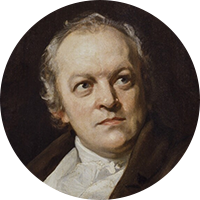 William Blake
"He was obeyed, yet he inspired neither love nor fear, nor even respect. He inspired uneasiness. That was it! Uneasiness. Not a definite mistrust — just uneasiness — nothing more. You have no idea how effective such a... a... faculty can be. He had no genius for organizing, for initiative, or for order even. That was evident in such things as the deplorable state of the station. He had no learning, and no intelligence. His position had come to him — why? Perhaps because he was never ill . . . He had served three terms of three years out there . . . Because triumphant health in the general rout of constitutions is a kind of power in itself."
"Well buy a lot of clothes, but we dont really need em Things we buy to cover up whats inside Cause they made us hate ourself and love their wealth."