Quote
"Out and down in the colonies, life can be indulged, life and sensuality in all its forms, with no harm done to the Metropolis, nothing to soil those cathedrals, white marble statues, noble thoughts."
T
Thomas Pynchon"Write by WASTE. The government will open it if you use the other. The dolphins will be mad. Love the dolphins."
Thomas Ruggles Pynchon Jr. is an American novelist. He is known for his dense, complex works of postmodern fiction, which are distinguished by their paranoid tone, absurd humor, and references to history, art, science, and popular culture. He is widely regarded as one of the greatest American novelists. Pynchon is notoriously reclusive. Few photographs of him have been published, and rumors about
"Out and down in the colonies, life can be indulged, life and sensuality in all its forms, with no harm done to the Metropolis, nothing to soil those cathedrals, white marble statues, noble thoughts."
"You don’t understand,” getting mad. “You guys, you’re like Puritans are about the Bible. So hung up with words, words. You know where that play exists, not in that file cabinet, not in any paperback you’re looking for, but—” a hand emerged from the veil of shower-steam to indicate his suspended head—“in here. That’s what I’m for. To give the spirit flesh. The words, who cares? They’re rote noises to hold line bashes with, to get past the bone barrier around an actor’s memory, right? But the reality is in this head. Mine. I’m the projector at the planetarium, all the closed little universe visible in the circle of that stage is coming out of my mouth, eyes, sometimes other orifices also."
"In Mexico City they somehow wandered into an exhibition of paintings by the beautiful Spanish exile Remedios Varo: in the central painting of a triptych, titled “Bordando el Manto Terrestre,” were a number of frail girls with heart-shaped faces, huge eyes, spun-gold hair, prisoners in the top room of a circular tower, embroidering a kind of tapestry which spilled out the slit windows and into a void, seeking hopelessly to fill the void: for all the other buildings and creatures, all the waves, ships and forests of the earth were contained in the tapestry, and the tapestry was the world."
"She has turned her face, more than once, to the Outer Radiance and simply seen nothing there. And so each time taken a little more of the Zero into herself. It comes down to courage, at worst an amount of self-deluding thats vanishingly small: he has to admire it, even if he cant accept her glassy wastes, her appeals to a day not of wrath but of final indifference...."
"Why should things be easy to understand?"
"“I came," she said, "hoping you could talk me out of a fantasy. "Cherish it!" cried Hilarious, fiercely. "What else do any of you have? Hold it tightly by its little tentacle, dont let the Freudians coax it away or the pharmacists poison it out of you. Whatever it is, hold it dear, for when you lose it you go over by that much to the others. You begin to cease to be.”"
"At one point a heated discussion arose over the possible interpretation of Lolita as a grandiose metaphor of the classic Europeans hopeless love for young, seductive, barbaric America. In his afterword to the novel Nabokov himself mentions this as the naive theory of one of the publishers who turned the book down. And although there cant be the slightest doubt that Nabokov did not mean to limit Lolita to that interpretation, there is no reason to exclude it as one of the novels many dimensions. The point, I felt, became obvious when one drew the line between Lolita as a delightfully frivolous story on the verge of pornography and Lolita as a literary masterpiece, the only convincing love story of our century."
 Lolita
"Lovely food, for rabbits, that is."
"One makes mistakes; that is life. But it is never a mistake to have loved."
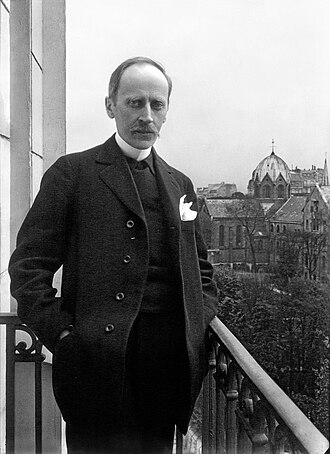 Romain Rolland
"[explaining to Ernie how April apologized to him] She just showed up at the factory, took off her coat, and begged me to take her. We made love in a way that Ive only ever seen in nature films."
 MouseHunt (film)
"Love is always love, come whence it may. A heart that beats at your approach, an eye that weeps when you go away are things so rare, so sweet, so precious that they must never be despised."
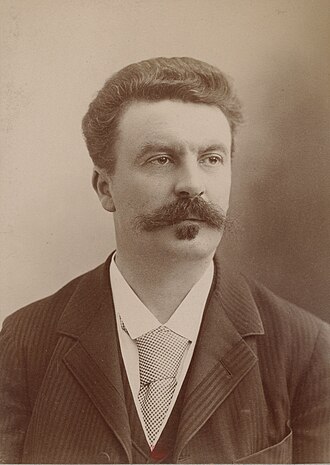 Guy de Maupassant
"He was obeyed, yet he inspired neither love nor fear, nor even respect. He inspired uneasiness. That was it! Uneasiness. Not a definite mistrust — just uneasiness — nothing more. You have no idea how effective such a... a... faculty can be. He had no genius for organizing, for initiative, or for order even. That was evident in such things as the deplorable state of the station. He had no learning, and no intelligence. His position had come to him — why? Perhaps because he was never ill . . . He had served three terms of three years out there . . . Because triumphant health in the general rout of constitutions is a kind of power in itself."