Quote
"Liberty, taking the word in its concrete sense, consists in the ability to choose."
S
Simone Weil"Wrongly or rightly you think that I have a right to the name of Christian. I assure you that when in speaking of my childhood and youth I use the words vocation, obedience, spirit of poverty, purity, acceptance, love of ones neighbor, and other expressions of the same kind, I am giving them the exact signification they have for me now. Yet I was brought up by my parents and my brother in a complete agnosticism, and I never made the slightest effort to depart from it; I never had the slightest desire to do so, quite rightly, I think. In spite of that, ever since my birth, so to speak, not one of my faults, not one of my imperfections really had the excuse of ignorance. I shall have to answer for everything on that day when the Lamb shall come in anger. You can take my word for it too that Greece, Egypt, ancient India, and ancient China, the beauty of the world, the pure and authentic reflections of this beauty in art and science, what I have seen of the inner recesses of human hearts where religious belief is unknown, all these things have done as much as the visibly Christian ones to deliver me into Christs hands as his captive. I think I might even say more. The love of these things that are outside visible Christianity keeps me outside the Church... But it also seems to me that when one speaks to you of unbelievers who are in affliction and accept their affliction as a part of the order of the world, it does not impress you in the same way as if it were a question of Christians and of submission to the will of God. Yet it is the same thing."
Simone Adolphine Weil was a French philosopher, mystic and political activist. Despite her short life, her ideas concerning religion, spirituality and politics have remained widely influential in contemporary philosophy.
"Liberty, taking the word in its concrete sense, consists in the ability to choose."
"Art is the symbol of the two noblest human efforts: to construct and to refrain from destruction."
"There is nothing that comes closer to true humility than the intelligence. It is impossible to feel pride in ones intelligence at the moment when one really and truly exercises it."
"The human soul has need of truth and of freedom of expression. The need for truth requires that intellectual culture should be universally accessible, and that it should be able to be acquired in an environment neither physically remote nor psychologically alien."
"This world is the closed door. It is a barrier. And at the same time it is the way through. Two prisoners whose cells adjoin communicate with each other by knocking on the wall. The wall is the thing which separates them but it is also their means of communication. It is the same with us and God. Every separation is a link. By putting all our desire for good into a thing, we make that thing a condition of our existence. But we do not, on that account, make of it a good. Merely to exist is not enough for us. The essence of created things is to be intermediaries. They are intermediaries leading from one to the other, and there is no end to this."
"School children and students who love God should never say: "For my part I like mathematics"; "I like French"; "I like Greek." They should learn to like all these subjects, because all of them develop that faculty of attention which, directed toward God, is the very substance of prayer."
"At one point a heated discussion arose over the possible interpretation of Lolita as a grandiose metaphor of the classic Europeans hopeless love for young, seductive, barbaric America. In his afterword to the novel Nabokov himself mentions this as the naive theory of one of the publishers who turned the book down. And although there cant be the slightest doubt that Nabokov did not mean to limit Lolita to that interpretation, there is no reason to exclude it as one of the novels many dimensions. The point, I felt, became obvious when one drew the line between Lolita as a delightfully frivolous story on the verge of pornography and Lolita as a literary masterpiece, the only convincing love story of our century."
 Lolita
"Lovely food, for rabbits, that is."
"One makes mistakes; that is life. But it is never a mistake to have loved."
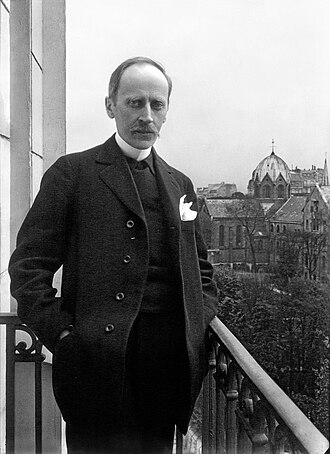 Romain Rolland
"[explaining to Ernie how April apologized to him] She just showed up at the factory, took off her coat, and begged me to take her. We made love in a way that Ive only ever seen in nature films."
 MouseHunt (film)
"Love is always love, come whence it may. A heart that beats at your approach, an eye that weeps when you go away are things so rare, so sweet, so precious that they must never be despised."
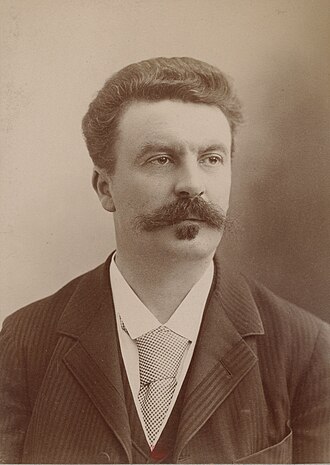 Guy de Maupassant
"He was obeyed, yet he inspired neither love nor fear, nor even respect. He inspired uneasiness. That was it! Uneasiness. Not a definite mistrust — just uneasiness — nothing more. You have no idea how effective such a... a... faculty can be. He had no genius for organizing, for initiative, or for order even. That was evident in such things as the deplorable state of the station. He had no learning, and no intelligence. His position had come to him — why? Perhaps because he was never ill . . . He had served three terms of three years out there . . . Because triumphant health in the general rout of constitutions is a kind of power in itself."