Quote
"I can only say that whatever my life and work have been, Im not envious of anyone — and this is my biggest satisfaction."
 Roman Polański
"You know, whenever you do something new and original, people run to see it because its different. Then, if it happens to be successful, the studios rush to imitate it. It becomes commonplace right away. But its been like that before, I think. Now, the stakes are so gigantic that they cut each others throats. So if most of the films are failures, then those that succeed so spectacularly, so commercially, become the norm. Its like a roulette for the studios. The problem with it is that it becomes more and more of a committee. Before, you dealt with the studio. It had one or two persons and now you have masses of executives who have to justify their existence and write so-called "creative notes" and have creative meetings. They obsess about the word creative probably because they arent."
Raymond Roman Thierry Polański is a Polish and French filmmaker and actor. He is the recipient of numerous accolades, including an Academy Award, three British Academy Film Awards, ten César Awards, two Golden Globe Awards, as well as the Golden Bear and a Palme d'Or.
"I can only say that whatever my life and work have been, Im not envious of anyone — and this is my biggest satisfaction."
Roman Polański"I want people to go to the movies. I am the man of the spectacle. Im playing."
Roman Polański"Whenever I get happy, I always have a terrible feeling."
Roman Polański"Michael, I know she’s a nice girl. She’s too bloody nice. Shes supposed to be playing a bitch. Every day I have to make her into a bitch."
Roman Polański"Its weird. I always had the premonition that Sharon belonged to me just for a little while."
Roman Polański"Its easy to direct while acting — there’s one less person to argue with."
Roman Polański"What say you? It is useless? Ay, I know But who fights ever hoping for success? I fought for lost cause, and for fruitless quest! You there, who are you! — You are thousands! Ah! I know you now, old enemies of mine! Falsehood! Have at you! Ha! and Compromise! Prejudice, Treachery! … Surrender, I? Parley? No, never! You too, Folly, — you? I know that you will lay me low at last; Let be! Yet I fall fighting, fighting still!"
"Ministers who deal with billions of dollars cannot be paid low salaries without risking a system malfunction. Low salaries will not attract able men who are or can be successful in their professions or business. Low salaries will draw in the hypocrites who sweet talk their way into power in the name of public services, but once in charge will show their true colour, and ruin the country. This has happened in many countries."
"In a Thumbnail Sketch here is [the Multiple Drafts theory of consciousness] so far:There is no single, definitive "stream of consciousness," because there is no central Headquarters, no Cartesian Theatre where "it all comes together" for the perusal of a Central Meaner. Instead of such a single stream (however wide), there are multiple channels in which specialist circuits try, in parallel pandemoniums, to do their various things, creating Multiple Drafts as they go. Most of these fragmentary drafts of "narrative" play short-lived roles in the modulation of current activity but some get promoted to further functional roles, in swift succession, by the activity of a virtual machine in the brain. The seriality of this machine (its "von Neumannesque" character) is not a "hard-wired" design feature, but rather the upshot of a succession of coalitions of these specialists.The basic specialists are part of our animal heritage. They were not developed to perform peculiarly human actions, such as reading and writing, but ducking, predator-avoiding, face-recognizing, grasping, throwing, berry-picking, and other essential tasks. They are often opportunistically enlisted in new roles, for which their talents may more or less suit them. The result is not bedlam only because the trends that are imposed on all this activity are themselves part of the design. Some of this design is innate, and is shared with other animals. But it is augmented, and sometimes even overwhelmed in importance, by microhabits of thought that are developed in the individual, partly idiosyncratic results of self-exploration and partly the predesigned gifts of culture. Thousands of memes, mostly borne by language, but also by wordless "images" and other data structures, take up residence in an individual brain, shaping its tendencies and thereby turning it into a mind."
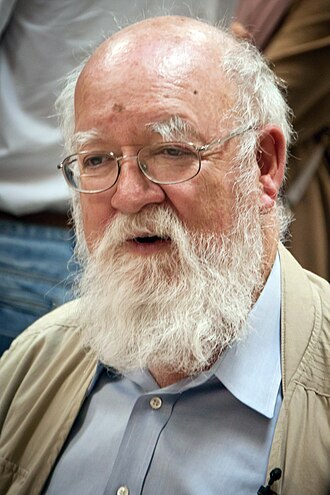 Daniel Dennett
"We recognize that in the reconstruction of most things – national, international, social, political – he is destined to play a commanding part. ... Its looks as if he were fated, despite his reluctance – for he is a modest man and his ambition, whatever it may be, is carefully concealed – to be a Saviour of Society, as well as an Organizer of Victory."
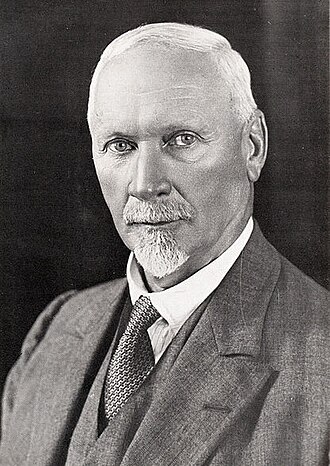 Jan Smuts
"I am speechless about the idea of putting music fans in jail for downloading music. It is wrong to illegally download, but the answer cannot be jail. Here in America we create new opportunities out of adversity, not punitive laws, and we should look to new technologies like Apples new Music Store for solutions. This way, innovation continues to be the hallmark of America. It is the fans that drive the success of the music business."
"We foreign journalists in Moscow used to amuse ourselves, as a matter of fact, by competing with one another as to who could wish upon one of these intelligentsia visitors to the USSR the most outrageous fantasy…One story I floated myself, for which I received considerable acclaim, was that the huge queues outside food shops came about because the Soviet workers were so ardent in building Socialism that they just wouldnt rest, and the only way the government could get them to rest for even two or three hours was organizing a queue for them to stand in. I laugh at it all now, but at the time you can imagine what a shock it was to someone like myself, who had been brought up to regard liberal intellectuals as the samurai, the absolute elite, of the human race, to find that they could be taken in by deceptions which a half-witted boy would see through in an instant…I could never henceforth regard the intelligentsia as other than credulous fools who nonetheless became the medias prophetic voices, their heirs and successors remaining so still."
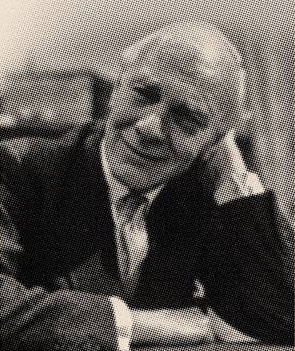 Malcolm Muggeridge