Quote
"La plus cruelle vengeance dune femme est quelquefois de nous rester fidèle."
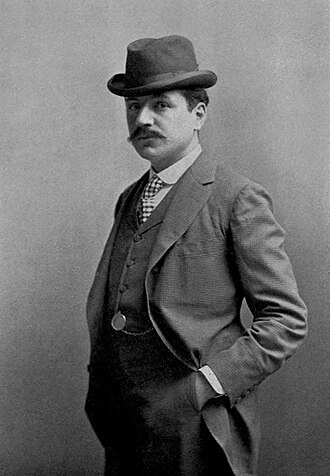 Paul Bourget
"You, who know better than any one the motley world of cosmopolites, understand why I have confined myself to painting here only a fragment of it. That world, indeed, does not exist, it can have neither defined customs nor a general character. It is composed of exceptions and of singularities. We are so naturally creatures of custom, our continual mobility has such a need of gravitating around one fixed axis, that motives of a personal order alone can determine us upon an habitual and voluntary exile from our native land. It is so, now in the case of an artist, a person seeking for instruction and change; now in the case of a business man who desires to escape the consequences of some scandalous error; now in the case of a man of pleasure in search of new adventures; in the case of another, who cherishes prejudices from birth, it is the longing to find the "happy mean;" in the case of another, flight from distasteful memories. The life of the cosmopolite can conceal all beneath the vulgarity of its whims, from snobbery in quest of higher connections to swindling in quest of easier prey, submitting to the brilliant frivolities of the sport, the sombre intrigues of policy, or the sadness of a life which has been a failure. Such a variety of causes renders at once very attractive and almost impracticable the task of the author who takes as a model that ever-changing society so like unto itself in the exterior rites and fashions, so really, so intimately complex and composite in its fundamental elements. The writer is compelled to take from it a series of leading facts, as I have done, essaying to deduce a law which governs them."
Paul Charles Joseph Bourget was a French poet, novelist and critic. He was nominated for the Nobel Prize in Literature five times.
"La plus cruelle vengeance dune femme est quelquefois de nous rester fidèle."
Paul Bourget"I had to take the necessary steps to prevent this alleged suicide from getting known, to see the commissary of police and the "doctor of the dead." I had to preside at the funeral ceremonies, to receive the guests and act as chief mourner. And always, always, he was present to me, with the dagger in his breast, writing the lines that had saved me, and looking at me, while his lips moved. Ah, begone, begone, abhorred phantom! Yes! I have done it; yes! I have killed you; yes! it was just. You know well that it was just. Why are you still here now? Ah! I will live; I will forget. If I could only cease to think of you for one day, only one day, just to breathe, and walk, and see the sky, without your image returning to haunt my poor head which is racked by this hallucination, and troubled? My God! have pity on me. I did not ask for this dreadful fate; it is Thou that hast sent it to me. Why dost Thou punish me? Oh, my God, have pity on me!"
Paul Bourget"Is there any God, any justice, is there either good or evil? None, none, none, none! There is nothing but a pitiless destiny which broods over the human race, iniquitous and blind, distributing joy and grief at haphazard. A God who says, "Thou shalt not kill," to him whose father has been killed? No, I dont believe it. No, if hell were there before me, gaping open, I would make answer: "I have done well," and I would not repent. I do not repent. My remorse is not for having seized the weapon and struck the blow, it is that I owe to him — to him — that infamous good service which he did me — that I cannot to the present hour shake from me the horrible gift I have received from that man. If I had destroyed the paper, if I had gone and given myself up, if I had appeared before a jury, revealing, proclaiming my deed, I should not be ashamed; I could still hold up my head. What relief, what joy it would be if I might cry aloud to all men that I killed him, that he lied, and I lied, that it was I, I, who took the weapon and plunged it into him! And yet, I ought not to suffer from having accepted — no — endured the odious immunity. Was it from any motive of cowardice that I acted thus? What was I afraid of? Of torturing my mother, nothing more. Why, then, do I suffer this unendurable anguish? Ah, it is she, it is my mother who, without intending it, makes the dead so living to me, by her own despair. She lives, shut up in the rooms where they lived together for sixteen years; she has not allowed a single article of furniture to be touched; she surrounds the mans accursed memory with the same pious reverence that my aunt formerly lavished on my unhappy father. I recognize the invincible influence of the dead in the pallor of her cheeks, the wrinkles in her eyelids, the white streaks in her hair. He disputes her with me from the darkness of his coffin; he takes her from me, hour by hour, and I am powerless against that love."
Paul Bourget"There are some surely whom you like and whom you dislike, for whom you entertain esteem and for whom you feel contempt? Have you not thought that you have some duties toward them, that you can aid them in leading better lives?"
Paul Bourget"The forests have taught man liberty."
Paul Bourget"Cet enseignement, cest quil faut vivre comme on pense, sinon, tôt ou tard, on finit par penser comme on a vécu. (This teaching is to live as we think, otherwise, sooner or later, we end up thinking as we lived.)"
Paul Bourget"The only influences in [the painting The sick Child, Munch painted in his elderly home, remembering very accurate the last days of his dying little sister Sophie] The sick Child.. ..were the ones that come from my home.. ..my childhood and my home. Only someone who knew the conditions at home could possibly understand why there can be no conceivable chance of any other place having played a part – my home is to my art as a midwife is to her children.. ..few painters have ever experienced the full grief of their subject as I did in The sick child. It was not just I who was suffering; it was all my nearest and dearest as well."
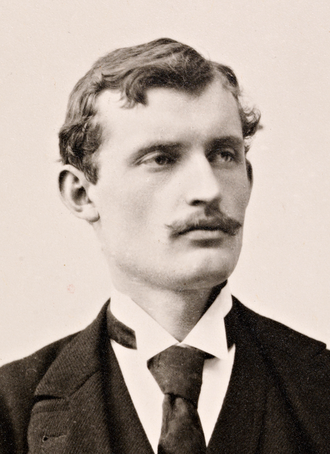 Edvard Munch
"There was a man and he had eight sons. Apart from that, he was nothing more than a comma on the page of History. Its sad, but thats all you can say about some people."
"Im very sad that this seems to be the No. 1 question people want to discuss. I had nothing to do with the issue other than what the media created. I was innocently drawn into the whole controversy. So, after many years, Im glad at least now that I have been given the opportunity to explain to the public and fans my side of the story in my own words. At a lecture, back in 1989, I was asked a question about blasphemy according to Islamic Law, I simply repeated the legal view according to my limited knowledge of the Scriptural texts, based directly on historical commentaries of the Quran. The next day the newspaper headlines read, "Cat Says, Kill Rushdie." I was abhorred, but what could I do? I was a new Muslim. If you ask a Bible student to quote the legal punishment of a person who commits blasphemy in the Bible, he would be dishonest if he didnt mention Leviticus 24:16."
 Cat Stevens
"Rhymer, brawler, and musician, Famed for his lunar expedition, And the unnumbered duels he fought, — And lover also, — by interposition! — Here lies Hercule Savinien De Cyrano de Bergerac, Who was everything, yet was naught. I cry you pardon, but I may not stay; See, the moon-ray that comes to call me hence! I would not bid you mourn less faithfully That good, brave Christian: I would only ask That when my body shall be cold in clay You wear those sable mourning weeds for two, And mourn awhile for me, in mourning him."
"We must recognize that there is no indication that Saddam Hussein has any intention of relenting. So we have an obligation of enormous consequence, an obligation to guarantee that Saddam Hussein cannot ignore the United Nations. He cannot be permitted to go unobserved and unimpeded toward his horrific objective of amassing a stockpile of weapons of mass destruction."
"—musics power Is little felt in sunlit hour; But hear its voice when hopes depart, Like swallows, flying from the heart On which the summers late decline Has set a sadness and a sign;. . . . . . How deeply will the spirit feel The lute, the songs sweet-voiced appeal; And how the heart drink in their sighs As echoes they from Paradise."