Quote
"Every way of classifying a thing is but a way of handling it for some particular purpose."
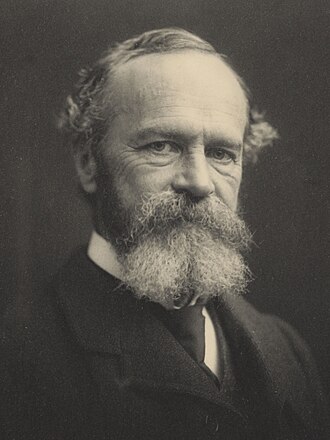 William James
"A difference which makes no difference is no difference at all."
William James was an American philosopher and psychologist. The first educator to offer a psychology course in the United States, he is considered to be one of the leading thinkers of the late 19th century, one of the most influential philosophers and is often dubbed the "father of American psychology".
"Every way of classifying a thing is but a way of handling it for some particular purpose."
William James"I am against bigness and greatness in all their forms, and with the invisible molecular moral forces that work from individual to individual, stealing in through the crannies of the world like so many soft rootlets, or like the capillary oozing of water, and yet rending the hardest monuments of mans pride, if you give them time. The bigger the unit you deal with, the hollower, the more brutal, the more mendacious is the life displayed. So I am against all big organizations as such, national ones first and foremost; against all big successes and big results; and in favor of the eternal forces of truth which always work in the individual and immediately unsuccessful way, under-dogs always, till history comes, after they are long dead, and puts them on top. — You need take no notice of these ebullitions of spleen, which are probably quite unintelligible to anyone but myself."
William James"Consider William James self as observer. It is hard to see anything impossible about it if we think of observers as pattern recognizers. Many brain systems observe the output of another, and we now know a great deal about pattern recognizers in the brain. There seems to be plentiful brain and psychological evidence regarding self-systems."
William James"If we remembered everything, we should on most occasions be as ill off as if we remembered nothing. It would take as long for us to recall a space of time as it took the original time to elapse, and we should never get ahead with our thinking. All recollected times undergo, accordingly, what M. Ribot calls foreshortening; and this foreshortening is due to the omission of an enormous number of the facts which filled them."
William James"There is no worse lie than a truth misunderstood by those who hear it."
William James"Tell him to live by yes and no — yes to everything good, no to everything bad."
William James