SHAWORDS

A paper reactor [new reactor concept] has the following characteristic — Nuclear power

"A paper reactor [new reactor concept] has the following characteristics: it is simple; it is small; it is cheap; it is lightweight; it can be built very quickly; very little development is required and it will use off the shelf components; it is in the study phase and not being built now. By contrast a real reactor has the following characteristics: it is complicated; it is large; it is heavy; it is being built now; it is behind schedule; it requires an immense amount of development on apparently trivial items; it takes a long time to build because of its engineering development problems."
Nuclear power
Nuclear power
Nuclear power
author

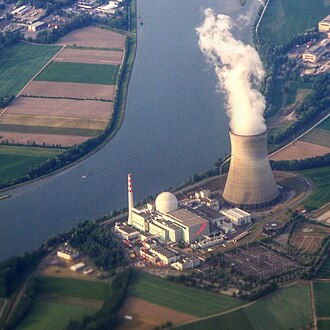
Nuclear power is the use of nuclear reactions to produce electricity. Nuclear power can be obtained from nuclear fission, nuclear decay and nuclear fusion reactions. Presently, the vast majority of electricity from nuclear power is produced by nuclear fission of uranium and plutonium in nuclear power plants. Nuclear decay processes are used in niche applications such as radioisotope thermoelectric

More by Nuclear power

View all →
Quote
"First, in dealing with those nations that break rules and laws, I believe that we must develop alternatives to violence that are tough enough to actually change behavior – for if we want a lasting peace, then the words of the international community must mean something. Those regimes that break the rules must be held accountable. Sanctions must exact a real price. Intransigence must be met with increased pressure – and such pressure exists only when the world stands together as one. One urgent example is the effort to prevent the spread of nuclear weapons, and to seek a world without them. In the middle of the last century, nations agreed to be bound by a treaty whose bargain is clear: All will have access to peaceful nuclear power; those without nuclear weapons will forsake them; and those with nuclear weapons will work towards disarmament. I am committed to upholding this treaty. It is a centerpiece of my foreign policy. And I’m working with President Medvedev to reduce America and Russia’s nuclear stockpiles. But it is also incumbent upon all of us to insist that nations like Iran and North Korea do not game the system. Those who claim to respect international law cannot avert their eyes when those laws are flouted. Those who care for their own security cannot ignore the danger of an arms race in the Middle East or East Asia. Those who seek peace cannot stand idly by as nations arm themselves for nuclear war. The same principle applies to those who violate international laws by brutalizing their own people. When there is genocide in Darfur, systematic rape in Congo, repression in Burma – there must be consequences. Yes, there will be engagement; yes, there will be diplomacy – but there must be consequences when those things fail. And the closer we stand together, the less likely we will be faced with the choice between armed intervention and complicity in oppression."
Nuclear powerNuclear power
Quote
"What if Roosevelt and Churchill had accepted the proposals from Bohr, Szilard, and others to internationalize the project? Would an with Russia still have resulted? The answer is probably yes. Bohrs idealistic concept was essentially a free exchange of information internationally. All nations would pool scientific knowledge, rather than keep it secret. An international body consisting mainly of scientists would oversee its exploitation. These ideas harked back to the free flow of information about physics in the fifty years before the Second World War, a period Bohr regarded as a golden age. However, not only times but nuclear physics had changed. Nuclear physics was by then perceived as having not only massive military potential but real commercial value for power generation. But these factors conferred great diplomatic, economic, and political power. For Stalin, possession of nuclear capability had immense importance, both symbolically and practically. Generation of electricity from nuclear power had the potential to achieve his long stated aim to "catch up and overtake" the West in terms of industrialization. Nuclear weapons would give him the ability to rule over his increasing empire in Eastern Europe, while allowing him to appear as, and to act as, the equal or the best of the West elsewhere. Western lack of trust in a totalitarian regime made a race inevitable."
Nuclear powerNuclear power