SHAWORDS

Also I should like to explain how a lover of free birds can endure to — Harriet Mann Miller

"Also I should like to explain how a lover of free birds can endure to keep them in confinement. Each inhabitant of a in my house has been liberated from the positive discomforts of a , and besides the wearied effort to make their lives happy and as free as possible in a room, the moment one shows a desire for the world outside my windows, he is gladly allowed to depart."
Harriet Mann Miller
Harriet Mann Miller
Harriet Mann Miller
author7 quotes

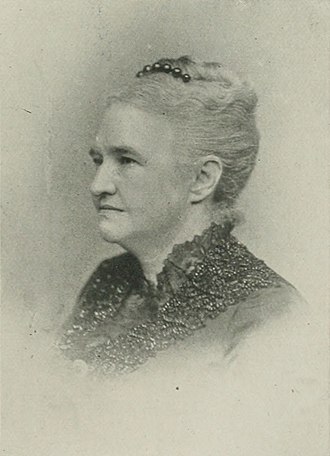
Harriet Mann Miller was an American author, naturalist, and ornithologist. She was one of the first three women raised to elective membership in the American Ornithologists' Union. Miller wrote stories for leading magazines. At the start of her career, her articles appeared under the pen name "Olive Thorne" while after marriage, she used the signature of "Olive Thorne Miller". Her books include: L

More by Harriet Mann Miller

View all →
Quote
"Written under the pen name Olive Thorne Miller, most of her childrens fiction has been forgotten, but her , both for children and adults, are still read. She became interested in bird watching in 1880 and avidly pursued this hobby for the rest of her life. ... Olive Thorne Miller wrote books on birds that reflected a close observation of their habits. Although her treatment was sometimes , most of her facts were accurate, and her works were useful in stimulating popular interest in ."
Harriet Mann MillerHarriet Mann Miller
Quote
"Because of its quiet tints, the beauty of plumage of the is often underrated. Nothing can be more attractive than the soft cinnamon browns of his back and wings, and the satiny white of breast and under parts, tinged in places with buff, and decorated profusely with lance-shaped spots of brown. Lovers of birds alive and free have reason to rejoice that our most interesting birds are not gaudy in coloring. The indiscriminate and terrible , is surely enough to make the most long-suffering lover of nature cry out in grief and pain. To me — let me say it frankly — they look not like an adornment of feathers, but like the dead bodies of birds, foully murdered to minister to a passing fashion."
Harriet Mann MillerHarriet Mann Miller
Quote
"The solo of the differs from nearly all other bird-songs that I know, being a clear, distinct whistle that may easily be reduced to our musical scale, and perfectly imitated by the human voice; in this latter quality it is almost unique. The notes are very few, usually two, never, I think, more than three; and the little ditty consists of, first, a single long, deliberate note, then two short repetitious of one a third higher, followed by three triplets at the same pitch. It is so distinct, indeed, that the of northern Minnesota—as a traveler in that country kindly wrote me—have put it into words, namely, "Puorn chiman, chig-a-big, chig-a-big, chig-a-big," which being translated means, "The Sioux canoes are close to shore, close to shore, close to shore," and the friendly bird is held in much esteem by the grateful Chippewas."
Harriet Mann MillerHarriet Mann Miller