Quote
"Entirety exists within me as exuberance … in empty longing … in … the desire to burn with desire."
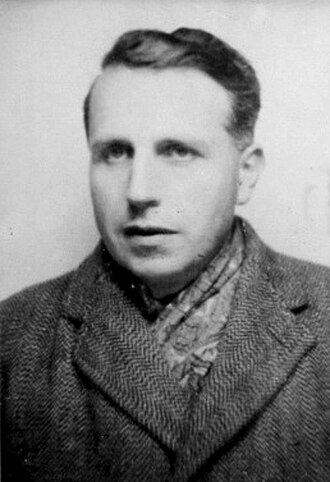 Georges Bataille
"An extreme, unconditional human yearning was expressed for the first time by Nietzsche independently of moral goals or of serving God. … Ardor that doesn’t address a dramatically articulated moral obligation is a paradox. … If we stop looking at states of ardor as simply preliminary to other and subsequent conditions grasped as beneficial, the state I propose seems a pure play of lightning, merely an empty consummation. Lacking any relation to material benefits such as power or the growth of the state (or of God or a Church or a party), this consuming can’t even be comprehended. … I’ll have to face the same difficulties as Nietzsche—putting God and the good behind him, though all ablaze with the ardor possessed by those who lay down their lives for God or the good. … I’ll admit that moral investigations that aim to surpass the good lead first of all to disorder."
Georges Albert Maurice Victor Bataille was a French intellectual working in philosophy, literature, sociology, anthropology, and history of art. His writing, which included essays, novels, and poetry, explored such subjects as eroticism, mysticism, surrealism, and transgression. His work would prove influential on subsequent schools of philosophy and social theory, including post-structuralism.
"Entirety exists within me as exuberance … in empty longing … in … the desire to burn with desire."
Georges Bataille"[Zarathustra] never abandoned the watchword of not having any end, not serving a cause, because, as he knew, causes pluck off the wings we fly with."
Georges Bataille"[Nietzsche’s doctrine of the eternal return] is what makes moments caught up in the immanence of return suddenly appear as ends. In every other system, don’t forget, these moments are viewed as means: Every moral system proclaims that “each moment of life ought to be motivated.” Return unmotivates the moment and frees life of ends."
Georges Bataille"Human entirety can only be what it is when giving up the addiction to others’ ends."
Georges Bataille"All eroticism has a sacramental character."
Georges Bataille"Concern for this or that limited good can sometimes lead to the summit... But this occurs in a roundabout way. Moral ends … are distinct from any excesses they occasion. States of glory and moments of sacredness surpass results intentionally sought."
Georges Bataille