Quote
"Each parable makes one point per main character."
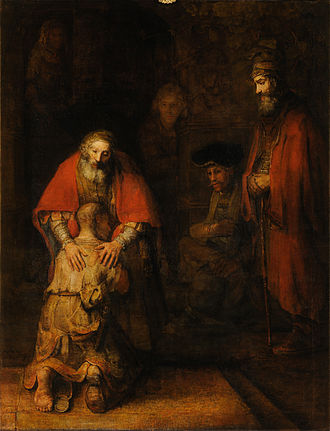 Parable
"And there went great multitudes with him: and he turned, and said unto them, If any man come to me, and hate not his father, and mother, and wife, and children, and brethren, and sisters, yea, and his own life also, he cannot be my disciple. And whosoever doth not bear his cross, and come after me, cannot be my disciple. For which of you, intending to build a tower, sitteth not down first, and counteth the cost, whether he have sufficient to finish it? Lest haply, after he hath laid the foundation, and is not able to finish it, all that behold it begin to mock him, saying, This man began to build, and was not able to finish. Or what king, going to make war against another king, sitteth not down first, and consulteth whether he be able with ten thousand to meet him that cometh against him with twenty thousand? Or else, while the other is yet a great way off, he sendeth an ambassage, and desireth conditions of peace. So likewise, whosoever he be of you that forsaketh not all that he hath, he cannot be my disciple."
A parable is a succinct, didactic story, in prose or verse, that illustrates one or more instructive lessons or principles. It differs from a fable in that fables employ animals, plants, inanimate objects, or forces of nature as characters, whereas parables have human characters. A parable is a type of metaphorical analogy.
"Each parable makes one point per main character."
Parable"The parables of Jesus in the Gospels are considered the single most important source for discovering how Jesus himself taught and proclaimed his message."
Parable"A parable is a form of writing that tells a story about common everyday things within the range of every individuals experience, and at the same time draws a subtle analogy between the ordinary facts of the story and the deeper meaning which lies parallel to the facts. Literally, the word parable means, "a comparison."
Parable"The rhetorical power of the narratives is obviously lost by means of propositional paraphrase, as is a portion of their meaning."
Parable"A parable is a form of teaching in which one thing is thrown beside another. Hence its radical idea is comparison."
Parable"Bohrs sort of humor, use of parables and stories, tolerance, dependence on family, feelings of indebtedness, obligation, and guilt, and his sense of responsibility for science, community, and, ultimately, humankind in general, are common traits of the Jewish intellectual. So too is a well-fortified atheism. Bohr ended with no religious belief and a dislike of all religions that claimed to base their teachings on revelations."
Parable