SHAWORDS

Art is simultaneously particular and general. This is a real dichotomy — Donald Judd

HomeDonald JuddQuote
"Art is simultaneously particular and general. This is a real dichotomy. The great thing about proportion, one aspect of art, is that it is both extremes at once. The level of quality of a work can usually be established by the extent of the polarity between its generality and particularity. Or, to state the idea a little too simply, the better the work, the more diverse its aspects. The nature of the general aspects and the particular ones changes from artist to artist and especially from time to time, since the changes are due to broad changes in philosophy. This change is the essential change in art, determining its purpose and appearance"
Donald Judd
Donald Judd
Donald Judd
author35 quotes

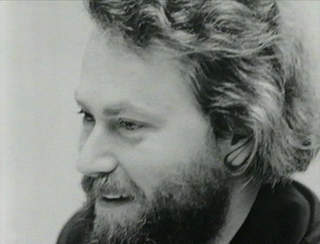
Donald Clarence Judd was an American artist associated with minimalism. In his work, Judd sought autonomy and clarity for the constructed object and the space created by it, ultimately achieving a rigorously democratic presentation without compositional hierarchy. He is generally considered the leading international exponent of "minimalism", and its most important theoretician through such writing

More by Donald Judd

View all →
Quote
"Eighteen years ago someone asked me to design a coffee table. I thought that a work of mine which was essentially a rectangular volume with the upper surface recessed could be altered. This debased the work and produced a bad table which I later threw away. The configuration and the scale of art cannot be transposed into furniture and architecture. The intent of art is different from that of the latter, which must be functional. If a chair or a building is not functional, if it appears to be only art, it is ridiculous... A work of art exists as itself; a chair exists as a chair itself."
Donald JuddDonald Judd
Quote
"ARTS is a somewhat conservative magazine but it is not uniformly, simply or blindly conservative, and the several conservative writers vary. And I am certainly not a conservative and neither is Miss Harrison. I decidedly disagree with the basic positions of Mr. Kramer, Miss Raynor and Mr. Tillim, though not with some of their evaluations, both of conservative and nonconservative artists. I think Ben Johnsons paintings, for example, are relatively uninteresting and powerless and that the work of some of the dop artists is full of true emotion.uninteresting and powerless and that the work of some of the dop artists is full of true emotion. The conservatism of Mr. Kramer and Mr. Mellow as successive editors lies only in the publication of more articles on conservative artists than on unconservative ones. Neither editors ever suggested to me that the magazine should have a uniform position or attempt to control my reviews, which are often contrary to Mr. Kramer’s opinions."
Donald JuddDonald Judd
Quote
"Any combining, mixing, adding, diluting, exploiting, vulgarizing, or popularizing of abstract art deprives art of its essence and depraves the artists artistic consciousness. Art is free, but it is not a free-for-all. The one struggle in art is the struggle of artists against artists, of artist against artist, of the artist-as-artist within and against the artist-as- man, -animal, or -vegetable. Artists who claim their artwork comes from nature, life, reality, earth or heaven, as mirrors of the soul or reflections of conditions or instruments of the universe, who cook up new images of man - figures and nature-in-abstraction - pictures, are subjectively and objectively, rascals or rustics."
Donald JuddDonald Judd
Quote
"Four years ago almost all of the applauded and selling art was New York School painting. It was preponderant in most galleries, which were uninclined to show anything new. The publications which praised it praised it indiscriminately and were uninterested in new developments. Much of the painting was by the "second generation" many of them epigones. Pollock was dead. Kline and Brooks had painted their last good paintings in 1956 and 1957. Gustons paintings had become soft and gray — his best ones are those around 1954 and 1955. Motherwells and De Koonings paintings were somewhat vague. None of these artists were criticized. In 1959 Newmans work was all right, and Rothkos was even better than before. Presumably, though none were shown in New York, Clyfford Stills paintings were all right. This lackadaisical situation was thought perfect. The lesser lights and some of their admirers were incongruously dogmatic : this painting was not only doing well but was the only art for the time. They thought it was a style. By now, it is."
Donald JuddDonald Judd