Quote
"The second explicit secularist constitutional provision is of course the First Amendment to the bill of rights."
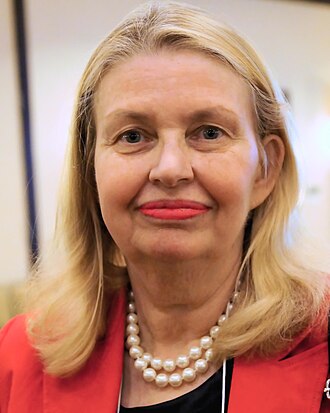 Susan Jacoby
"As always, war had lowered the level of American tolerance for any kind of dissent."
Susan Jacoby is an American author. Her 2008 book about American anti-intellectualism, The Age of American Unreason, was a New York Times best seller. She is an atheist and a secularist. Jacoby graduated from Michigan State University in 1965. She lives in New York City.
"The second explicit secularist constitutional provision is of course the First Amendment to the bill of rights."
Susan Jacoby"Notions of the depravity of human reason, Allen argued, were cherished by priests because, if ordinary human beings were assumed to be perfectly capable of reasoning for themselves, the clergy would be out of work."
Susan Jacoby"Without downgrading the importance of either the establishment clause or the constitutional ban on religious tests for officeholders, one can make a strong case that the omission of one word—God—played an even more important role in the construction of a secular foundation for the new government. The Constitution’s silence on the deity broke not only with culturally and historically distant precedents but with proximate and recent American precedents—most notably the 1781 Articles of Confederation, which acknowledged the beneficence of “the Great Governor of the World.” With its refusal to invoke any form of divine sanction, even the vague deistic “Providence,” the Constitution went even farther than Virginia’s religious freedom act in separating religion from government."
Susan Jacoby"Throughout their presidencies, Jefferson and his successor, Madison, never ceased to uphold the separation of church and state they had conceived as a model for the new nation."
Susan Jacoby"Although there were numerous attempts by state ratifying conventions to amend the Constitution, and subvert the intent of the preamble, by declaring that governmental power was derived from God or Jesus Christ, the proposed religious amendments were defeated. In the end, the economic necessity for a federal union trumped all other concerns."
Susan Jacoby"What the many types of freethinkers shared, regardless of their views on the existence or nonexistence of a divinity, was a rationalist approach to fundamental questions of earthly existence—a conviction that the affairs of human beings should be governed not by faith in the supernatural but by a reliance on reason and evidence produced from the natural world."
Susan Jacoby