Quote
"Remembrance is neither what happened nor what did not happen but, rather, their potentialization, their becoming possible once again."
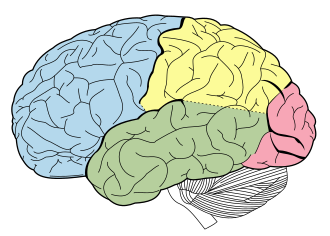 Memory
"Developmental changes in imitation were examined in three experiments with 6- to 24-month-old infants. In all experiments, infants in the demonstration condition observed an experimenter perform three specific actions with a puppet. Their ability to reproduce those actions was assessed for the first time during the test in the absence of prior practice. Infants in the control condition received equivalent exposure to the puppet and the experimenter but were not shown the target actions. The results of Experiment 1 showed that 12-, 18-, and 24-month-old infants exhibited clear evidence of imitation following a 24-hour delay (deferred imitation). In addition, the findings of Experiment 1 demonstrated that the 18- and 24-month-old infants reproduced more of the target actions during the test than the 12-month-olds. The results of Experiment 2 showed that 6-month-olds performed as well as 12-month-olds when they were tested in the absence of a delay (immediate imitation). Finally, the results of Experiment 3 showed that, with additional exposure to the target actions, even 6-month-old infants exhibited deferred imitation following a 24-hour delay. Taken together, these findings have important implications for current theories of the development of imitation and memory during the first 2 years of life."
Memory is the faculty of the mind by which data or information is encoded, stored, and retrieved when needed. It is the retention of information over time for the purpose of influencing future action. If past events could not be remembered, it would be impossible for language, relationships, or personal identity to develop. Memory loss is usually described as forgetfulness or amnesia.
"Remembrance is neither what happened nor what did not happen but, rather, their potentialization, their becoming possible once again."
Memory"Though sands be black and bitter black the sea, Night lie before me and behind me night, And God within far Heaven refuse to light The consolation of the dawn for me,— Between the shadowy burns of Heaven and Hell, It is enough love leaves my soul to dwell  With memory."
Memory"The affective intensity of an event is another predictor of later recall: Events that are "affectively charged," or have high levels of emotionality associated with them, either positive or negative, tend to be well recalled (e.g., Brewer, 1988; Thompson, 1998; Wagenaar, 1986; White, 2002)."
Memory"Anyone who’s taken statements from multiple witnesses to the same event will know how malleable memory is."
Memory"Everyday experience suggests that highly emotional events are often the most memorable, an observation supported by psychological and pharmacological studies in humans. Although studies in animals have shown that nondeclarative emotional memory (behaviors associated with emotional situations) may be impaired by lesions of the amygdala, little is known about the neural underpinnings of emotional memory in humans, especially in regard to declarative memory (memory for facts that can be assessed verbally). We investigated the declarative memory of two rare patients with selective bilateral amygdala damage. Both subjects showed impairments in long-term declarative memory for emotionally arousing material. The data support the hypothesis that the human amygdala normally enhances acquisition of declarative knowledge regarding emotionally arousing stimuli."
Memory"Look at it out here! Its all falling apart. Im erasing you, and Im happy! You did it to me first. I cant believe you did this to me. Clem! Did you hear me? By morning, youll be gone! The perfect ending to this piece of sh*t story!"
Memory