Quote
"Since the beginning of time, children have not liked to study. They would much rather play, and if you have their interests at heart, you will let them learn while they play; they will find that what they have mastered is childs play."
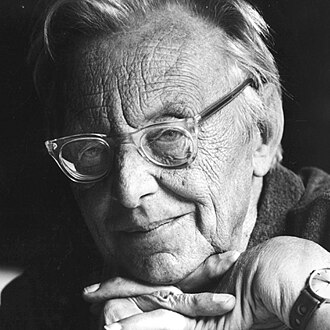
"Experience first, then intellectualize."

Carl Heinrich Maria Orff was a German composer and music educator, who composed the cantata Carmina Burana (1937). The concepts of his Schulwerk were influential for children's music education.
"Since the beginning of time, children have not liked to study. They would much rather play, and if you have their interests at heart, you will let them learn while they play; they will find that what they have mastered is childs play."
"I am often asked why I nearly always select old material, fairy tales and legends for my stage works. I do not look upon them as old, but rather as valid material. The time element disappears, and only the spiritual power remains. My entire interest is in the expression of spiritual realities. I write for the theater in order to convey a spiritual attitude."
"Elemental Music is never just music. Its bound up with movement, dance and speech, and so it is a form of music in which one must participate, in which one is involved not as a listener but as a co-performer. It is pre-rational, has no over-all form, no architectonics, involves no set sequences, ostinati or minor rondo-forms. Elemental Music is earthy, natural, physical, capable of being learnt and experienced by anybody, childs play. ... Elemental Music, word and movement, play, every-thing that awakens and develops the powers of the soul builds up the humus of the soul, the humus without which we face spiritual soil-erosion. ... we face spiritual soil-erosion when man estranges himself from the elemental and loses his balance."
"The subject matter covered in Carmina stays pretty basic: love, lust, the pleasures of drinking and the heightened moods evoked by springtime. These primitive and persistently relevant themes are nicely camouflaged by the Latin and old German texts, so the listener can actually feign ignorance while listening to virtually X-rated lyrics. (Veni Veni Venias! Come, come come now!) The music itself toggles between huge forces and a single voice, juxtaposing majesty and intimacy with ease..."
"He did have much more than a straightforward musical experience in mind. He subtitled his exuberant hour-long oratorio "Cantiones profanae, cantoribus et choris cantandae, comitantibus instrumentis atque imaginibus magicis," or "Secular songs for singers and choruses accompanied by instruments and magical images" — hardly typical concert fare. From a conductors point of view, Carmina is an absolute blast — so many people, so many textures, so much variety. And, contrary to what conductors might tell you, when 300-plus performers are involved, size does matter."