Quote
"Da mihi animas, cetera tolle tibi."
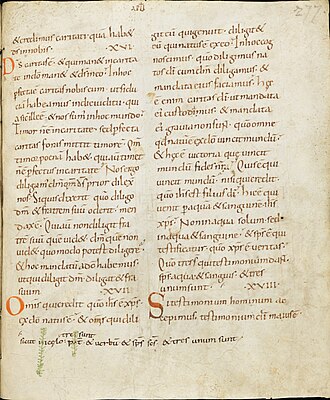 Vulgate
"For the humanists, whatever authority Scripture might possess derived from the original texts in their original languages, rather than from the Vulgate, which was increasingly recognized as unreliable and inaccurate. In that the catholic church continued to insist that the Vulgate was a doctrinally normative translation, a tension inevitably developed between humanist biblical scholarship and catholic theology. ... Through immediate access to the original text in the original language, the theologian could wrestle directly with the Word of God, unhindered by filters of glosses and commentaries that placed the views of previous interpreters between the exegete and the text. For the Reformers, sacred philology provided the key by means of which the theologian could break free from the confines of medieval exegesis and return ad fontes, to the title deeds of the Christian faith rather than their medieval expressions, to forge once more the authentic theology of the early church."
The Vulgate is a late-4th-century Latin translation of the Bible. It is largely the work of Saint Jerome who, in 382, had been commissioned by Pope Damasus I to revise the Vetus Latina Gospels used by the Roman Church. Later, of his own initiative, Jerome extended this work of revision and translation to include most of the books of the Bible.
"Da mihi animas, cetera tolle tibi."
Vulgate"State super vias, et videte, et interrogate de semitis antiquis quæ sit via bona, et ambulate in ea: et invenietis refrigerium animabus vestris."
Vulgate"Dixitque Deus: Fiat lux. Et facta est lux."
Vulgate"In principio creavit Deus cælum et terram."
Vulgate"Levemus corda nostra cum manibus ad Dominum in cælos."
Vulgate"Parvulus enim natus est nobis, et filius datus est nobis."
Vulgate