Quote
"To spend too much time in studies is sloth; to use them too much for ornament, is affectation; to make judgment wholly by their rules, is the humour of a scholar."
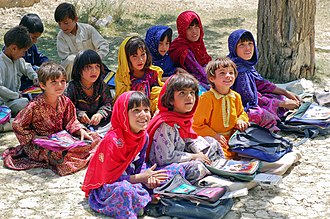 Education
"Having a global education and being a world citizen is the key element for peace and for all elements of progress outlined in the UN Charter. Indeed, that is the foundation for the necessary new skill-set at the conference table. Being able to look at the problems through the eyes of others reduces fears and misunderstandings that breed conflict and confusion. We must learn to work together; we must learn more about each other; and we must come to the table with resolve to solve those problems no single country can address... Through global education, we must prepare world citizens who understand the interconnected nature of our planet and who are willing to act on behalf of people everywhere. We each must spend more time learning about other cultures and other lands. Schools and universities need to introduce more international lessons, expand language programmes, extend study-abroad opportunities, welcome international students, and encourage cross-cultural dialogues. Schools and universities also need to fully employ new technologies to connect students with others throughout the world and introduce different perspectives on the lessons being studied."
Education is the transmission of knowledge and skills and the development of character traits. Formal education happens in a complex institutional framework, like public schools. Non-formal education is also structured but occurs outside the formal schooling system, while informal education is unstructured learning through daily experiences. Formal and non-formal education are divided into levels
"To spend too much time in studies is sloth; to use them too much for ornament, is affectation; to make judgment wholly by their rules, is the humour of a scholar."
Education"You can think of the curriculum as the shadows cast on a wall by the light of education itself as it shines over, under, around, and through the myriad phases of our experience. It is a mistake to be sure to take these shadows for the reality, but they are something that helps us find or grasp or intuit that reality. The false notions that there is a fixed curriculum, that there is a list of things that an educated person ought to know, and that the shadow-exercises on the wall themselves are the content of education—these false notions all come from taking too seriously what was originally a wise recognition—the recognition that the shadows do in fact provide a starting point in our attempt to fully envision reality."
Education"A better educational system should, therefore, be worked out which will present the possibilities of human living in such a manner that barriers will be broken down, prejudices removed, and a training given to the developing child which will enable him, when grownup, to live with other men in harmony and goodwill. This can be done, if patience and understanding are developed and if educators realise that "where there is no vision, the people perish". p. 87"
Education"Even if the world progresses generally, youth will always begin at the beginning, and the epochs of the worlds cultivation will be repeated in the individual."
Education"Education doesn’t have aims. It is the aim of other things."
Education"Education makes a greater difference between man and man, than nature has made between man and brute. The virtues and powers to which men may be trained, by early education and constant discipline, are truly sublime and astonishing. Newton and Locke are examples of the deep sagacity which may be acquired by long habits of thinking and study."
Education