SHAWORDS

he [Hare] was never afraid to ask the most controversial questions, su — R. M. Hare

HomeR. M. HareQuote
"he [Hare] was never afraid to ask the most controversial questions, such as What is Wrong with Slavery? and his answers were always enlightening. (Indeed, that particular paper is one that he was able to write with an authority that few others could possess, since, as he notes, he had in a manner of speaking been a slave, when as a prisoner of the Japanese he worked on the Burma railway.)"
R. M. Hare
R. M. Hare
R. M. Hare
author9 quotes

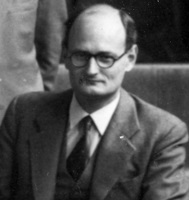
Richard Mervyn Hare, usually cited as R. M. Hare, was a British moral philosopher who held the post of White's Professor of Moral Philosophy at the University of Oxford from 1966 until 1983. He subsequently taught for a number of years at the University of Florida. His meta-ethical theories were influential during the second half of the twentieth century.

More by R. M. Hare

View all →
Quote
"He [Hare] was thus, however exacting his standards, a most positive figure as a mentor, giving of himself in discussion in a manner that could be opinionated but was also self-forgetful...He was concerned about the case against eating meat; but his eventual virtual vegetarianism was rather caused, he said, by gardening than by argument. Some of his dislikes were distinctive: the music of Beethoven (which he came to find superficial), wearing socks (which he ascribed to commercialism), drinking coffee (which he said affected his temper), travelling by train (which caused him anxiety), giving and receiving presents (when the recipient best knows what he wants)...He had the courage, though not the extravagance, to be an eccentric."
R. M. HareR. M. Hare
Quote
"The rules of moral reasoning are, basically, two, corresponding to the two features of moral judgment...When we are trying, in a concrete case, to decide what we ought to do, what we are looking for...is an action to which we can commit ourselves (prescriptively) but which we are at the same time prepared to accept as exemplifying a principle of action to be prescribed for others in like circumstances (universalizability)...[I]f we cannot universalize the principle, it cannot become an ‘ought’."
R. M. HareR. M. Hare
Quote
"I had a strange dream, or half-waking vision, not long ago. I found myself at the top of a mountain in the mist, feeling very pleased with myself, not just for having climbed the mountain, but for having achieved my life’s ambition, to find a way of answering moral questions rationally. But as I was preening myself on this achievement, the mist began to clear, and I saw that I was surrounded on the mountain top by the graves of all those other philosophers, great and small, who had had the same ambition, and thought they had achieved it. And I have come to see, reflecting on my dream, that, ever since, the hard-working philosophical worms had been nibbling away at their systems and showing that the achievement was an illusion."
R. M. HareR. M. Hare
Quote
"It is said that the prescription to keep all black people in subjection is formally universal, and internally consistent, and so is not ruled out by the Categorical Imperative. But the point is: can somebody who has fully represented to himself the situation of black people who are kept in subjection go on willing that they should be so treated? For if he has fully represented this to himself, he will have formed a preference that he should not be so treated if he is a black person; and this is inconsistent with the universal form of the proposed maxim. There is of course the problem of the fanatical black-hater who is prepared to prescribe that the maxim should be followed even if he himself were a black person. I have discussed the case of this fanatic at length in my books...and I think I have shown that my theory can deal with him. At any rate the Kantian move can be used in arguments with ordinary non‐fanatical people."
R. M. HareR. M. Hare