Quote
"Haste in every business brings failures."
H
Herodotus"Herodotus was the first to organize a vast enquiry about a war and its causes. This is indeed the legacy of Herodotus to European historiography, and I am not going to say that it is an enviable legacy from every point of view. It has made war the central theme or one of the very central themes of European historiography ever since. If I had to answer the famous question an Oxford undergraduate once put to Sir John Myres – "Sir, if Herodotus was such a fool as they say, why do we read him for Greats?" – my answer would be that Herodotus was not only the founder of European historiography in a generic way: he provided European historiography with one of its leading and recurring themes, the study of war, in its origins, main events, results."
Herodotus was a Greek historian and geographer from the Greek city of Halicarnassus, under Persian control in the 5th century BC, and a later citizen of Thurii in modern Calabria, Italy. He wrote the Histories, a detailed account of the Greco-Persian Wars, among other subjects such as the rise of the Achaemenid dynasty of Cyrus. He has been described as "The Father of History", a title conferred o
"Haste in every business brings failures."
"When this response reached Croesus, it afforded him far more pleasure than anything else the oracle had told him, because he was sure that a mule would never replace a man as the Persian king, and that in consequence he and his descendants would rule for ever. He next turned his mind to investigating which was the most powerful Greek state, so that he could gain them as his allies. As a result of his enquiries, he discovered that Lacedaemon and Athens were the outstanding states, and that Lacedaemon was populated by Dorians while Athens was populated by Ionians. For these two peoples—the one Pelasgian, the other Hellenic—had been pre-eminent in the old days. The Pelasgians never migrated anywhere, but the Hellenes were a very well-travelled race. When Deucalion was their king, they were living in Phthia, but in the time of Dorus the son of Hellen they were in the territory around Mounts Ossa and Olympus, known as Histiaeotis. Then they were evicted from Histiaeotis by the Cadmeans and settled on Mount Pindus, where they were called Macedonians. Next they moved to Dryopis, and from Dryopis they finally reached the Peloponnese and became known as the Dorians."
"Great deeds are usually wrought at great risks."
"He was the first artist in prose. As a historian, he fails chiefly by inattention or insensibility to political cause and effect. He will account for a great event merely by some accident which was the immediate occasion of it, without seeking to find any deeper source. And he tells us little or nothing about constitutional change. His charm of style is all the greater for his almost child-like simplicity, and he is one of the most delightful story-tellers. His narrative flows on in what the Greeks called the running style, seldom attempting compact periods."
"The Lacedaemonians fought a memorable battle; they made it quite clear that they were the experts, and that they were fighting against amateurs."
"The History of Herodotus works up the materials thus collected into an artistic picture of the world, grouped round a central idea. This idea is the great struggle between East and West, between Asiatic and Greek, of which the Persian Wars formed the last chapter. The History falls into two chief parts. The first five books are an introduction, tracing the rise and growth of the Persian power. The last four books relate the Persian invasions of Greece under Darius and Xerxes."
"We have created a wealthy society with tens of millions of talented, resourceful individuals who play virtually no role whatsoever as citizens. Bringing these people in — with their networks of influence, their knowledge, and their resources — is the key to creating the capacity for shared intelligence that we need to solve our problems."
 Al Gore
"As in respect of the first wonder we are all on the same level, how comes it that the philosophic mind should, in all ages, be the privilege of a few? The most obvious reason is this: The wonder takes place before the period of reflection, and (with the great mass of mankind) long before the individual is capable of directing his attention freely and consciously to the feeling, or even to its exciting causes. Surprise (the form and dress which the wonder of ignorance usually puts on) is worn away, if not precluded, by custom and familiarity."
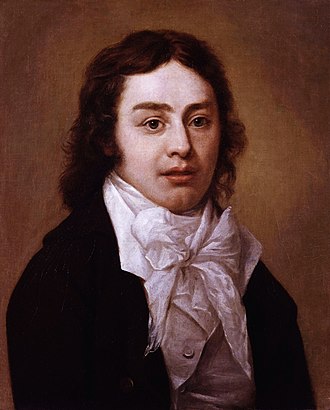 Samuel Taylor Coleridge
"The dualistic philosophy reigned supreme in Europe, dominating the development of Western science. But with the advent of atomic physics, findings based on demonstrable experiment were seen to negate the dualistic theory, and the trend of thought since then has been back to the monistic conception of the ancient Taoists."
"Under the rule of a repressive whole, liberty can be made into a powerful instrument of domination. The range of choice open to the individual is not the decisive factor in determining the degree of human freedom, but what can be chosen and what is chosen by the individual."
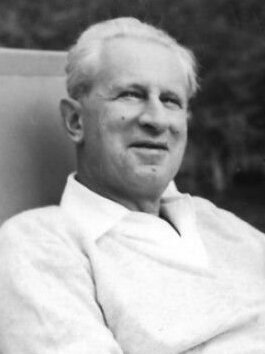 Herbert Marcuse
"All economic activity is carried out through time. Every individual economic process occupies a certain time, and all linkages between economic processes necessarily involve longer or shorter periods of time."
"I believe that the main lesson which our generation has learnt is that we must find a new limit for the activities of government, a limit which leaves ample scope for sensible experimentation but which secures the freedom of the individual as the mainspring of all social and political activity. The whole purpose of these lectures has been to suggest that we can find such a limit if we are willing to revive and develop the ancient ideal of the Rule of Law."