Quote
"It was never easy to coax Isadora Duncan into a photographers studio. Like a wild and wise animal, she fled from those who sought to capture the essence of her — which was motion — by making her stand still."
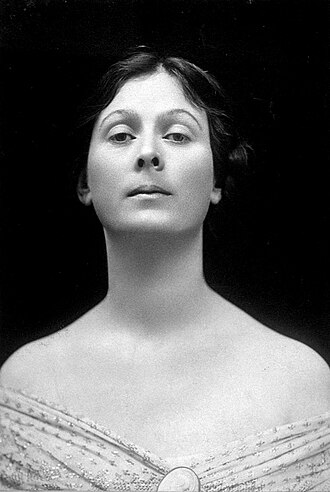 Isadora Duncan
"I have closely studied the figured documents of all ages and of all the great masters, but I have never seen in them any representations of human beings walking on the extremity of the toes or raising the leg higher than the head. These ugly and false positions in no way express that state of unconscious Dionysiac delirium which is necessary to the dancer. Moreover movèments, just like harmonies in music, are not invented; they are discovered."
Angela Isadora Duncan was an American-born dancer and choreographer, who was a pioneer of modern contemporary dance and performed to great acclaim throughout Europe and the United States. Born and raised in California, she lived and danced in Western Europe, the U.S., and Soviet Russia from the age of 22. She died when her scarf became entangled in the wheel and axle of the car in which she was tr
"It was never easy to coax Isadora Duncan into a photographers studio. Like a wild and wise animal, she fled from those who sought to capture the essence of her — which was motion — by making her stand still."
Isadora Duncan"I shall never forget the first time I saw her come on to an empty platform to dance. … She came through some little curtains which were not much taller than herself — she came through and walked down to where a musician, his back to us, was seated at a large piano — he had just finished playing a short prelude by Chopin when in she came, and in some five or six steps was standing at the piano, quite still — you might have counted five or eight, and then there sounded the voice of Chopin in a second prelude or etude — it was played through gently and came to an end — she had not moved at all. Then one step back or sideways, and the music began again as she went moving on before, or after it. Only just moving — not pirouetting or doing any of the things which a Taglioni or a Fanny Elssler would have certainly done. She was speaking her own language, not echoing any ballet master, and so she came to move as no one had ever seen anyone move before. The dance ended, she again stood quite still. No bowing, no smiling — nothing at all. Then again the music is off, and she runs from it — it runs after her — for she has gone ahead of it. How is it that we know she is speaking her own language? We know it, for we see her head, her hands, gently active, as are her feet, her whole person. And if she is speaking, what is it she is saying? No one would ever be able to report truly, yet no one present had a moments doubt. Only this can we say — that she was telling to the air the very things we long to hear; and now we heard them, and this sent us all into an unusual state of joy, and I sat still and speechless."
Isadora Duncan"Perhaps the greatest personality who has ever devoted herself to developing the art of the dance … Her interests ranged over a wide field of activities. There was a time when she wished to initiate a reform of human life in its least details of costume, of hygiene, of morals. But gradually she came to concentrate her interest upon the dance. For her the dance is not merely the art which permits the spirit to express itself in movement; it is the base of a whole conception of life, a life flexible, harmonious, natural. In the development of the dance she found herself confronted by the dilemma which has just been alluded to. On the one hand was the limited technique of the ballet, on the other the unnatural contortions of the eccentric school. To return to the unconscious gesture of the people — that is to say, the crude, stereotyped gestures of the street — offered no way of escape. She found the solution in a return to the natural gesture of human life as represented in Greek art."
Isadora Duncan"Isadora Duncan has not dealt with the dance intellectually, nor spiritually — but personally. The Age saw to that!"
Isadora Duncan"The revival of the dance is significant of the abiding, though much forgotten, need of the world for its arts, and a proof of the strange immortality of the arts themselves. A few years ago several great dancers came to summon the world, who must have prepared through long periods separately and without a common plan; yet with the effectiveness of premeditated simultaneity they appeared, as it were in a company. And the response of a world still hungering, somewhat dimly, for the arts, was the welcome we give to an advent long desired. Fortunate were those whose introduction to this momentous movement came by way of the greatest of its exponents, Isadora Duncan. It was one of the great hours, of which we have but three or four in a lifetime, when we first saw her. In that hour we sensed the manifold meanings and implications of the dance; its ecstasies, inspirations, and healing beneficences, and its possibly unimaginable importance to the modern world."
Isadora Duncan"To seek in nature the fairest forms and to find the movement which expresses the soul of these forms — this is the art of the dancer. It is from nature alone that the dancer must draw his inspirations, in the same manner as the sculptor, with whom he has so many affinities. Rodin has said: "To produce good sculpture it is not necessary to copy the works of antiquity; it is necessary first of all to regard the works of nature, and to see in those of the classics only the method by which they have interpreted nature." Rodin is right; and in my art I have by no means copied, as has been supposed, the figures of Greek vases, friezes and paintings. From them I have learned to regard nature, and when certain of my movements recall the gestures that are seen in works of art, it is only because, like them, they are drawn from the grand natural source. My inspiration has been drawn from trees, from waves, from clouds, from the sympathies that exist between passion and the storm, between gentleness and the soft breeze, and the like, and I always endeavour to put into my movements a little of that divine continuity which gives to the whole of nature its beauty and its life."
Isadora Duncan