Quote
"All the vast various moils that mean a world alive."
T
Thomas Hardy"I seem but a dead man held on end To sink down soon.... O you could not know That such swift fleeing No soul foreseeing — Not even I — would undo me so!"
Thomas Hardy was an English novelist and poet. A Victorian realist in the tradition of George Eliot, he was influenced both in his novels and in his poetry by Romanticism, including the poetry of William Wordsworth. He was highly critical of much in Victorian society, especially on the declining status of rural people in Britain such as those from his native South West England.
"All the vast various moils that mean a world alive."
"The main object of religion is not to get a man into heaven, but to get heaven into him."
"Numb as a vane that cankers on its point, True to the wind that kissed ere canker came."
"To find beauty in ugliness is the province of the poet."
"A local thing called Christianity."
"Done because we are too menny."
"Dave Foley: I once shot a man just to watch him die, then I got distracted and missed it. Oh my friends tried to describe it to me, but it just isnt the same."
"I did not go to join Kurtz there and then. I did not. I remained to dream the nightmare out to the end, and to show my loyalty to Kurtz once more. Destiny. My destiny! Droll thing life is — that mysterious arrangement of merciless logic for a futile purpose. The most you can hope from it is some knowledge of yourself — that comes too late — a crop of unextinguishable regrets. I have wrestled with death. It is the most unexciting contest you can imagine. It takes place in an impalpable grayness, with nothing underfoot, with nothing around, without spectators, without clamor, without glory, without the great desire of victory, without the great fear of defeat, in a sickly atmosphere of tepid skepticism, without much belief in your own right, and still less in that of your adversary. If such is the form of ultimate wisdom, then life is a greater riddle than some of us think it to be. I was within a hairs-breadth of the last opportunity for pronouncement, and I found with humiliation that probably I would have nothing to say. This is the reason why I affirm that Kurtz was a remarkable man. He had something to say. He said it. Since I had peeped over the edge myself, I understand better the meaning of his stare, that could not see the flame of the candle, but was wide enough to embrace the whole universe, piercing enough to penetrate all the hearts that beat in the darkness. He had summed up — he had judged. The horror! He was a remarkable man. After all, this was the expression of some sort of belief; it had candor, it had conviction, it had a vibrating note of revolt in its whisper, it had the appalling face of a glimpsed truth — the strange commingling of desire and hate."
"I spoke up about the importance of sex and have been paying the price ever since. I was transphobic, I was a cunt, a bitch, a TERF, I deserved cancelling, punching and death."
"Oh Rama, here I go again! Listen to you, sounding like Death Vader. You people need cigarettes as much as this country needs another C-average President. Plus you look like a human Pez dispenser! Here are your cigarettes, and here is some gum so you can blow bubbles for that WEIRD-ASS HOLE YOU HAVE IN YOUR NECK. And here are some batteries, for your creeping-me-out machine. Now get the park out of my store! I hope I am reincarnated as a turtleneck... I like to tank you for getting that joke!"
"I also know that the shock of Annabels death consolidated the frustration of that nightmare summer, made of it a permanent obstacle to any further romance throughout the cold years of my youth. The spiritual and the physical had been blended in us with a perfection that must remain incomprehensible to the matter-of-fact, crude, standard-brained youngsters of today. Long after her death I felt her thoughts floating through mine. Long before we met we had had the same dreams. We compared notes. We found strange affinities. The same June of the same year (1919) a stray canary had fluttered into her house and mine, in two widely separated countries. Oh, Lolita, had you loved me thus!"
 Lolita
"The groans of the dying and the blanched set faces of the dead ... were enough to drive away all unwholesome feelings of exultation, and to remind one of the grim reality that war is. And even though these were the faces and the sufferings of our enemy, one had ... a deeper sense of the common humanity which knows no racial distinctions."
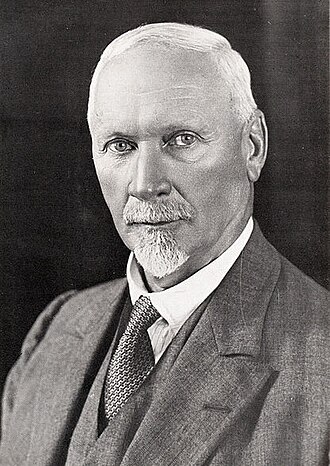 Jan Smuts