Quote
"Empedocles holds that the corporeal elements are four, while all the elements-including those which initiate movement-are six in number; whereas Anaxagoras agrees with Leucippus and Democritus that the elements are infinite."
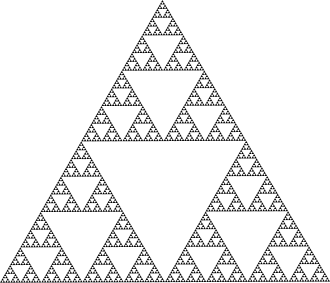 Infinity
"If I should ask... how many squares there are one might reply truly that there are as many as the corresponding number of roots, since every square has its own root and every root its own square, while no square has more than one root and no root more than one square. ... But if I inquire how many roots there are, it cannot be denied that there are as many as there are numbers because every number is a root of some square. This being granted we must say that there are as many squares as there are numbers because they are just as numerous as their roots, and all the numbers are roots. Yet at the outset we said there are many more numbers than squares, since the larger portion of them are not squares. Not only so, but the proportionate number of squares diminishes as we pass to larger numbers. ... So far as I see we can only infer that the totality of all numbers is infinite, that the number of squares is infinite, and that the number of their roots is infinite; neither is the number of squares less than the totality of all numbers, nor the latter greater than the former, and finally the attributes "equal," "greater," and "less," are not applicable to infinite, but only to finite quantities. When therefore Simplicio introduces several lines of different lengths and asks me how it is possible that the longer ones do not contain more points than the shorter, I answer him that one line does not contain more or less or just as many points as another, but that each line contains an infinite number. Or if I had replied to him that the points in one line were equal in number to the squares; in another, greater than the totality of numbers; and in the little one, as many as the number of cubes, might I not, indeed, have satisfied him by thus placing more points in one line than in another and yet maintaining an infinite number in each. So much for the first difficulty."
Infinity is something which is boundless, limitless, or endless. It is denoted by ∞, called the infinity symbol.
"Empedocles holds that the corporeal elements are four, while all the elements-including those which initiate movement-are six in number; whereas Anaxagoras agrees with Leucippus and Democritus that the elements are infinite."
Infinity"All things were together, infinite both in number and in smallness; for the small too was infinite."
Infinity"The physicists... always regard the infinite as an attribute of a substance which is different from it and belongs to the class of the so-called elements--water or air or what is intermediate between them. Those who make them limited in number never make them infinite in amount. But those who make the elements infinite in number, as Anaxagoras and Democritus do, say that the infinite is continuous by contact-compounded of the homogeneous parts."
Infinity"The science of nature is concerned with spatial magnitudes and motion and time, and each of these at least is necessarily infinite or finite, even if some things dealt with by the science are not, e.g. a quality or a point--it is not necessary perhaps that such things should be put under either head. Hence it is incumbent on the person who specializes in physics to discuss the infinite and to inquire whether there is such a thing or not, and, if there is, what it is. The appropriateness to the science of this problem is clearly indicated. All who have touched on this kind of science in a way worth considering have formulated views about the infinite, and indeed, to a man, make it a principle of things."
Infinity"Ford, there’s an infinite number of monkeys outside who want to talk to us about this script for Hamlet they’ve worked out."
Infinity"Dans chaque point réel, qui fait une Monade... il y pourroit lire encor tout le passé, et même tout lavenir infiniment infini, puisque chaque moment contient une infinité de choses , et quil y a une infinité de momens dans chaque partie du temps, et une infinité dheures, dannées, de siecles, deônes, dans toute léternité future. Quelle infinité dinfinités infiniment répliquée, quel monde, quel univers dans quelque corpuscule quon pourroit assigner."
Infinity