SHAWORDS

If we some day choke on the pollution of our own air, there will be li — Pollution

HomePollutionQuote
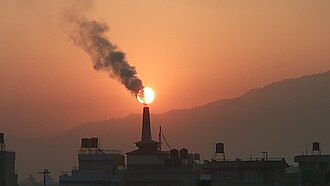
"If we some day choke on the pollution of our own air, there will be little consolation in leaving behind a dying continent ringed with steel."
Pollution
Pollution
Pollution
author7 quotes

Pollution is the introduction of contaminants into the natural environment that cause harm. Pollution can take the form of any substance or energy. Pollutants, the components of pollution, can be either foreign substances/energies or naturally occurring contaminants.

More by Pollution

View all →
Quote
"Continued unrestricted testing by the nuclear powers, joined in time by other nations which may be less adept in limiting pollution, will increasingly contaminate the air that all of us must breathe. Even then, the number of children and grandchildren with cancer in their bones, with leukemia in their blood, or with poison in their lungs might seem statistically small to some, in comparison with natural health hazards. But this is not a natural health hazard -- and it is not a statistical issue. The loss of even one human life, or the malformation of even one baby -- who may be born long after we are gone -- should be of concern to us all. Our children and grandchildren are not merely statistics toward which we can be indifferent."
PollutionPollution
Quote
"“There really have been no studies that have associated the [pharmaceutical] residues in our water with human health problems,” says Ilene Ruhoy, a pediatric neurologist and environmental toxicologist who has studied the issue. That could be a sign that they pose no threat, but like Wilson, Ruhoy stresses how difficult it is to do these types of studies. “You’re talking about exposure to parts per million, parts per billion. And it’s a combination of drugs. It’s not just one drug in the water, it’s multitudes of. It’s exposure to these very, very minute amounts of these drugs, but many drugs over decades—ten, 20, 30, 40, 50, 60 years.”"
PollutionPollution
Quote
"Wildfires, heat domes, hurricanes, and extreme weather events are hard to ignore; yet, much to the consternation of environmental activists, a significant segment of the population continues to deny anthropogenic global warming. Even among environmental advocates, there is often a tendency to view the rise in diseases such as cancer, Parkinson’s disease, and heart, liver, and kidney diseases—along with neurological disorders—as merely bad luck or the result of poor genetics. The difficulty in definitively linking these disorders to the increasing presence of chemical toxins and microplastics allows agrochemical, petrochemical, and pharmaceutical companies to continue their practices without accountability. The industrial use of glyphosate and other pesticides, PFAS, heavy metals, dioxins, phthalates, and VOCs continues to accumulate in our environment, creating an ever more toxic planet. Bioaccumulation may be the most dangerous term that people either don’t understand or don’t know. Every person and organism has physiological thresholds for warding off viruses, bacteria, and chemical toxins, which, when exceeded, can lead to illness, disease, or even death. Much to the delight of chemical companies, the greatest threats to our biosphere—chemical toxins and waste—often go unnoticed."
PollutionPollution
Quote
"Worldwide, pharmaceutical use has been on the increase for the past century and will continue to increase into the future with the development of new medicines to cure recently discovered diseases as well as previously untreatable conditions. Following use by the patient, active pharmaceutical ingredients (APIs) and their metabolites are excreted to the sewerage system. They are then typically transported to a wastewater treatment works, where, depending on their molecular structure and physicochemical properties, they can be either degraded by biological treatment processes or released to the environment in effluents or sorb to sludge. The soil environment will therefore be exposed to APIs and their metabolites when sludge from treatment processes is applied to land as an agricultural fertilizer or when soil is irrigated with reclaimed wastewater effluent. While only a few studies have explored the occurrence of APIs in the soil environment, available data indicate that a range of API classes, including nonsteroidal anti-inflammatory drugs, antidepressants, anticonvulsants, and antibacterial agents do occur in soils in concentrations up to the low mg/kg level. Because of detection of pharmaceuticals in soils, concerns have been raised over the potential for these substances to be taken up into human food items and to pose a risk to human health. A number of studies have demonstrated the uptake of pharmaceuticals used in human and veterinary medicine into plants. Studies have explored the uptake and translocation of a variety of APIs with a particular focus on the antidepressant drug fluoxetine and antibacterial chemicals including sulfamethazine, sulfamethoxazole, and trimethoprim into numerous plant species including root and shoot crops such as soybean, lettuce, and carrot."
PollutionPollution