Quote
"Yes, we all know the famous saying: where there’s smoke, there’s success."
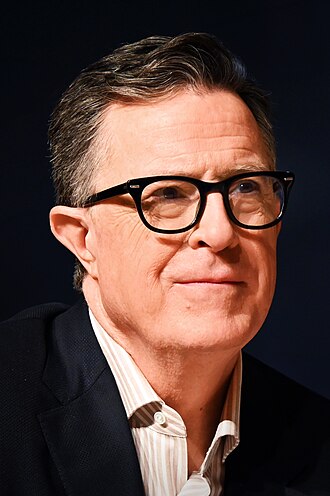 Stephen Colbert
"Im surprised at the reaction it got. I went down there and did exactly what I wanted. I didnt expect it to be some sort of cultural-political line in the sand. I did the style of jokes Id been doing for six months. The fact that anybody found it surprising or alarming that I would do that was educational to me."
Stephen Tyrone Colbert is an American comedian, writer, producer, political commentator, actor, and television host. He is best known for hosting the Comedy Central news satire show The Colbert Report from 2005 to 2014, and the CBS talk show The Late Show with Stephen Colbert since September 2015.
"Yes, we all know the famous saying: where there’s smoke, there’s success."
Stephen Colbert"My character is self-important, poorly informed, well-intentioned, but an idiot… So we said, "Lets give him a promotion."
Stephen Colbert"Truthiness is tearing apart our country, and I dont mean the argument over who came up with the word. I dont know whether its a new thing, but its certainly a current thing, in that it doesnt seem to matter what facts are. It used to be, everyone was entitled to their own opinion, but not their own facts. But thats not the case anymore. Facts matter not at all. Perception is everything. Its certainty. People love the president because hes certain of his choices as a leader, even if the facts that back him up dont seem to exist. Its the fact that hes certain that is very appealing to a certain section of the country. I really feel a dichotomy in the American populace. What is important? What you want to be true, or what is true?"
Stephen Colbert"I think of him as well intentioned, poorly informed, high status idiot."
Stephen Colbert"Don’t be afraid to be a fool. Remember, you cannot be both young and wise. Young people who pretend to be wise to the ways of the world are mostly just cynics. Cynicism masquerades as wisdom, but it is the farthest thing from it. Because cynics don’t learn anything. Because cynicism is a self-imposed blindness, a rejection of the world because we are afraid it will hurt us or disappoint us. Cynics always say no. But saying yes begins things. Saying yes is how things grow. Saying yes leads to knowledge. "Yes" is for young people. So for as long as you have the strength to, say yes."
Stephen Colbert"Such a proud moment of professionalism. You work for years crafting cogent satirical essays and the thing that everybody remembers is me making love to a Chiquita and bursting into laughter. What you cant see off camera is Jon started laughing first. And then Im weak. As much as I want to make the audience laugh, I really want to make Jon laugh."
Stephen Colbert"I appeal to all pupils, students and young people, asking you to focus on the horizons that are opening up for you, and which you could only dream of a year ago. Our future will depend on your desire for education and moral values as well as on your entrepreneurial spirit."
"We have created a wealthy society with tens of millions of talented, resourceful individuals who play virtually no role whatsoever as citizens. Bringing these people in — with their networks of influence, their knowledge, and their resources — is the key to creating the capacity for shared intelligence that we need to solve our problems."
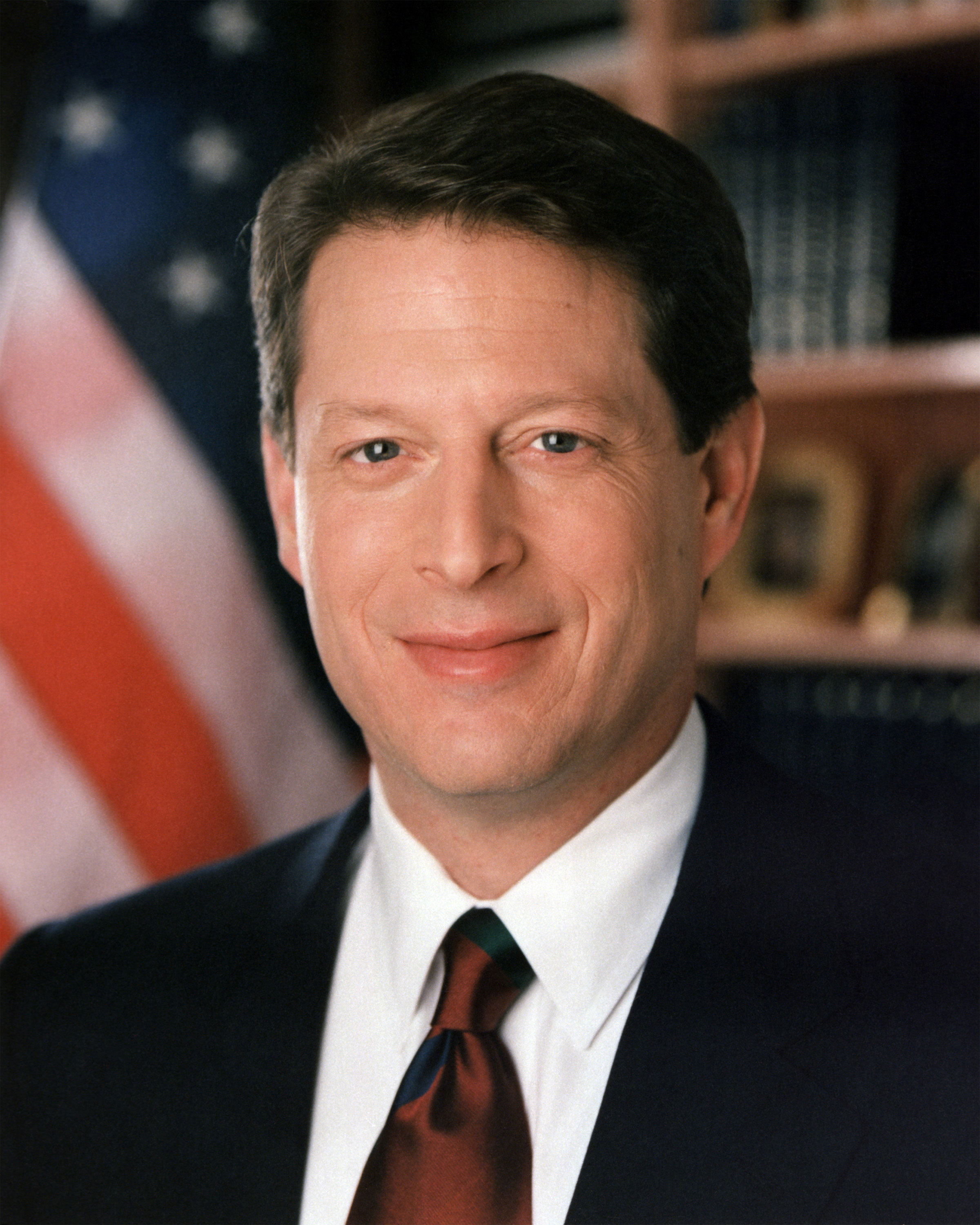 Al Gore
"We are shocked when we see educators, timid before criticism and confused about first principles, betray their trust. And we wonder what can be that philosophy of education which believes that young people can be trained to the duties of citizenship by wrapping their minds in cotton wool."
"An [hypertext] encyclopaedia will be an overall attempt by the knowledgeable, the learned societies or anyone else, to represent the state-of-the-art in their field. An encyclopaedia will be a living document, as up to date as it can be, instantly accessible at any time. It will contain carefully authored explanations and summaries of the subject, as well as computer-generated indexes of literature. A reference to a paper from the encyclopaedia conveys authority and acceptance by academic society. A measure of a paper’s standing may be conveyed by the number of links it is away from an encyclopaedia."
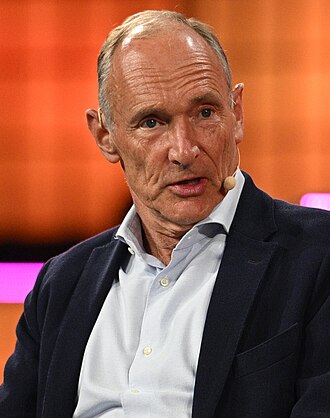 Tim Berners-Lee
"A sample of the modern debate, which neatly summarizes the anti-reductionist position is provided by Grene (1974). She points out that in principle a one-level ontology—the belief, for example, that with increasing knowledge all science will become an account of the world in the language of, say, atomic events—contradicts itself. This is so because such a belief, to be meaningful, requires an ontology which admits both atomic events and cognition. Here at once a second level is smuggled in! It is logically possible... that there might be no levels in between those of atomic events and cognition (that in essence is Descartess position) but the sciences of chemistry and biology consist of some well-tested conjectures that there are such intermediate levels as are represented by molecules, cells, organelles, organs, and organisms."
"All competent thinkers agree with Bacon that there can be no real knowledge except that which rests upon observed facts. This fundamental maxim is evidently indisputable if it is applied, as it ought to be, to the mature state of our intelligence. But, if we consider the origin of our knowledge, it is no less certain that the primitive human mind could not, and indeed ought not to, have thought in that way. For if, on the one hand, every Positive theory must necessarily be founded upon observations, it is, on the other hand, no less true that, in order to observe, our mind has need of some theory or other. If in contemplating phenomena we did not immediately connect them with principles, not only would it be impossible for us to combine these isolated observations, and therefore to derive profit from them, but we should even be entirely incapable of remembering facts, which would for the most remain unnoted by us. Thus there were two difficulties be overcome: the human mind had to observe in order to form real theories, and yet had to form theories of some sort before it could apply itself to a connected series of observations. The primitive human mind, therefore, found itself involved in a vicious circle, from which it would never have had any means of escaping, if a natural way of the difficulty had not fortunately found by the spontaneous development of Theological conceptions. ...chimerical hopes ..exaggerated ideas of mans importance in the universe to which the Theological Philosophy ...at the commencement, ...afforded an indispensable stimulus without the aid which we cannot, indeed, conceive how the primitive human mind would have been induced to undertake any arduous labours."
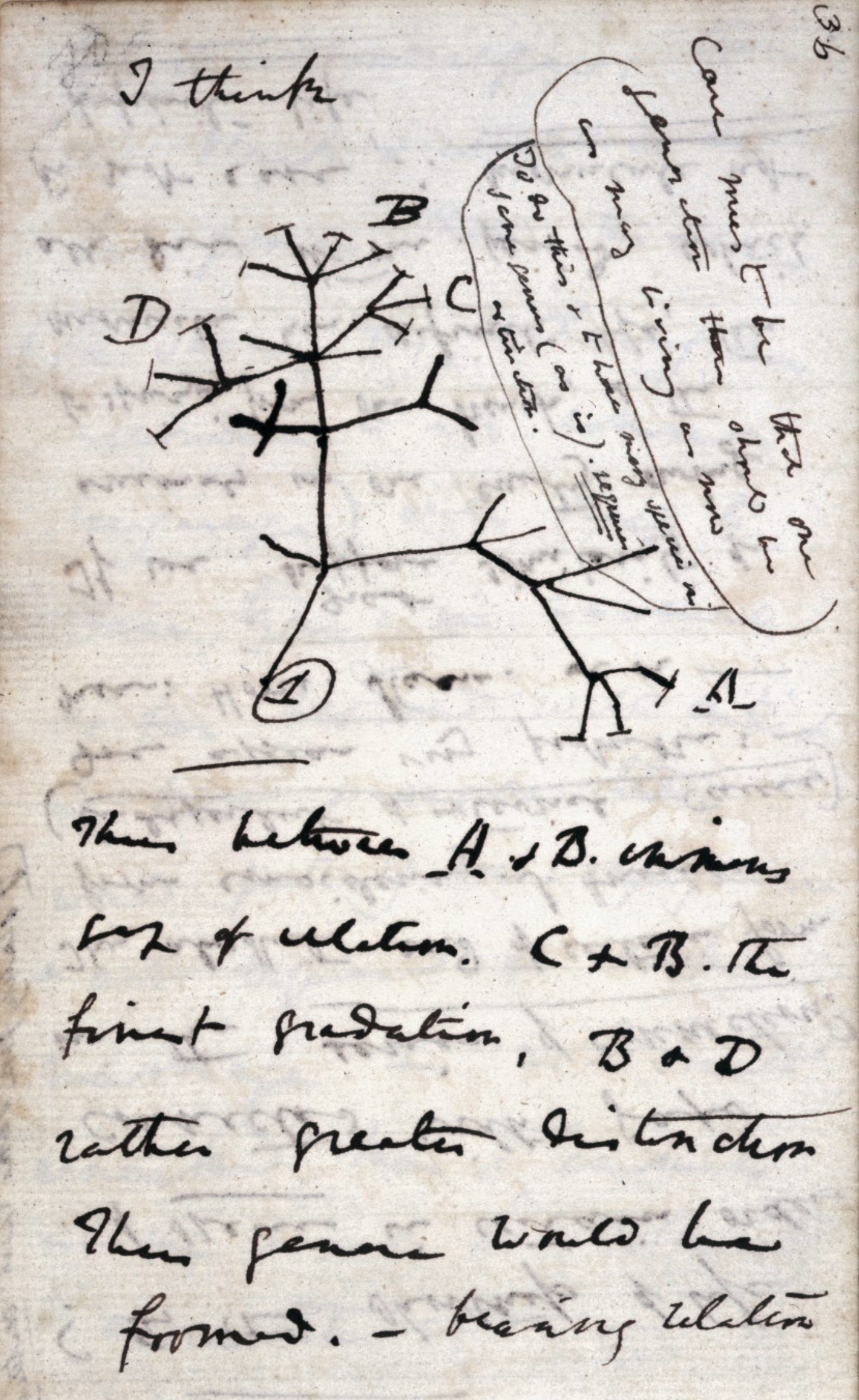 Theory