SHAWORDS

In 1975, Emile Ajars second novel, La Vie devant soi, was a French lit — Romain Gary

HomeRomain GaryQuote
"In 1975, Emile Ajars second novel, La Vie devant soi, was a French literary sensation. The fictionalised memoir of an Arab boy growing up in a Parisian suburb, packed with extraordinary slang, aggressive jokes and almost unbelievable characters, the book was lathered with praise by critics, eventually winning the Goncourt, the French equivalent of the Booker. It went on to become the bestselling French novel of the 20th century. There was only one problem: Ajar was actually Roman Gary, already a bestselling French author (and previous winner of the Goncourt, which is supposed to be awarded to any particular writer only once), who had reinvented himself to outwit the literary establishment and win a new readership."
R
Romain Gary
Romain Gary
author17 quotes

Romain Gary, also known by the pen name Émile Ajar, was a Lithuanian-born French novelist, diplomat, film director, and military aviator. He is the only author to have won the Prix Goncourt twice. He is considered a major writer of French literature of the second half of the 20th century.

More by Romain Gary

View all →
Quote
"By the time Romain Gary shot himself in the head, the French-Russian writer had published over fifty novels under four different names, directed two movies, fought in the air force, and represented France as a consul. His marriages — first to the British writer Lesley Branch, then to the American actress Jean Seberg — had brought him celebrity. He had enmeshed some of France’s literary giants in an elaborate hoax that broke fundamental precepts of the country’s cultural institutions. But Gary always saw his own life as a series of incomplete drafts. Even as he planned his own death, he remained on the path to self-improvement. “To renew myself, to relive, to be someone else, was always the great temptation of my existence,” read the essay he left with his suicide note. It’s perhaps no surprise that biographies of the author often seem overwhelmed by the slippery nature of their subject. “Romain Gary: The Chameleon,” “Romain Gary: The Man who Sold his Shadow.” Gary was one of France’s most successful writers, but he lived the life of a spy."
R
Romain Gary

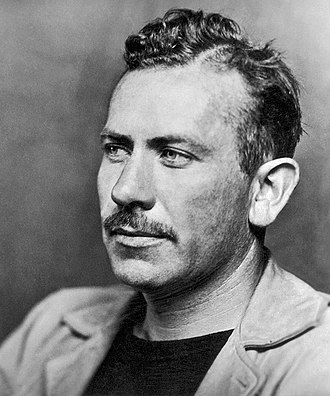
Quote
"Gary’s life was shaped by war, revolution, emigration, anti-Semitism, defeat, and murderous low-altitude bombing runs. But he never wallowed in victimhood – quite the contrary. He wrote scathing satires of the victim syndrome, and never claimed that his changes of country and language were anything but opportunities to be someone else. He didn’t need to know whether he was Russian, or Jewish, or Polish, or Catholic, or French. In a questionnaire on ethnic identity he would have answered: all of the above. Gary is a good model for our own century of transnational lives."
R
Romain Gary
Quote
"Too famous for his work to be judged without bias, Gary felt he needed to break free from categorization. So, in 1973, at age 59 — the same age his mother was when she died — Gary invented Émile Ajar. He was by then twice divorced, retired from the diplomatic corps, and had published 22 books, including the Goncourt-winning The Roots of Heaven (1956), about illegal elephant poaching in Africa. It was time for a new adventure, as he explains in The Life and Death of Émile Ajar: “I was tired of being nothing but myself…there was the nostalgia for one’s youth, for one’s debut, for one’s renewal…. I was profoundly affected by the oldest protean temptation of man: that of multiplicity.” … events turned downright farcical. The Life Before Us was awarded the 1975 Prix Goncourt, the rules of which stipulate that it may be awarded to an author just once in his lifetime, and Gary had already received it for The Roots of Heaven. He instructed Ajar’s lawyer to turn down the honor on her client’s behalf, but the prize administrators would hear nothing of it. “The Goncourt Prize cannot be accepted or refused any more than life and death. Mr. Ajar remains the laureate.”"
R
Romain Gary
Quote
"In 1966, Gary and Seberg visited the memorial of the Warsaw ghetto, in the city where he’d lived as a child for several years before moving to France. This confrontation with the trauma of history — a horror he narrowly avoided — was overwhelming. Gary hallucinated the arm of a hidden Jew emerging from a sewer grill shaking its fist, and fainted from the shock. When he came to, some combination of survivor’s guilt and righteous anger was conceived, taking shape in The Dance of Genghis Cohn (1967) — a breathtakingly original, hilarious, and complex exploration of Gary as a man, an author, and a Jew. Genghis (né Moishe) Cohn, a comedian from Berlin imprisoned in Auschwitz, exposes his bare bottom to Schatz, the SS officer who kills him, and instructs him to “Kush mire in toques.” (Opines Cohn’s ghost: “There have undoubtedly been more worthy and noble last words in history than ‘Kiss my ass,’ but I have never made any claim to greatness and, besides, I’m quite pleased with my effort…”)."
R
Romain Gary

More on Education And Success

View all →
Quote
"An [hypertext] encyclopaedia will be an overall attempt by the knowledgeable, the learned societies or anyone else, to represent the state-of-the-art in their field. An encyclopaedia will be a living document, as up to date as it can be, instantly accessible at any time. It will contain carefully authored explanations and summaries of the subject, as well as computer-generated indexes of literature. A reference to a paper from the encyclopaedia conveys authority and acceptance by academic society. A measure of a paper’s standing may be conveyed by the number of links it is away from an encyclopaedia."
Tim Berners-LeeTim Berners-Lee
Quote
"One of the first major steps in the direction of modern skepticism came through the victory of Occam over Aquinas in a controversy about language. The statement that modi essendi were replaced by modi significandi et intelligendi, or that ontological referents were abandoned in favor of pragmatic significations, describes broadly the change in philosophy which continues to our time. From Occam to Bacon, from Bacon to Hobbes, and from Hobbes to contemporary semanticists, the progression is clear: ideas become psychological figments, words become useful signs. ... To one completely committed to this realm of becoming, as are the empiricists, the claim to apprehend verities is a sign of . Probably we have here but a highly sophisticated expression of the doctrine that ideals are hallucination and that the only normal, sane person is the healthy extrovert, making instant, instinctive adjustments to the stimuli of the material world."
O
Ontology