SHAWORDS

In closing, it should be noted that although a full and complete under — Hormonal birth control

"In closing, it should be noted that although a full and complete understanding of the potential effects of hormonal contraceptive use on physiology, psychology, and behavior is incredibly important, any effects should be weighed against the multiple benefits that the revolutionary invention of HCs has brought. Effective contraceptive methods have given women control over their fertility that is unprecedented and has aided in many personal and economic achievements for women (Go ldin and Katz, 2002). Regardless, future independent and comparative research on the psychological and behavioral effects of HC use in humans and nonhuman primates is crucial. The additional knowledge gained from this research could help in the development of new contraceptive methods and will allow women to make more informed decisions regarding the type and timing of their HC use."
Hormonal birth control
author89 quotes

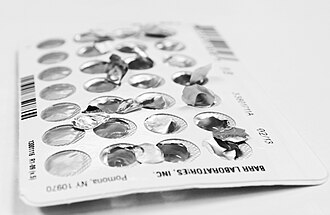
Hormonal contraception refers to birth control methods that act on the endocrine system. Almost all methods are composed of steroid hormones, although in India one selective estrogen receptor modulator is marketed as a contraceptive. The original hormonal method—the combined oral contraceptive pill—was first marketed as a contraceptive in 1960. In the ensuing decades, many other delivery methods h

More by Hormonal birth control

View all →
Quote
"By 1960 the worlds population had grown to around 3 billion people, having taken just 33 years to increase from 2 billion.1 Although many agreed that growth rates needed to fall, couples at the time had few reversible contraceptive choices: mainly barrier methods, spermicides, and a few plastic-only and metal-based intrauterine devices (IUDs). Many relied on ‘withdrawal’. This was soon to change dramatically because during the 1950s scientists had patented two synthetic progestogens, norethisterone and norethynodrel.2 Clinical studies showed that these hormones inhibited ovulation, although some accompanying oestrogen (initially mestranol, now ethinylestradiol) was needed for acceptable breakthrough bleeding and pregnancy rates. The first combined oral contraceptive was marketed in the US in 1960, and in the UK the following year. Many women enthusiastically embraced ‘the pill’; for some because it separated contraception from the act of intercourse and for others because it could be used without their partners knowledge. Early on, howev-er, concerns were expressed about the methods carcinogenic potential, and about reports of associated venous thromboembolic and other cardiovascular events.2 Furthermore, the unfolding thalidomide tragedy of the early 1960s provided a powerful reminder of the epidemiological truth that when millions of people use a medicinal product small increases in risk still result in many people affected."
Hormonal birth controlHormonal birth control