Quote
"Electrical Engineering is the largest branch of engineering, representing about 30 percent of the universitys graduates entering the engineering market"
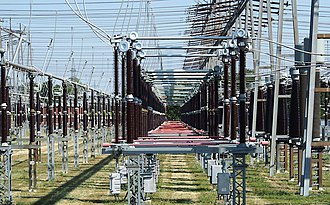 Electrical engineering
"In the early 1800s galvanometers could be constructed with the fine gauges of silk-covered copper or silver wires produced for decorative purposes, but when Faraday was making his classic electrical experiments in 1831 he needed a sturdier gauge of copper wire. Bare copper wire was available in many diameters for mechanical applications, but coils for electromagnetic investigations had to be insulated with string and calico. It was soon realized that the cotton-covered springy iron wire then used to hold out the brims of ladies bonnets showed how copper wire might be similarly wrapped to provide a flexible insulation."
Electrical engineering is an engineering discipline concerned with the study, design, and application of equipment, devices, and systems that use electricity, electronics, and electromagnetism. It emerged as an identifiable occupation in the latter half of the 19th century after the commercialization of the electric telegraph, the telephone, and electrical power generation, distribution, and use.
"Electrical Engineering is the largest branch of engineering, representing about 30 percent of the universitys graduates entering the engineering market"
Electrical engineering"The belief in a certain idea gives to the researcher the support for his work. Without this belief he would be lost in a sea of doubts and insufficiently verified proofs."
Electrical engineering"It has been suggested that because the able mechanical engineers who have taken up the subject of construction are mainly to be credited with the advances which have been made in electrical lightning, therefor electrical engineering per se is to be a thing of the past. For the further, those who would be electrical engineers must first be mechanical engineers, and then somehow obtain a smattering of electrical knowledge, and all will be will with them... With this view the writer proposes to join issues... The electrical engineer of the future... if he is to properly represent his chosen profession, will be required to know everything about electricity, and much more about everything else. As with other branches of engineering and of applied science, electrical engineering comes in contact with and requires help from many other branches. The electrical engineer cannot go far for instance, without some knowledge of mathematics, of chemistry, as well as of mechanics."
Electrical engineering"In my work I now have the comfortable feeling that I am so to speak on my own ground and territory and almost certainly not competing in an anxious race and that I shall not suddenly read in the literature that someone else had done it all long ago. It is really at this point that the pleasure of research begins. when one is. so to speak, alone with nature and no longer worries about human opinions, views and demands. To put it in a way that is more learned than clear: the philological aspect drops out and only the philosophical remains."
Electrical engineering"The design of this memoir is to deduce strictly from a few principles, obtained chiefly by experiment, the rationale of those electrical phenomena which are produced by the mutual contact of two or more bodies, and which have been termed galvanic; its aim is attained if by means of it the variety of facts be presented as unity to the mind."
Electrical engineering"I was originally supposed to become an [Electrical] engineer but the thought of having to expend my creative energy on things that make practical everyday life even more refined, with a loathsome capital gain as the goal, was unbearable to me."
Electrical engineering