SHAWORDS

In the last analysis, whether one dares to wage a tit-for-tat struggle — Lin Biao

HomeLin BiaoQuote
"In the last analysis, whether one dares to wage a tit-for-tat struggle against armed aggression and suppression by the imperialists and their lackeys, whether one dares to fight a people’s war against them, means whether ono dares to embark on revolution. This is the most effective touchstone for distinguishing genuine from fake revolutionaries and Marxist-Leninists."
Lin Biao
Lin Biao
Lin Biao
author16 quotes

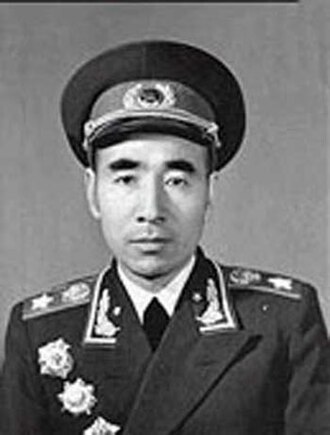
Lin Biao was a Chinese military general and politician. He was a Marshal of the People's Republic of China, and was pivotal in the Communist victory during the Chinese Civil War, especially in Northeast China from 1946 to 1949. Lin was the general who commanded the decisive Liaoshen and Pingjin campaigns, in which he co-led the Manchurian Field Army to victory and led the People's Liberation Army

More by Lin Biao

View all →
Quote
"Our attitude towards imperialist wars of, aggression has always been clear-cut. First, we are against them, and secondly, we are not afraid of them. We will destroy whoever attacks us. As for revolutionary wars waged by the oppressed nations and peoples, so far from opposing them, we invariably give them firm support and active aid. It has been so in the past, it remains so in present and, when we grow in strength as time goes on, we will give them still more support and aid in the future. It is sheer daydreaming for anyone to think that, since our revolution has been victorious, our national construction is forging ahead, our national wealth is increasing and our living conditions are improving, wo too will lose our revolutionary fighting will, abandon the cause of world revolution and discard Marxism-Leninism and proletarian internationalism."
Lin BiaoLin Biao
Quote
"During the autumn, preparations for [Richard Nixons] visit to Beijing moved rapidly, assisted by a dramatic tilt in China’s internal politics. On September 13 a plane carrying Lin Biao, his family and entourage crashed in Mongolia. The story remains murky but officially it was claimed that the army leader was fleeing after a failed coup. His son certainly seems to have concocted an inept assassination plot. The death of Mao’s handpicked heir amid accusations of betrayal was a damaging blow to his image of infallibility. This sparked a crisis of faith among millions of Chinese about the “continuous revolution” to which they had been subjected so brutally for two decades. A foreign policy triumph was now even more important for Mao. Lin was supposedly an opponent of détente with the United States. Certainly his death and disgrace strengthened Zhou Enlai, even though strong opposition remained to Nixon’s visit from Mao’s estranged wife, Jiang Qing, and from radicals in Shanghai. Zhou pushed ahead with arrangements and in October Kissinger paid a second visit to China—this time in public—to agree the agenda and draft the all-important communiqué."
Lin BiaoLin Biao