Quote
"There is no better way to know death than to link it with some licentious image."
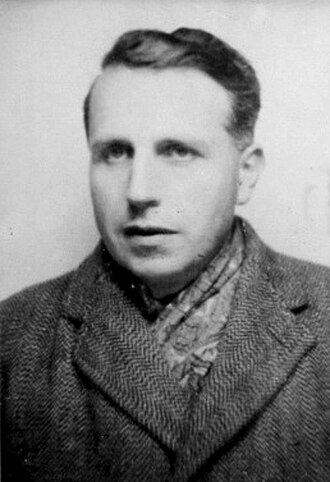 Georges Bataille
"Inner experience, unable to have principles either in dogma (a moral attitude), or in science (knowledge can be neither its goal nor its origin), or in a search of enriching states (an experimental, aesthetic attitude), it cannot have any other concern nor other goal than itself. Opening myself to inner experience, I have placed in it all value and authority. Henceforth I can have no other value, no other authority (in the realm of mind). Value and authority imply the discipline of a method, the existence of a community. I call experience a voyage to the end of the possible of man. Anyone may choose not to embark on this voyage, but if he does embark on it, this supposes the negation of the authorities, the existing values which limit the possible. By virtue of the fact that it is negation of other values, other authorities, experience, having a positive existence, becomes itself positively value and authority. Inner experience has always had objectives other than itself in which one invested value and authority. … If God, knowledge, and suppression of pain were to cease to be in my eyes convincing objectives, … would inner experience from that moment seem empty to me, henceforth impossible without justification? ... I received the answer [from Blanchot]: experience itself is authority."
Georges Albert Maurice Victor Bataille was a French intellectual working in philosophy, literature, sociology, anthropology, and history of art. His writing, which included essays, novels, and poetry, explored such subjects as eroticism, mysticism, surrealism, and transgression. His work would prove influential on subsequent schools of philosophy and social theory, including post-structuralism.
"There is no better way to know death than to link it with some licentious image."
Georges Bataille"Concern for this or that limited good can sometimes lead to the summit... But this occurs in a roundabout way. Moral ends … are distinct from any excesses they occasion. States of glory and moments of sacredness surpass results intentionally sought."
Georges Bataille"An intention that rejects what has no meaning in fact is a rejection of the entirety of being."
Georges Bataille"Entirety exists within me as exuberance … in empty longing … in … the desire to burn with desire."
Georges Bataille"[Nietzsche’s doctrine of the eternal return] is what makes moments caught up in the immanence of return suddenly appear as ends. In every other system, don’t forget, these moments are viewed as means: Every moral system proclaims that “each moment of life ought to be motivated.” Return unmotivates the moment and frees life of ends."
Georges Bataille"There is no communication more profound,” he claims. “[T]wo beings are lost in a convulsion that binds them together. But they only communicate when losing a part of themselves. Communication ties them together with wounds, where their unity and integrity dissipate in fever."
Georges Bataille