SHAWORDS

It is clear that even though information technology (I/T) has evolved — Information technology

"It is clear that even though information technology (I/T) has evolved from its traditional orientation of administrative support toward a more strategic role within an organization, there is still a glaring lack of fundamental frameworks within which to understand the potential of I/T for tomorrows organizations. In this paper, we develop a model for conceptualizing and directing the emerging area of strategic management of information technology. This model, termed the Strategic Alignment Model, defined in terms of four fundamental domains of strategic choice: business strategy, information technology strategy, organizational infrastructure and processes, and information technology infrastructure and processes-each with its own underlying dimensions."
Information technology
author8 quotes

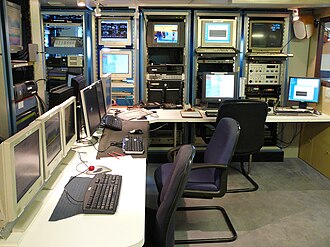
Information technology (IT) is the study or use of computers, telecommunication systems and other devices to create, process, store, retrieve and transmit information. While the term is commonly used to refer to computers and computer networks, it also encompasses other information distribution technologies such as television and telephones. Information technology is an application of computer sci

More by Information technology

View all →
Quote
"The strategic role of information systems in “extending” the enterprise is examined. A number of issues emerge as essential considerations in the strategic alignment of the investment in information technology and business strategy. Information technologies transform organizational boundaries, interorganizational relations, and marketplace competitive and cooperative practice. The paper presents a framework of strategic control that guides the planning and execution of these investments in information technology for business transformation, seeking increased understanding and influence. Emerging information technologies change the limits of what is possible in the leverage of strategic control through transformation of boundaries, relations, and markets."
Information technologyInformation technology
Quote
"The strategic use of information technology (I/T) is now and has been a fundamental issue for every business. In essence, I/T can alter the basic nature of an industry. The effective and efficient utilization of information technology requires the alignment of the I/T strategies with the business strategies, something that was not done successfully in the past with traditional approaches. New methods and approaches are now available. The strategic alignment framework applies the Strategic Alignment Model to reflect the view that business success depends on the linkage of business strategy, information technology strategy, organizational infrastructure and processes, and I/T infrastructure and processes... We [have looked] at why it may not be sufficient to work on any one of these areas in isolation or to only harmonize business strategy and information technology. One reason is that, often, too much attention is placed on technology, rather than business, management, and organizational issues. The objective is to build an organizational structure and set of business processes that reflect the interdependence of enterprise strategy and information technology capabilities. The attention paid to the linkage of information technology to the enterprise can significantly affect the competitiveness and efficiency of the business. The essential issue is how information technology can enable the achievement of competitive and strategic advantage for the enterprise."
Information technologyInformation technology
Quote
"A fundamental change is taking place in the nature and application of technology in business, a change with profound and far-reaching implications for companies of every size and shape. A multimillion dollar research program conducted by the DMR Group, Inc., studied more than 4,500 organizations in North America, Europe, and the Far East to investigate the nature and impact of changes in technology. The synthesis and analysis of this information indicate that information technology is going through its first paradigm shift. Driven by the demands of the competitive business environment and profound changes in the nature of computers, the information age is evolving into a second era. Computing platforms in most organizations today are not able to deliver the goods for corporate rebirth. It is only through open network computing that the open networked client/server enterprise can be achieved. In nontechnical language this book shows managers and professionals how to take immediate action for the short-term benefits of the new technology while positioning their organizations for long-term growth and transformation..."
Information technologyInformation technology
Quote
"The objective of (CIM) is the appropriate integration of enterprise operations by means of efficient information exchange within the enterprise with the help of Information Technology (IT). Integration includes the physical and logical connection of processes by means of data communications technology operating to specified standards, but also the integration of enterprise functions as welt as enterprise information. Generalized models and an open systems architecture are required to reduce the system complexity to a manageable level. They are used to identify the principal components, processes, constraints and information sources used to describe a manufacturing enterprise progressing towards CIM. In this paper, the basic concepts of an open-systems architecture for CIM called are presented. The function view of the CIM-OSA modelling framework is discussed. CIM-OSA provides a unique set of advanced features to model functionality and behaviour of CIM systems at three distinct levels (requirements definition, design specification and implementation description)."
Information technologyInformation technology
Quote
"In the last few years, an information resources management concept has emerged as a focus of managing information activities. Although lacking a concise or universal definition, the IRM concept has become a framework for planning more responsive and coordinated information management organization structures throughout Government and the private sector. In brief, IRM is viewed as an integration of management responsibilities for the control of information-related activities and related processes. It includes the planning and management of information collection, use, and dissemination as well as management of information technology."
Information technologyInformation technology