Quote
"I can think of nothing else than this machine."
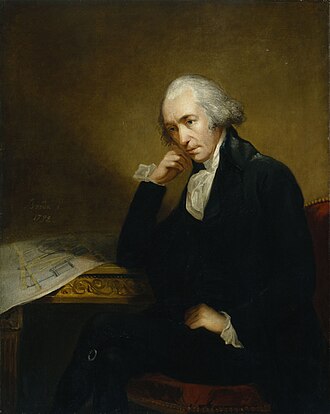 James Watt
"It is not worth my while to manufacture in three countries only; but I can find it very worthwhile to make it for the whole world."
James Watt was a Scottish inventor, engineer and chemist who improved on Thomas Newcomen's 1712 Newcomen steam engine with his Watt steam engine in 1776, which was fundamental to the changes brought by the Industrial Revolution in both his native Great Britain and the rest of the world.
"I can think of nothing else than this machine."
James Watt"Almost everybody is sure... that it is proceeding with unprecedented speed; and... that its effects will be more radical than anything that has gone before. Wrong, and wrong again. Both in its speed and its impact, the information revolution uncannily resembles its two predecessors... The first industrial revolution, triggered by James Watts improved steam engine in the mid-1770s... did not produce many social and economic changes until the invention of the railroad in 1829... Similarly, the invention of the computer in the mid-1940s... it was not until 40 years later, with the spread of the Internet in the 1990s, that the information revolution began to bring about big economic and social changes... the same emergence of the “super-rich” of their day, characterized both the first and the second industrial revolutions... These parallels are close and striking enough to make it almost certain that, as in the earlier industrial revolutions, the main effects of the information revolution on the next society still lie ahead."
James Watt"These foundations decisively changed incentives for people and impelled the engines of prosperity, paving the way for the Industrial Revolution. First and foremost, the Industrial Revolution depended on major technological advances exploiting the knowledge base that had accumulated in Europe during the past centuries. It was a radical break from the past, made possible by scientific inquiry and the talents of a number of unique individuals. The full force of this revolution came from the market that created profitable opportunities for technologies to be developed and applied. It was the inclusive nature of markets that allowed people to allocate their talents to the right lines of business. It also relied on education and skills, for it was the relatively high levels of education, at least by the standards of the time, that enabled the emergence of entrepreneurs with the vision to employ new technologies for their businesses and to find workers with the skills to use them. It is not a coincidence that the Industrial Revolution started in England a few decades following the Glorious Revolution. The great inventors such as James Watt (perfecter of the steam engine), Richard Trevithick (the builder of the first steam locomotive), Richard Arkwright (the inventor of the spinning frame), and Isambard Kingdom Brunel (the creator of several revolutionary steamships) were able to take up the economic opportunities generated by their ideas, were confident that their property rights would be respected, and had access to markets where their innovations could be profitably sold and used."
James Watt"In science its main worth is temporary, as a stepping-stone to something beyond. Even the Principia, as Newton, with characteristic modesty entitled his great work, is truly but the beginning of a natural philosophy, and no more an ultimate work than Watts steam-engine, or Arkwrights spinning-machine."
James Watt