Quote
"Its not just the books under fire now that worry me. It is the books that will never be written. The books that will never be read. And all due to the fear of censorship. As always, young readers will be the real losers."
 Censorship
"It seems that Wikipedia.com, that splendid source for all kinds of information, is no longer dedicated to the truth, assuming it ever was. Individuals who have tried to edit the pages about Barack Obama — to reflect the incontrovertible fact that he is not God, Abraham Lincoln, Franklin Roosevelt, or Ronald Reagan — report that their contributions have vanished within minutes of posting them, and that they, themselves, have been suspended for three days following each infraction. When some sort of official at Wikipedia was contacted about this, she stonewalled, claiming that this censorship was the work of volunteers, implying they were somehow beyond control of Wikipedia itself. Like the Red Guard and the Khmer Rouge were "volunteers."
Censorship is the suppression of speech, public communication, or other information. This may be done on the basis that such material is considered objectionable, harmful, sensitive, or "inconvenient". Censorship can be conducted by governments and private institutions. When an individual such as an author or other creator engages in censorship of their own works or speech, it is referred to as se
"Its not just the books under fire now that worry me. It is the books that will never be written. The books that will never be read. And all due to the fear of censorship. As always, young readers will be the real losers."
Censorship"For several years now, various groups have urged the banning of crime pictures on the ground that they influence youths to turn to crime. When Jimmy Walker was minority leader of the New York legislature, there was a censorship fight on the floor of the House. A powerful group of pious bluenoses wanted to bar from circulation good books that dared to mention certain well-known facts of life. The bluenoses said the books were indecent, bawdy, lascivious and would lead their young and innocent daughters astray. Jimmy stood the debate as long as he could, then he said, "I have been around a good deal, but I have never heard of a womans being seduced by a book." That killed the censorship bill."
Censorship"Only six weeks ago, I discovered that, over the years, some cubby-hole editors at Ballantine Books, fearful of contaminating the young, had, bit by bit, censored some 75 separate sections from the novel. Students, reading the novel which, after all, deals with the censorship and book-burning in the future, wrote to tell me of this exquisite irony. Judy-Lynn Del Rey, one of the new Ballantine editors, is having the entire book reset and republished this summer with all the damns and hells back in place."
Censorship"Captain Beatty: Colored people dont like Little Black Sambo. Burn it. White people dont feel good about Uncle Toms Cabin. Burn it."
Censorship"But while we may smile at these traders in corruption, the degree to which they have been able to infect the Bench, and through it large numbers of the least thoughtful people, supplies grave cause for alarm. There are some ugly chapters in English history connected with attempts to suppress conviction, to throttle its expression under pretence of its being wicked or immoral. But we are so far away from those eras, that many hardly remember their lesson; which is a pity, for such lessons are costly, and, if forgotten, can sometimes only be recovered at a heavier cost. The lesson taught by every effort to repress honest and public discussion of any subject whatever is, that all such efforts are revolutionary. Every honest man in prison is tenfold more dangerous than fire burning near fire-damp. The majesty of law is defiled when the innocent are punished deliberately with the guilty. Edward Truelove, in prison, has exchanged places with his judges, and his sentence on them, for their most immoral judgment, will be affirmed when their decisions have become byewords of judicial prejudice and folly. They who menace man’s freedom of thought and speech are tampering with something more powerful than gun powder. They who suppress by force even an erroneous book honestly meant for human welfare, are justifying all the crimes ever committed against human intelligence; they are laying again the trains that have always ended in revolution; and, right as it is to suppress books notoriously meant for corruption, and punish the vile who through them seek selfish ends at cost of the public good, even that is a task requiring the utmost care and wisdom. Better that many base men and many bad books escape, than that one honest woman be robbed of her child by violence calling itself law, or one honest man suffer the felon’s chain from the very hand provided for protection of honesty."
Censorship"Let children read whatever they want and then talk about it with them. If parents and kids can talk together, we wont have as much censorship because we wont have as much fear."
Censorship"We have created a wealthy society with tens of millions of talented, resourceful individuals who play virtually no role whatsoever as citizens. Bringing these people in — with their networks of influence, their knowledge, and their resources — is the key to creating the capacity for shared intelligence that we need to solve our problems."
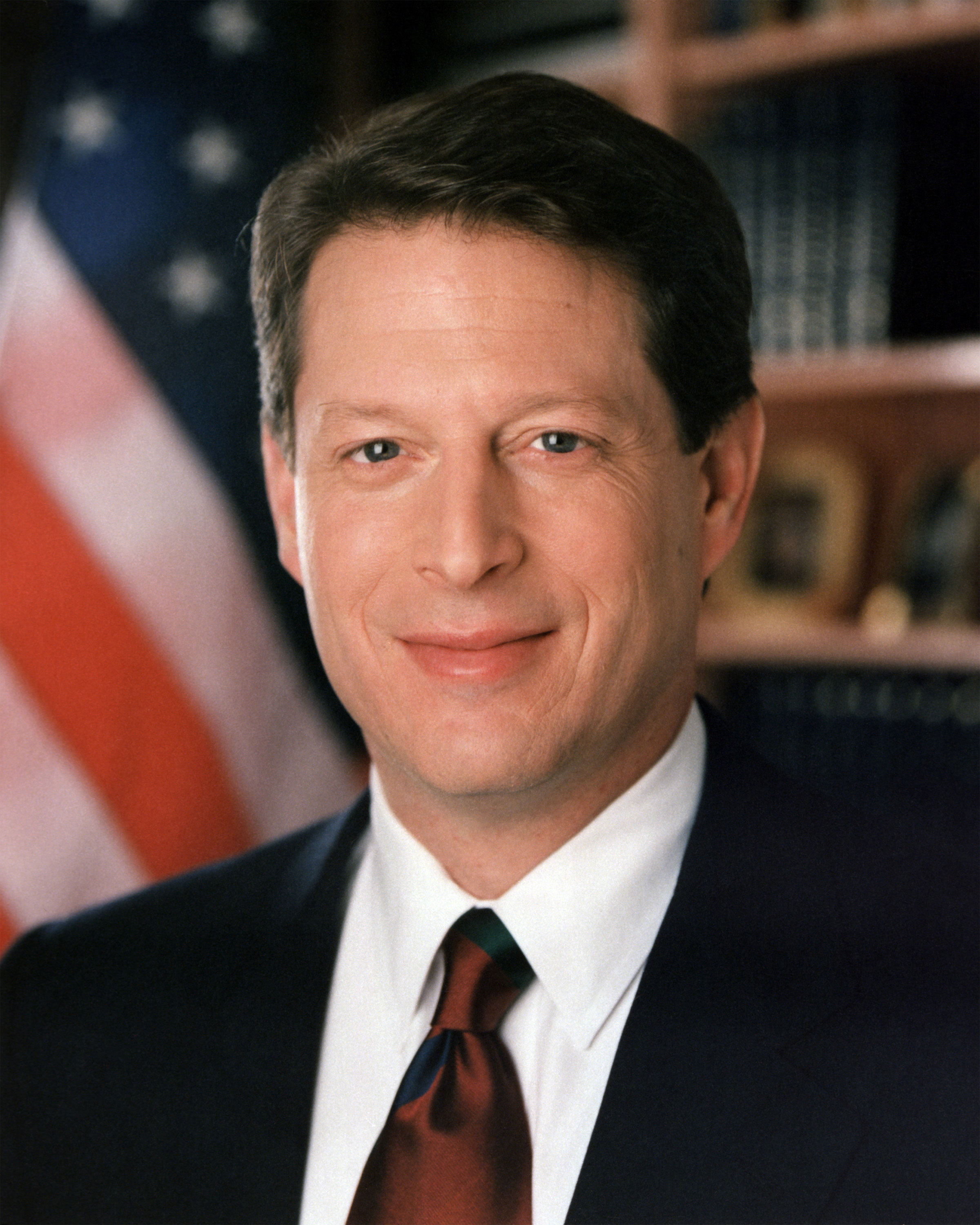 Al Gore
"As in respect of the first wonder we are all on the same level, how comes it that the philosophic mind should, in all ages, be the privilege of a few? The most obvious reason is this: The wonder takes place before the period of reflection, and (with the great mass of mankind) long before the individual is capable of directing his attention freely and consciously to the feeling, or even to its exciting causes. Surprise (the form and dress which the wonder of ignorance usually puts on) is worn away, if not precluded, by custom and familiarity."
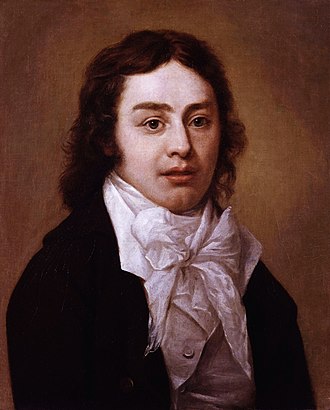 Samuel Taylor Coleridge
"The dualistic philosophy reigned supreme in Europe, dominating the development of Western science. But with the advent of atomic physics, findings based on demonstrable experiment were seen to negate the dualistic theory, and the trend of thought since then has been back to the monistic conception of the ancient Taoists."
"Under the rule of a repressive whole, liberty can be made into a powerful instrument of domination. The range of choice open to the individual is not the decisive factor in determining the degree of human freedom, but what can be chosen and what is chosen by the individual."
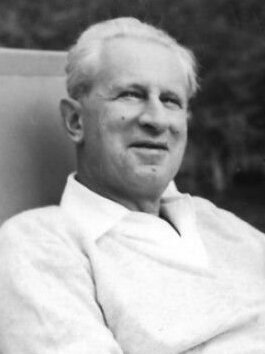 Herbert Marcuse
"All economic activity is carried out through time. Every individual economic process occupies a certain time, and all linkages between economic processes necessarily involve longer or shorter periods of time."
"I believe that the main lesson which our generation has learnt is that we must find a new limit for the activities of government, a limit which leaves ample scope for sensible experimentation but which secures the freedom of the individual as the mainspring of all social and political activity. The whole purpose of these lectures has been to suggest that we can find such a limit if we are willing to revive and develop the ancient ideal of the Rule of Law."