Quote
"In old age... we are like a batch of letters that someone has sent. We are no longer in the past, we have arrived."
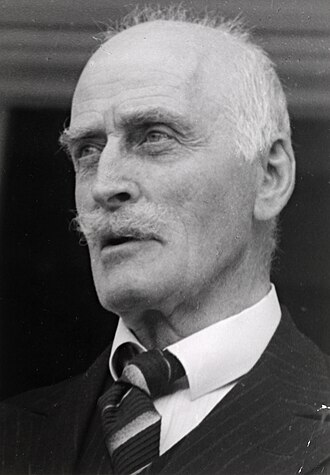 Knut Hamsun
"It was in those days when I wandered about hungry in Kristiania, that strange city which no one leaves before it has set its mark upon him. . . ."
Knut Hamsun was a Norwegian writer who was awarded the Nobel Prize in Literature in 1920. Hamsun's work spans more than 70 years and shows variation with regard to consciousness, subject, perspective and environment. He published more than 23 novels, a collection of poetry, some short stories and plays, a travelogue, works of non-fiction and some essays.
"In old age... we are like a batch of letters that someone has sent. We are no longer in the past, we have arrived."
Knut Hamsun"And love became the worlds origin and the worlds ruler, yet littered its path is with flowers and blood, flowers and blood."
Knut Hamsun"Then, one afternoon, one of my articles was finished at last and, pleased and happy, I stuck it in my pocket and went up to the Commander. It was high time I bestirred myself to get some money again. I didnt have very many øre left. [...] He takes the papers out of my hand and starts leafing through them. He turns his face in my direction. [...] "Everything we can use must be so popular," he answers. "You know the sort of public we have. Couldnt you try to make it a bit simpler? Or else come up with something that people understand better?"
Knut Hamsun"I walked very slowly, passed Majorstuen, continued onward, always onward, walked for hours, and finally got out to the Bogstad Woods. Here I stepped off the road and sat down to rest. Then I busied myself looking for a likely place, began to scrape together some heather and juniper twigs and made a bed on a small slope where it was fairly dry, opened my parcel and took out the blanket. I was tired and fagged out from the long walk and went to bed at once. I tossed and turned many times before I finally got settled; my ear hurt - it was a bit swollen from the blow of the fellow on the hay load and I couldnt lie on it. I took off my shoes and placed them under my head, with the big wrapping paper on top of them. A brooding darkness was all around me. Everything was still, everything. But up aloft soughed the eternal song of wind and weather, that remote, tuneless hum which is never silent. I listened so long to this endless, faint soughing that it began to confuse me; it could only be the symphonies coming from the whirling worlds above me, the stars intoning a hymn. . . ."
Knut Hamsun"Here I was walking around so hungry that my intestines were squirming inside me like snakes, and I had no guarantee there would be something in the way of food later in the day either. And as time went on I was getting more and more hollowed out, spiritually and physically, and I stooped to less and less honourable actions every day. I lied without blushing to get my way, cheated poor people out of their rent, even had to fight off the thought, mean as could be, of laying hands on other peoples blankets, all without remorse, without a bad inner conscience. Rotten patches were beginning to appear in my inner being, black spongy growths that were spreading more and more. And God sat up in his heaven keeping a watchful eye on me, making sure that my destruction took place according to all the rules of the game, slowly and steadily, with no let-up. But in the pit of hell the devils were raising their hackles in fury because it was taking me such a long time to commit a cardinal sin, an unforgivable sin for which God in his righteousness had to cast me down. . . ."
Knut Hamsun"I sit there on the bench and write 1848 dozens of times; I write this number criss-cross in all possible shapes and wait for a usable idea to occur to me. A swarm of loose thoughts is fluttering about in my head. The mood of the dying day makes me despondent and sentimental. Autumn has arrived and has already begun to put everything into a deep sleep; flies and other insects have suffered their first setback, and up in the trees and down on the ground you can hear the sounds of struggling life, pottering, ceaselessly rustling, labouring not to perish. All crawling things are stirring once more; they stick their yellow heads out of the moss, lift their legs and grope their way with their long feelers, before they suddenly give out, rolling over and turning up their bellies. Every growing thing has received its distinctive mark, a gentle breath of the first frost; the grass stems, stiff and pale, strain upwards towards the sun, and the fallen leaves rustle along the ground with a sound like that of wandering silkworms. Its autumn, the very carnival of transience; the roses have an inflamed flush, their blood-red colour tinged with a wonderfully hectic hue. I felt I was myself a crawling insect doomed to perish, seized by destruction in the midst of a whole world ready to go to sleep."
Knut Hamsun